Portuguese
  Spanish


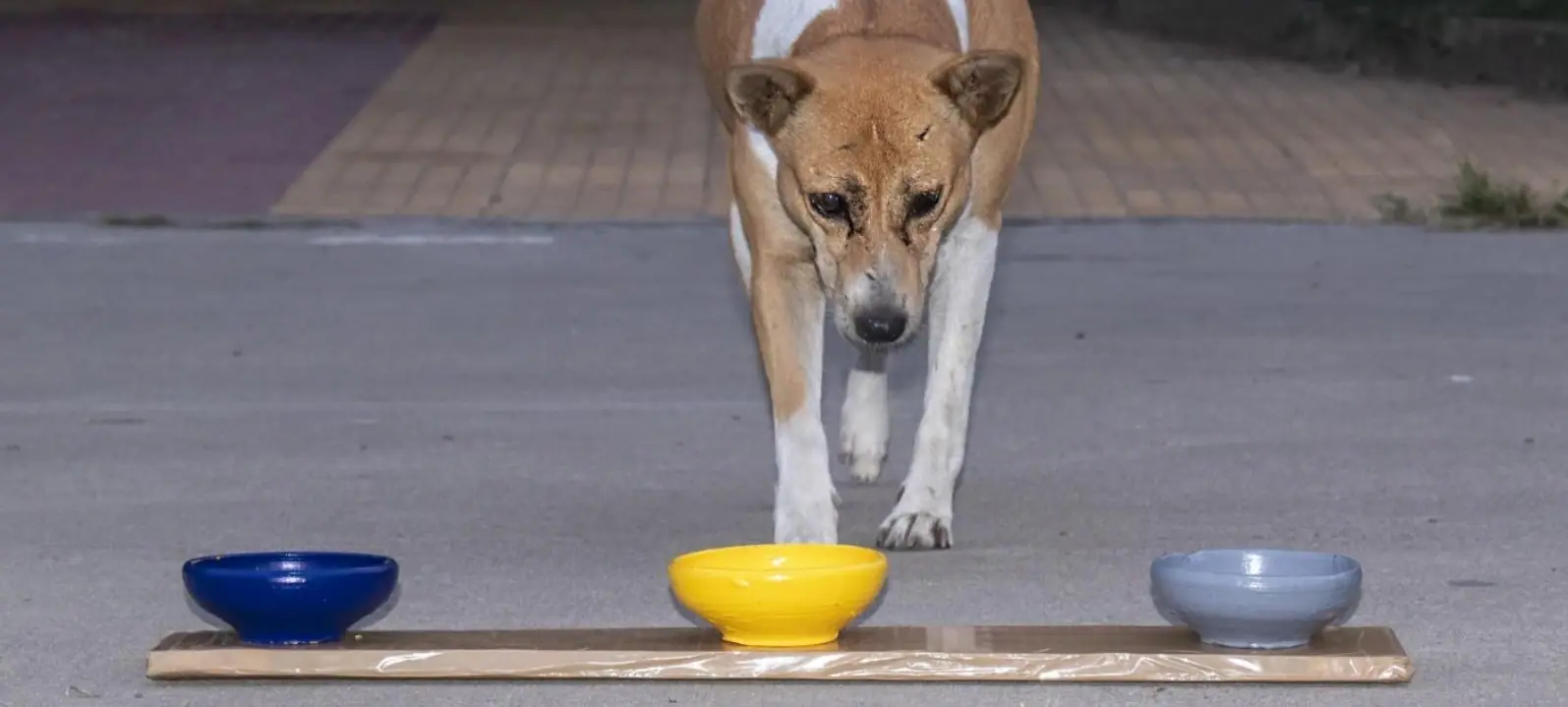

Researchers Discovered That Dogs May Prefer The Color Yellow, Bringing New Perspectives On Color Perception And Canine Behavior
Imagine walking down a busy street in India. Stray dogs sniff through piles of trash looking for food, a common scene in many cities. But there’s something unexpected about their choices.
Color may influence more than just smell or taste. Researchers found that, for many of these dogs, yellow appears to be more attractive than even a piece of fresh chicken.
A recent study from the Indian Institute of Science Education and Research (IISER) in Kolkata revealed a curious preference of stray dogs for the color yellow.
-
China Develops Custom 140-Ton Electric Mining Truck with 770 kWh Swappable Battery, Deploys 290 Units in Xinjiang’s Largest Zinc Mine

-
Meta to Launch Arena, a New Prediction App Targeting 3.56 Billion Users, Competing with Polymarket and Kalshi

-
Scientist Challenges Famous Human Evolution Theory, Argues Homo Sapiens Evolved Gradually Over Thousands of Years
-
15-Year-Old American Builds Ocean Generator with PVC Pipe and 3D-Printed Propeller for $12, Wins National Prize, Presents at White House, and Makes Forbes 30 Under 30 List




The discovery surprised scientists as it revealed that this choice may be linked to an evolutionary trait shared with wolves, the wild ancestors of domestic dogs.
Limited Vision, But Sharp Perception
Dogs see the world differently than humans. While human eyes have three types of light-sensitive cells (cones), allowing the perception of a broad spectrum including red, green, and blue, dogs have only two types.
This difference makes them unable to fully distinguish red and green shades, which appear to them as soft variations of yellow or gray.
Thus, although the canine world seems less colorful than the human one, colors like yellow stand out intensely. However, this simpler perception does not entirely explain the observed preference. Something else seems to be at play.
Tests Reveal Clear Choice For Yellow
The researchers conducted experiments with 134 stray dogs in Kolkata. Each dog had to choose between three bowls: one yellow, one blue, and one gray.
The majority headed straight for the yellow bowl without hesitation. Among the tested dogs, 72 opted for yellow, a number significantly higher than the other options.
In a second test, conducted without food in the bowls, the results were similar. The absence of food did not hide the interest in yellow, showing that color alone exerts an attraction.
When Yellow Outweighs Food
To investigate the strength of this preference, scientists raised the challenge. A gray bowl with food was placed alongside an empty yellow bowl. Surprisingly, most dogs still chose the yellow bowl, ignoring the food.
Of the 52 dogs offered biscuits in a gray bowl, 41 preferred the empty yellow bowl. Even when the food was replaced with raw chicken, considered more appetizing, the result remained: 47 out of 61 dogs chose yellow.
This behavior indicates that the attraction to color outweighed the basic desire to eat. The experience confirmed that yellow exerts a more powerful visual influence than previously thought.
The scientists also tested whether smell influenced the choices. They covered the bowls so that the dogs could smell but not see the colors. When they did, the dogs showed no preference, proving that the attraction to yellow was purely visual.
The Evolutionary Origin Of The Preference
But why yellow? The scientists propose several explanations. One involves “ecological valence,” a theory suggesting that animals develop preferences associated with essential resources, such as food or shelter.
In the Indian context, many human foods available to stray dogs are yellow. Turmeric and dried chili, common in local cuisine, appear yellow to dogs. Even raw meat and blood, red to human eyes, seem yellowish in canine perception.
The researchers led by Anamitra Roy suggest that this association may be older than the domestication of dogs itself. It may have roots in inherited evolutionary behaviors from wolves.
Another interesting aspect is that the preference for yellow does not stem from a disdain for other colors. When scientists tested blue against gray, the dogs showed no orientation. This reinforces that the choice for yellow was a positive fact for the color, not an exclusion of other options.
Although the study did not address pet dogs, it is plausible that they share this preference with stray dogs. Rescue and capture equipment for dogs may also be redesigned considering this discovery, making operations more practical and safe.
With information from ZME Science.