Portuguese
  Spanish





A Proposal Under Study Foresees a Submerged Curtain in Antarctica to Slow the Melting of the Thwaites Glacier, Linked to Sea Level Rise, and Reignites the Debate About Engineering Interventions in Polar Areas.
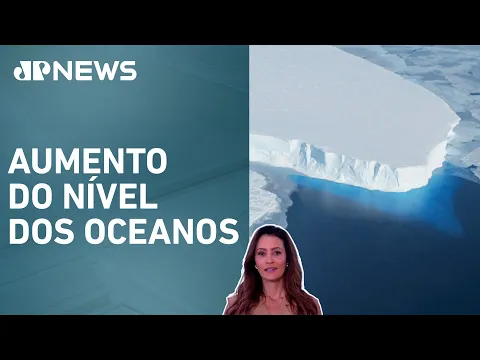
A proposal discussed in studies and public analyses suggests installing a submerged barrier of about 80 kilometers in Antarctica to reduce the melting of the Thwaites Glacier, known by the nickname “Doomsday Glacier”.
The initiative is based on the premise that a significant portion of ice loss occurs due to the action of relatively warmer ocean currents reaching the base of the glacier.
The most cited design describes a flexible structure, similar to a curtain, anchored to the seabed.
-
French Scientists Set Sail on Ice-Trapped Ship for 18-Month Arctic Climate Study

-
Dyson Introduces WashG1: A Revolutionary Floor Cleaner with Motorized Rollers and Self-Cleaning Technology
-
Australian Megafactory Austal Constructs 380-Foot, $74 Million High-Speed Ferry for Canary Islands Capable of Carrying 1,100 Passengers and 278 Cars at 38 Knots

-
Scientists Develop Battery Using Mineral Found in Bones and Chalk, Surviving 1,000 Charges While Retaining 75% Capacity, Paving the Way for a Lithium-Free Future



According to the authors of the concept and promotional materials of the Seabed Anchored Curtain Project, the barrier would aim to limit the entry of these warmer waters beneath the ice and thus reduce the rate of thinning of the glacier.
The idea does not replace emission reduction policies.
What is proposed, according to public descriptions of the project, is to slow down a process considered critical by glaciologists due to its potential effects on sea level.
Thwaites Glacier and the Nickname “Doomsday Glacier”
The Thwaites Glacier is located in West Antarctica, in a region closely monitored by scientific teams due to its potential contribution to sea level rise.
Researchers highlight that Thwaites influences the ice flow from the interior of the continent toward the ocean, functioning as an important element in the area’s dynamics.
The nickname “Doomsday Glacier” has gained popularity because, if Thwaites were to collapse completely, global average sea level could rise by about 65 centimeters.

This estimate appears in materials from the Thwaites Glacier Collaboration and communications from scientific institutions monitoring the glacier.
Moreover, experts also point out that rapid changes in Thwaites may affect the stability of neighboring sectors of West Antarctica, although the magnitude and pace of these effects depend on various physical factors and are the subject of ongoing research.
Sea Level Rise and the Current Weight of Thwaites
Estimates released by scientific initiatives dedicated to the region indicate that ice loss from Thwaites accounts for approximately 4% of the global sea level rise currently observed.
This figure is used as a reference to illustrate the glacier’s weight in the broader context of global warming and continental ice melting.
In practical terms, this means that Thwaites is not the only source of sea level rise, but it repeatedly appears in studies and reports due to its large volume of ice and because it is situated in an area vulnerable to ocean influence.
Warm Ocean Currents and Melting at the Base of the Ice
Part of the melting occurs out of sight, beneath the ice.
Researchers describe that warmer ocean currents can circulate at depth and reach zones where the ice meets the seabed and areas beneath the ice shelves associated with the glacier.
By transferring heat to the base, this circulation can favor ice thinning and alter the stability of the system.
Studies indicate that the submarine topography and channels on the continental shelf can direct this flow, creating preferential routes for water to reach sensitive points.
This is precisely the mechanism that the proposal aims to address, intervening in the path through which the warmer water arrives.
The intent, according to proponents’ descriptions, is to interfere with local circulation to reduce direct contact between ocean heat and the base of the glacier.
Submerged Barrier of 80 Km and the Design of the “Wall” at the Seabed
Although the term “wall” has become common, the idea presented does not involve a rigid concrete structure.
The project describes a flexible barrier, anchored to the seabed, with about 152 meters in height and approximately 80 kilometers in length, installed in front of strategic areas of the seabed.

The objective, according to the disclosed conceptual design, would be to limit the entry of warmer water at depth and allow, to a greater extent, the circulation of colder water in upper layers.
The detailing of the material and method of installation appears as part of the uncertainties still under discussion, as the project is publicly treated as a proposal in the development and study phase.
Scientific documents and technical analyses on “seabed-anchored curtains” have also been evaluating the feasibility of this type of intervention in different glacial environments, including engineering challenges such as depth, currents, pressure, and durability.
Climate Engineering in Antarctica and Limits of the Proposal
The proponents state that the structure would not prevent climate change.
What is discussed, according to project presentations and recent reports, is the possibility of slowing the rate of ice loss at a specific point and thereby influencing the speed of contribution to sea level.
Limits and risks associated with the intervention are also emerging in the public discussion.
Among them are concerns about local environmental impacts, effects on ocean circulation at a regional scale, and the logistical difficulty of installing and maintaining such a structure in an environment with sea ice, storms, and long periods of remote operation.
For this reason, the proposal is often presented as a subject of research and debate, not as an approved or ongoing project.
Part of the debate involves evaluating cost, governance, and international responsibility, considering that Antarctica is governed by treaties and that large-scale decisions would require broad agreements.
Scientific Debate, Studies and Monitoring of the Glacier
So far, the “curtain” has appeared in studies, simulations, and feasibility analyses.
Public descriptions also point to the need for testing, modeling, and validation before any attempt at field deployment in Antarctica.
Meanwhile, scientific teams are continuing to monitor the Thwaites Glacier to better understand how the ocean, the submarine relief, and the dynamics of ice combine to accelerate or decelerate melting.
This monitoring is used as a basis to reduce uncertainties and support projections about sea level.