






 Portuguese
  Spanish



Archaeologists In Egypt Made An Impressive Discovery In Egypt: The First Astronomical Observatory Of The Ancient Civilization. And The Findings Surpassed All Expectations!
Egyptian archaeologists revealed one of the most impressive discoveries in recent years: the first astronomical observatory of ancient Egypt. This finding, dating back to the 6th century BC, was announced by the Egyptian Ministry of Tourism and Antiquities, describing it as the “first and largest” of its kind. Located in Buto, now known as Tell Al-Faraeen, in the Kafr El-Sheikh province, this discovery has been creating excitement in the archaeological community.
The leader of the excavation team, Hossam Ghonim, declared to Live Science that “everything we found surpassed our expectations“. Indeed, the discovery is fascinating, both for its size and the details it reveals about the ancient Egyptians relationship with the cosmos. The excavation started three years ago, and the evidence found demonstrates the technical and spiritual advancement of this civilization.
Enigmatic Structure Reveals Celestial Secrets
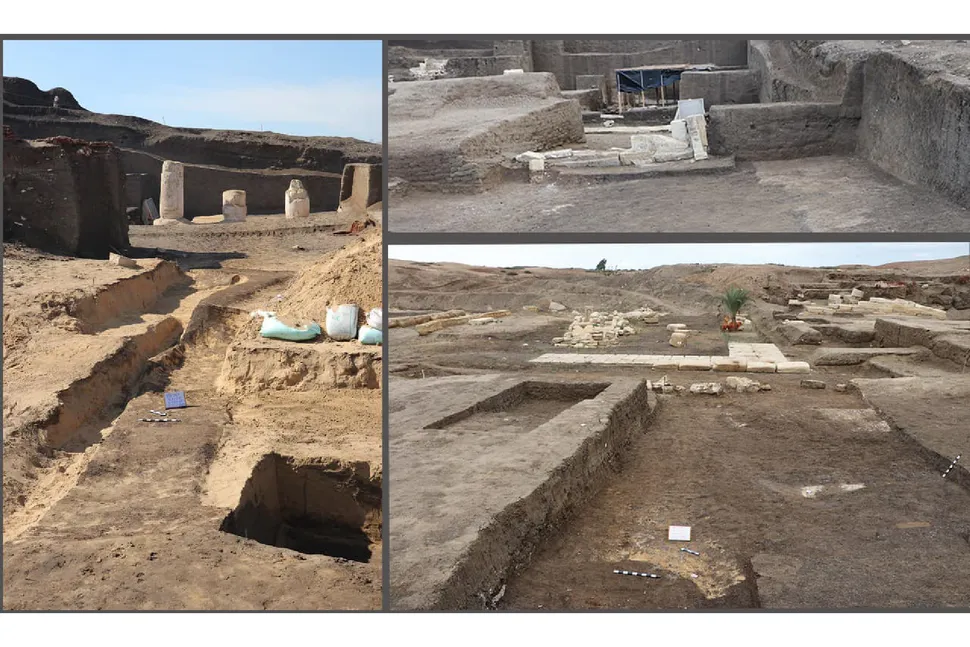
At the center of this discovery is an “L” shaped building, covering more than 850 square meters. The entrance of the structure is oriented to the east, marked by a traditional gate known as “pylon”. This gate symbolized the connection between the earthly and divine worlds, and inside the construction, priests, called “smn pe”, tracked the movement of celestial bodies, such as the sun and stars.
-
Metal Detectorist Uncovers Up to 15,000 Roman Coins in Wales, Potentially the Largest Find of Its Kind in the Country

-
Top U.S. Bank Executive Fired After Dumping Trash on Street, Taking Bin Home, and Receiving Two Fines
-
Brazilian Man Arrested After FBI Alert on AI-Reported Plot to Harm Son and Attack Schools, Churches, and Officials
-
2,500-Year-Old Bronze Artifacts Unearthed by Detectorist in Eastern Poland





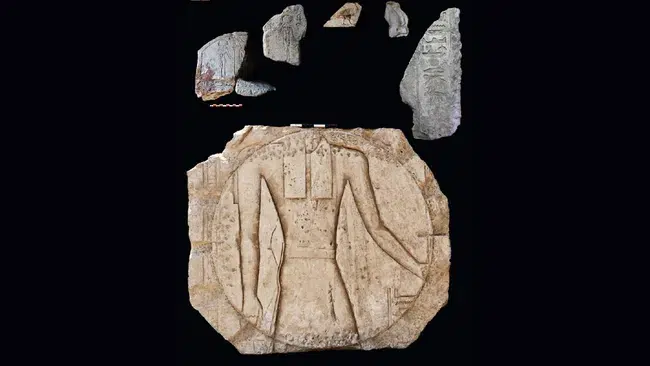
Ghonim explained that the position of the structure was crucial for tracking celestial bodies. Sunlight would penetrate inside, illuminating specific points where observers made their measurements. A statue of the smn pe was found, symbolizing this intimate connection between celestial observation and Egyptian spirituality.
Initially, archaeologists believed they had found a temple. However, upon delving deeper into the excavations, the team found artifacts and symbols associated with astronomy, such as the icons of Chen, Cenet, and Benu. These discoveries led to a new interpretation of the site, which ended up being identified as an astronomical observatory.
The Sundial And The Egyptian Technological Advancement
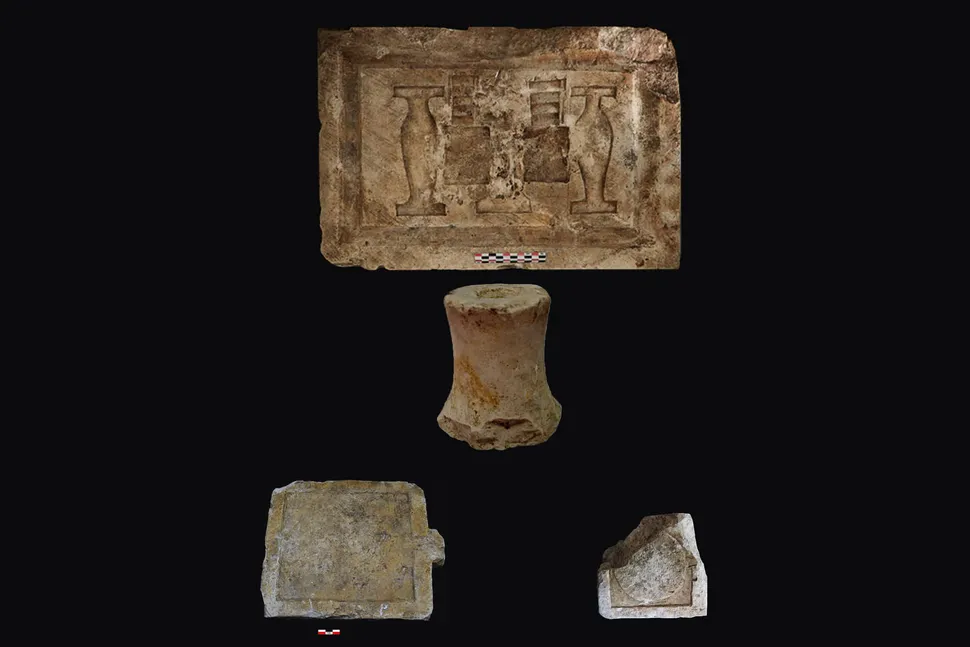
Among the most notable items found at the site is a huge sundial. According to Ghonim, this sundial used changes in solar shadows to accurately determine sunrise, noon, and sunset. “It was a simple technology, but extremely effective“, he said. Initially, the team thought the sundial was part of a temple gate, but soon realized its true function.
In addition to the sundial, archaeologists also discovered an ancient timing device called “merkhet”, which also dates back to the 6th century BC.
These findings are concrete evidence of the advanced astronomical techniques used by the Egyptians to determine important dates in the solar calendar, such as religious festivities, royal coronations, and the agricultural cycle.
The Sky And The Earth As Sacred Carpets
Inside the observatory, the team also found a stone with inscriptions that represented the sunrise and sunset during three seasons of the year. Ghonim explained that the ancient Egyptians viewed the earth and sky as “two carpets“. They mapped the sky on “Themet Hrt” (the carpet of the sky) and the earth on “Themet Ghrt”, which symbolized the agricultural calendar, marking events such as the Nile floods and harvests.
This stone carpet is the first of its kind ever discovered. The inscriptions reveal a profound understanding of seasonal changes and variations in day lengths, showing how the Egyptians integrated astronomy and agriculture.
A New Vision Of Time And Space
Another fascinating detail about the observatory is the unusual arrangement of the pillars at the entrance of the main hall. Unlike traditional temples that have pillars at the end of the hall, this observatory had a “trio of pillars” at the entrance. According to Ghonim, this suggests that the pillars may represent the Egyptians’ tripartite division of time into seasons, months, and weeks.
Even more intriguing is the fact that the observatory had two pylons — a structure symbolizing the horizon where the sun rises, known as “akhet”. An important detail was the discovery of a limestone watchtower, which archaeologists believe was used to observe constellations.
Sacred Symbols And The Spiritual Legacy
In addition to the astronomical discoveries, the observatory also housed artifacts of religious significance. A statue of the god Horus, with the head of a falcon, was found, as well as a representation of the “Eye of Horus”. These symbols were closely linked to the sun and moon, connecting the systems of the universe to Egyptian mythology.
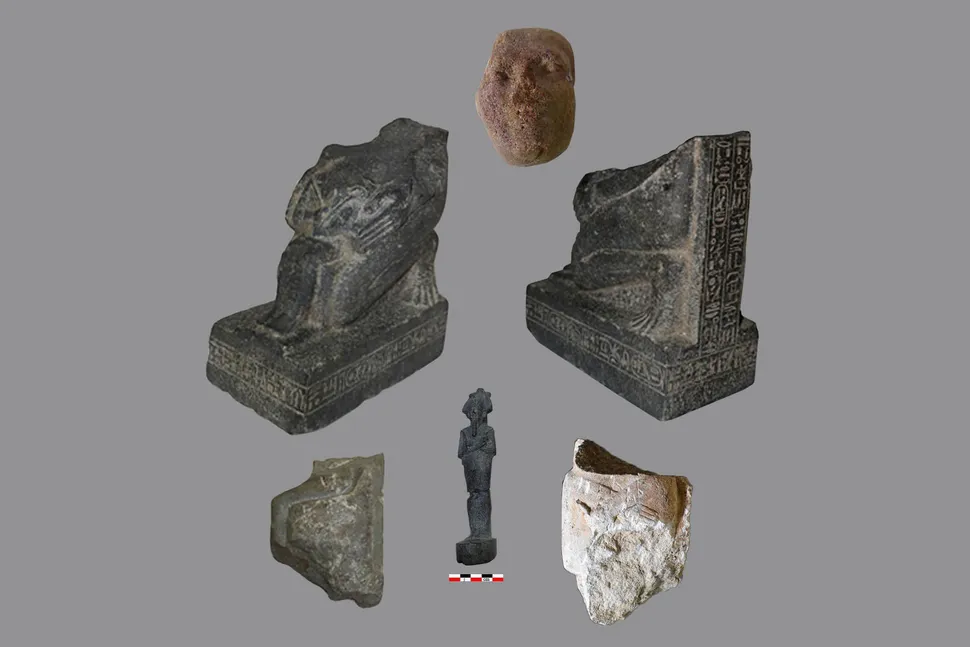
The discovery of a granite statue of King Psamtik I and a bronze figure of Osiris, the god of resurrection, further reinforces the connection between the study of the stars and spirituality in ancient Egypt. Several pottery items found at the site, used in religious rituals, indicate that the observatory served both scientific and spiritual practices.


Isso prova a tecnologia e a ciência eram presentes e muito importantes, pois o legado que eles deixaram tanto nos processos de fundição, arquitetura, artes e etc.
Depois dizem que aquela região não contribuiu com nada para a uma idade!.
Infelizmente o ser humano não evoluiu para o bem, haja visto a situação atual do mundo. Ódio, ganância, sede de poder é o que satisfaz essa alma corrompida do homem
Misericórdia Senhor 🙏
Mas se os Faraós e os nobres eram sepultados com seus bens materiais e também com animais e escravos, não me parece ser espiritualidade. Um apego à matéria muito grande!