Portuguese
  Spanish


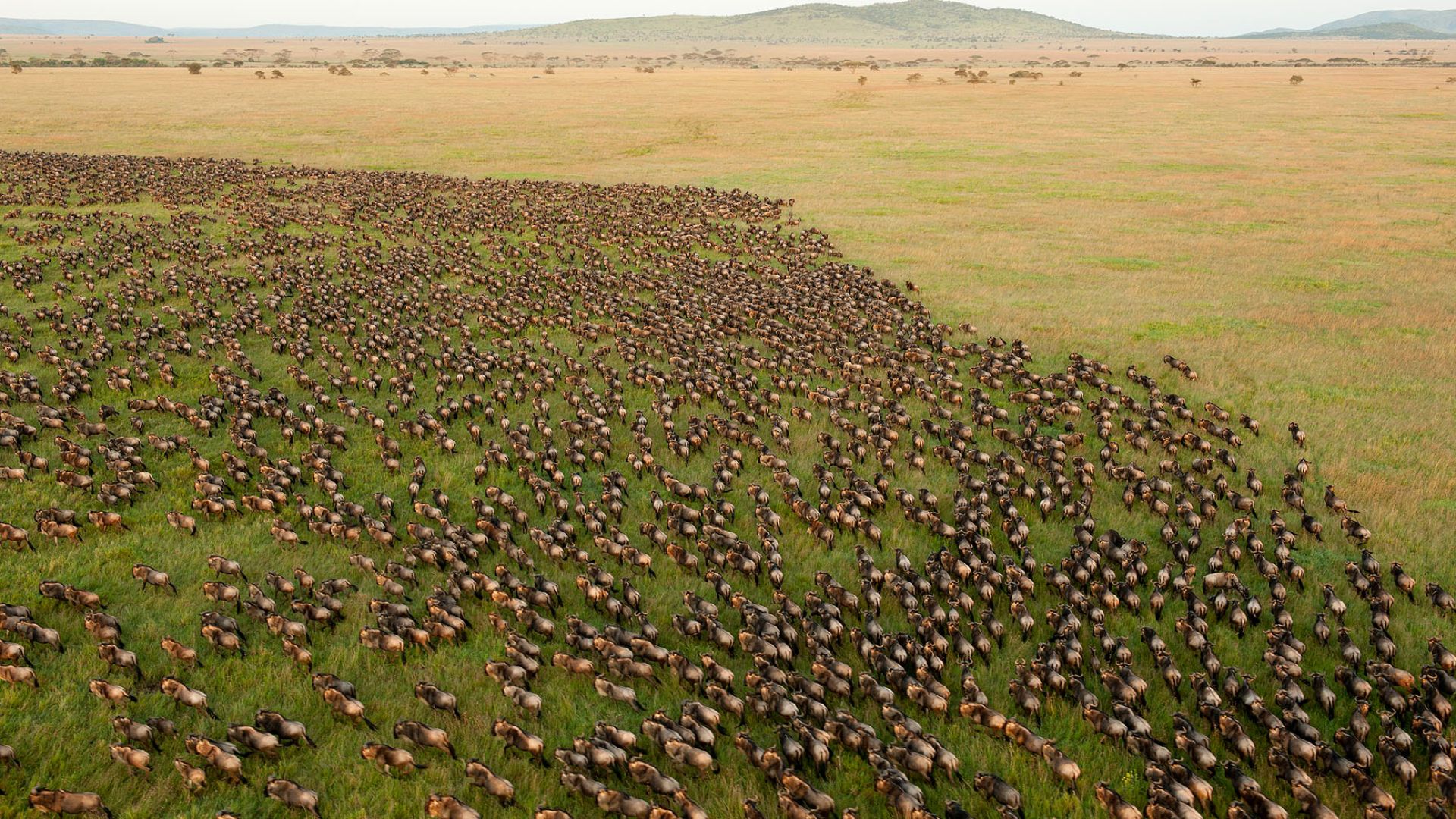

Disease That Affected Ungulates Changed The Destiny Of The Serengeti When Controlled, Releasing The Largest Migration Of Wildebeests On The Planet And Reducing The Fuel For Fires. Research Links The Decrease Of Fires To The Increase Of Trees And Changes In The Ecosystem Carbon.
One of the most well-documented ecological changes in the African savanna began with an invisible enemy and ended up altering the landscape on a continental scale.
In the Serengeti ecosystem, located between Tanzania and Kenya, the removal of a virus that weakened large herbivores triggered a chain of effects involving grass, fire, and trees, with measurable impacts on the carbon stored in vegetation and soil.
The phenomenon gained prominence in the scientific literature for connecting animal health, population dynamics, and environmental processes that are usually treated separately.
-
Twin Earthquakes of Magnitude 7.2 and 7.5 Strike Venezuela, Leaving Over 1,400 Dead and Affecting Millions, Potential Losses Estimated at $6.7 Billion

-
Latin America’s Largest Residential Complex Located in São Paulo Boasts 1,160 Apartments, 72 Shops, 22 Elevators, and 104 Staff Members

-
Rare 1747 Lutheran Bible from Germany, Preserved in Southern Brazil, Showcases Unique Engravings and Handcrafted Techniques
-
Before Japan Became a Football Powerhouse, Zico Transformed the Amateur League, Boosted the J.League, and Was Honored with a Statue at Kashima Antlers




Cattle Plague In The Serengeti And The Turnaround In The Wildebeest Population
At the center of this story is the cattle plague, internationally known as rinderpest, a viral disease that affected cattle and other ungulates and which, for decades, limited populations of large herbivores in parts of Africa.
In the Serengeti, wildebeests remained for a long time at relatively low numbers, partly associated with the effects of this disease.
When control of the virus was consolidated, wildebeest counts significantly increased, and this population expansion began to pressure the grass in a way that changes the rules of fire.

Grass As Fuel And The Direct Effect On Fire Regime
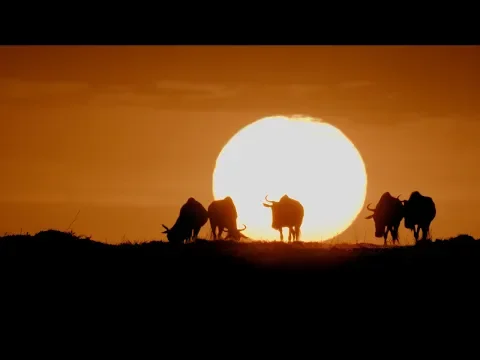
The link between animals and fires lies in the amount of fuel available on the savanna floor.
In years and areas where the biomass of grasses accumulates, fire finds sufficient material to spread easily, burning large stretches and hindering the survival and recruitment of young trees.
With more wildebeests consuming grass over time, some of this fuel stops accumulating, and the probability of extensive fires tends to decrease.
The most visible consequence of this reduction in fire is the gradual increase in tree density in areas that were previously kept open by frequent burns.
Ecological Cascade Mediated By Disease And Long-Term Data
Researchers who analyzed decades of records in the Serengeti gathered evidence that this chain of events was consistent with the pattern observed in the field.
Using data on wildebeest abundance, fire occurrence series, and tree density records, the study described an ecological cascade mediated by disease, in which the removal of an infectious agent alters the population of herbivores, changes the fire regime, and ultimately influences tree cover.
The result, beyond the landscape change, is that trees represent a significant carbon stock.
When tree density increases, the amount of carbon retained in woody biomass grows, and the ecosystem may approach more of a “sink” behavior than a “source,” depending on the balance between carbon influx and outflux.
Herbivory, Fire, And The Dynamics Of Trees In The Savanna
In the savanna, fire and herbivory are often pointed out as two central forces shaping the environment, but the relationship between them is not always intuitive.
Herbivores can reduce the amount of grasses and thus decrease fire, but they can also damage seedlings and reduce the recruitment of trees under certain conditions.
The case of the Serengeti is particularly relevant because it involves a dominant herbivore, in very large numbers, that primarily feeds on grass, directly affecting the continuity of fuel and, consequently, the behavior of fire on a landscape scale.

Rainfall, Other Animals And The Mosaic Of Environmental Factors
Tree density, in turn, does not depend solely on fire and herbivores.
Rainfall, soil moisture availability, pressure from other animals, such as elephants, and even changes in atmospheric carbon dioxide can influence vegetation over decades.
Still, the scientific analysis of the Serengeti became a reference by showing that, even in a complex system, it is possible to trace strong relationships between historical events and current ecological processes when long data series are available.
Animal Health Beyond Livestock And Its Effects On The Environment
The “disease” component is what differentiates this cascade from other well-known stories about wildlife management and habitat recovery.
In many ecosystems, changes begin with overhunting, introduction of exotic species, or habitat destruction.
In the Serengeti, the chain was driven by a sanitary factor that affected ungulates and that, when controlled, released the growth potential of a population already adapted to the environment.
This link between animal health and the savanna structure reinforces the idea that disease surveillance and control programs can generate environmental effects that go beyond livestock and food security.
The human dimension also appears in this context.
The rinderpest was the target of control campaigns that involved vaccination and sanitary policies in regions with domestic herds, which helped reduce the virus’s circulation among domestic and wild animals.
The global eradication of the disease was recognized by international organizations, and the episode is often cited as one of the greatest sanitary victories in animal history.
In the Serengeti, however, scientific interest turns to what came next, when a virus that once pressured the fauna ceased to play this role and other forces, such as food availability and fire regime, began to regulate the system.
Fewer Fires, More Trees And Changes In The Landscape
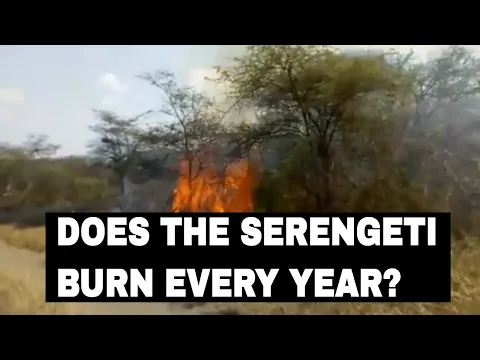
The change in fire is not a secondary detail.
Fires in savannas can be recurring and extensive, influencing not only trees but also plant composition, habitat quality for birds and mammals, and even nutrient dynamics.
When fire decreases, young trees have a better chance of surpassing vulnerable stages, and the landscape structure changes slowly, with more shading, more woody organic matter, and alterations in species distribution.
These changes can, in turn, influence where herbivores feed, how predators move, and how water is retained in different microenvironments.
Ecological Time And Transformations That Take Decades
A striking feature of this type of phenomenon is ecological time.
The sequence does not occur in a single season nor is it limited to an isolated event.
Populations grow, grass responds to consumption, fire alters its patterns, and trees take years to establish, grow, and become a stable part of the savanna.
Therefore, the case of the Serengeti is often analyzed with long time series and methods that attempt to separate natural variations from trends associated with structural changes.
Carbon In The Savanna And Measurable Implications
The discussion of carbon comes as a measurable consequence of a process that, at first glance, could be interpreted merely as a story about animals and fire.
Trees store carbon throughout their lives, and soil organic matter can be influenced by changes in vegetation, leaf and branch deposition, and burning frequency.
When fire is frequent, some carbon quickly returns to the atmosphere, whereas reduced burning can favor accumulation in biomass and in surface layers of soil, depending on local conditions.
The study that described the cascade in the Serengeti discussed precisely these implications, showing that the trajectory of the ecosystem can be profoundly affected by disturbances that, at origin, do not appear “environmental,” but sanitary.
From The Virus To Migration And Fire: A Story That Connects Themes
There is still an aspect of scientific communication that helps explain why this story resonates.
It connects themes that rarely appear together in news: a virus affecting ungulates, the massive migration of wildebeests, the likelihood of fires, and the global debate on carbon.
In a single chain, basic ecological mechanisms, human decisions about disease control, and transformations that manifest in the landscape of one of the most studied savannas on the planet are linked.
If the elimination of a disease can change the fire and carbon of an entire savanna, what other silent changes in wildlife health might still be reshaping ecosystems without the public noticing?