





 Portuguese
  English
  Spanish
  4 min of reading
  0 comments


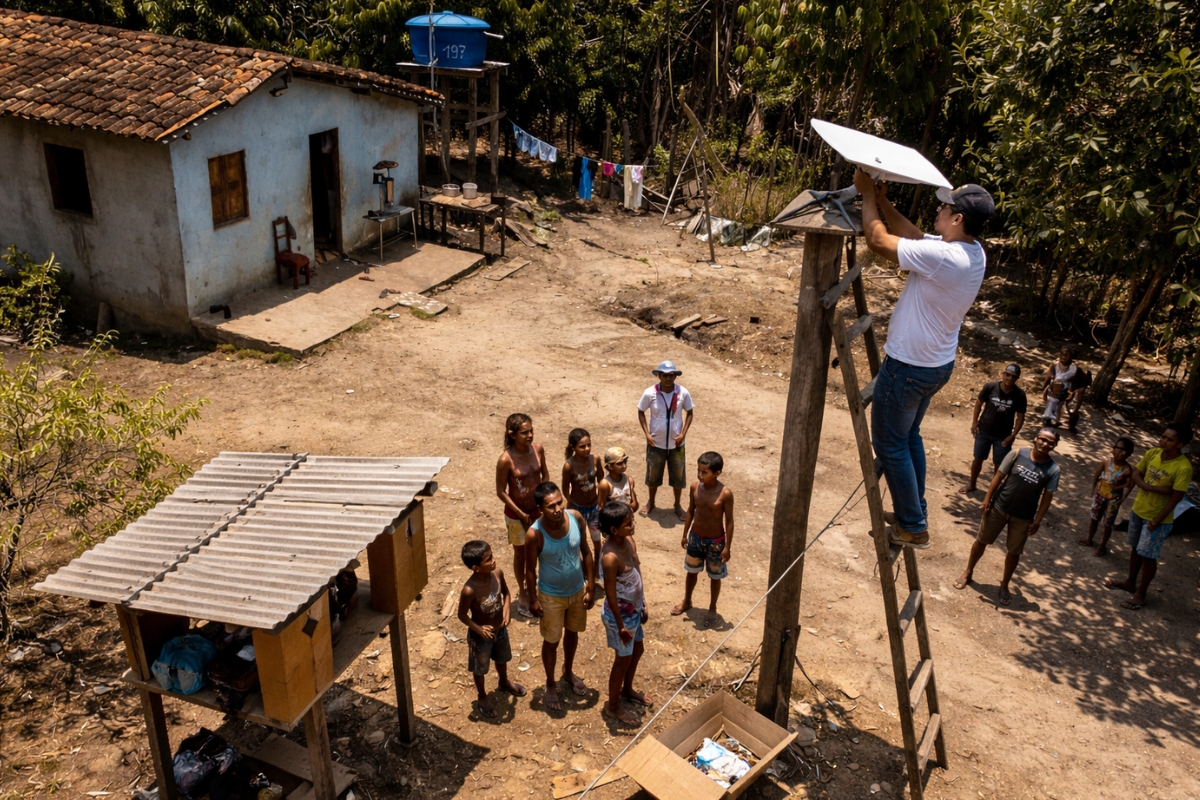
In Amazonas, Networks With Starlink Activated Connection in More Than 1,000 Communities to Reduce Isolation and Unlock Health and Education, Catching the Attention of Regulators and Local Projects.
The arrival of Starlink in the Brazilian Amazon is starting to shorten distances that have always hindered basic services. A small antenna, local power, and a constant connection are changing the daily lives of communities that lived on the edge of digital silence.
The impact is evident in simple and urgent tasks: a video call that works, a class that doesn’t drop, a health consultation without waiting days. The technical numbers help explain why this has become a game changer.
The information was released by starlink.com, the official Starlink website. Typical performance ranges and latency targets that support the turnaround in connectivity in remote areas can be found there.
-
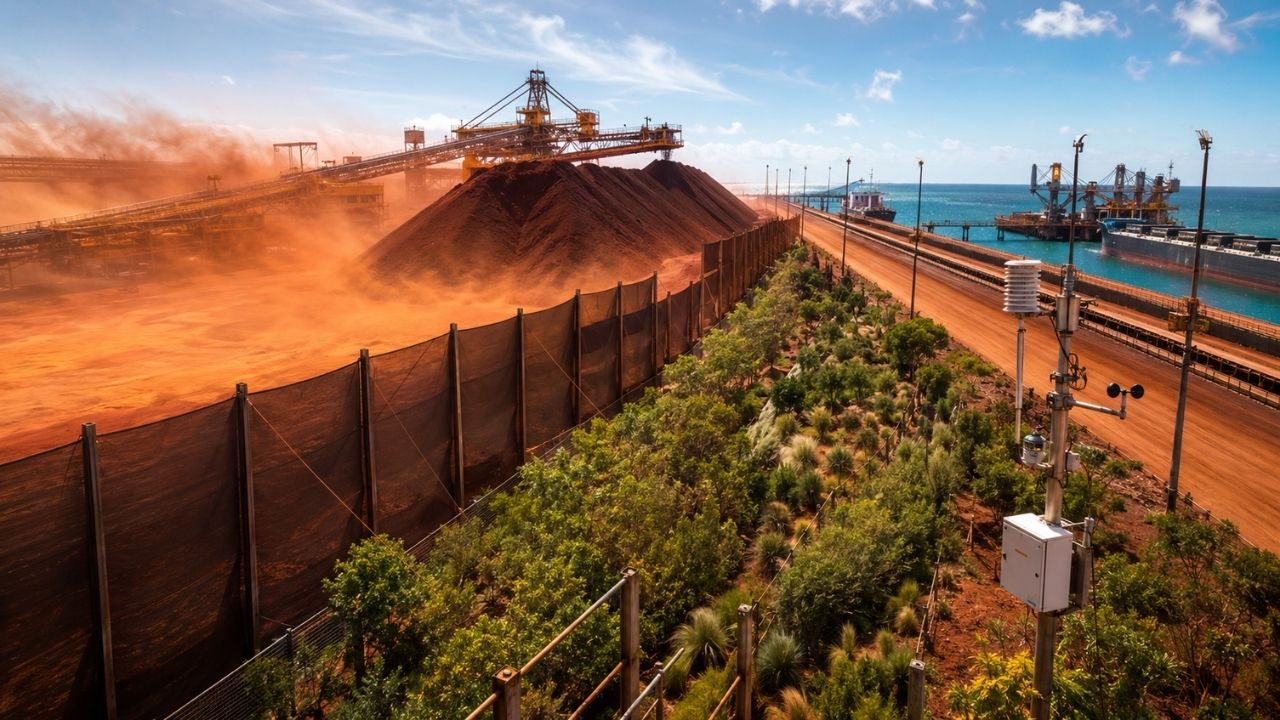
Forget the common mining dust: BHP combines 150,000 native plants, windbreak curtains, and real-time monitoring to reduce particles in Port Hedland, where iron ore stockpiles face strong winds and even cyclone-ready systems during port operations.

-
Scientists discover that tires are releasing invisible microplastics into city air, raising concerns about what we breathe every day.

-
Scientists have discovered a hidden underwater “portal” beneath the largest glacier in East Antarctica, capable of carrying warm water to the ice base; Totten drains a colossal basin with the potential to raise sea levels by more than 3.5 meters.
-
For the first time in history, scientists are observing the Pacific crust tearing on the ocean floor and revealing the birth of an underwater tectonic division.




Why the Low Orbit at 550 km Changes the Game in the Amazon
The central difference lies in the low orbit, with satellites about 550 km away. This height reduces the distance the signal must travel and decreases some of the latency that typically disrupts calls and classes in traditional satellite internet.
The noteworthy physical data is the minimum propagation time, around 3.7 ms just for the trip to the satellite and back. This helps the connection feel like regular internet, with faster responses.
Lower latency unlocks uses that require stability, such as video, file transfers, and access to digital services. In practice, it connects schools, health clinics, and community organizations with less reliance on travel.

What Speeds and Latency Does Starlink Publish, 25 to 220 Mbps and 25 to 60 ms
Starlink publishes typical performance ranges for users on land. The connection usually operates with 25 to 220 Mbps of download, 5 to 20 Mbps of upload, and 25 to 60 ms of latency.
These numbers change the usage pattern. Video calls, online classroom platforms, and remote support systems can operate with increased predictability.
The company itself also presented a target of 20 ms for median latency in network improvements. This points to continuous evolution during peak demand times.
How Latency Fell From 48.5 ms to 33 ms and What This Unlocks
Starlink recorded a reduction in latency during peak hours, with the median dropping from 48.5 ms to 33 ms. The p99 indicator, which reflects the worst moments, fell from over 150 ms to less than 65 ms.
When variation decreases, usage becomes more stable and less frustrating. The difference is apparent in what matters for those who are far away: video consultations, live classes, technical support, and communication during emergencies.
This type of consistency is what transforms internet into service infrastructure. It becomes more than access; it becomes a part of daily operations.

More Than 1,000 Communities Connected and a Target of 1 Million People in the Forest
The scale has already surpassed the testing phase. The Conexão Povos da Floresta project reported connections in more than 1,000 communities in the Amazon, aiming to reach over 1 million people.
This includes indigenous, quilombola, extractive, and riverside communities, with networks bringing signals to collective points. The change is often immediate; local communication, access to services, and community organization become faster.
Large-scale deployment also creates a new standard of expectation. If the connection arrives, the community starts to demand services that depend on it, such as digital education and remote assistance.
What Anatel Approved on 04/08/2025, More 7,500 Satellites and Authorization Until 2027
Anatel, the telecommunications regulatory agency, approved on 04/08/2025 an expansion of the right to explore the Starlink system in Brazil. The decision included 7,500 new satellites in addition to the 4,408 already planned, with authorization maintained until 2027.
This move expands operational capacity and reinforces the expansion scenario. In regions where fiber is rare and the terrain complicates any construction, the satellite alternative gains strategic weight.
The topic also enters the radar of competition, space sustainability, and digital sovereignty. Regulation shows that the technology is no longer an exception; it has become part of the official telecommunications map.

Teleconsultations, 219 Consultations and 3 Points With Photovoltaic Energy Starting in November
The Sustainable Amazon Foundation, a socio-environmental organization, detailed a direct use in health. On 10/10/2023, the telehealth project in riverside communities in the Amazon announced the use of Starlink starting in November at 3 points with photovoltaic energy.
The practical result had already appeared before the connectivity boost. By September 2023, the project had totaled 219 teleconsultations in three communities, providing nursing and psychology services.
With a more stable connection, the trend is to expand reach and reduce response time. In the Amazon, this difference can determine if guidance arrives at the right time.
Constellation With About 9,500 Active Satellites in January 2026 and the Effect on Capacity
The constellation is also growing rapidly. Space.com, a science and space news site, described about 9,500 active satellites in January 2026.
More satellites mean more coverage and more capacity, especially during peak hours. This advance helps maintain quality in regions that come online and start to rely on it for essential services.
In the Amazon, this translates into continuity. The connection stops being a rare event and becomes a constant presence, the kind of change that reorganizes local life.
Starlink has become the fastest bridge between isolated communities and services that previously required a long journey. The data on latency, typical speeds, and regulatory expansion show a path to consolidation.
With more than 1,000 communities already connected, growing telehealth services, and authorization valid until 2027, low-orbit internet is starting to fill the space of a practical solution to challenges that have always been giants in the forest.


-

-

-

-

-

-

41 people reacted to this.