






 Portuguese
  Spanish
  6 min of reading
  0 comments


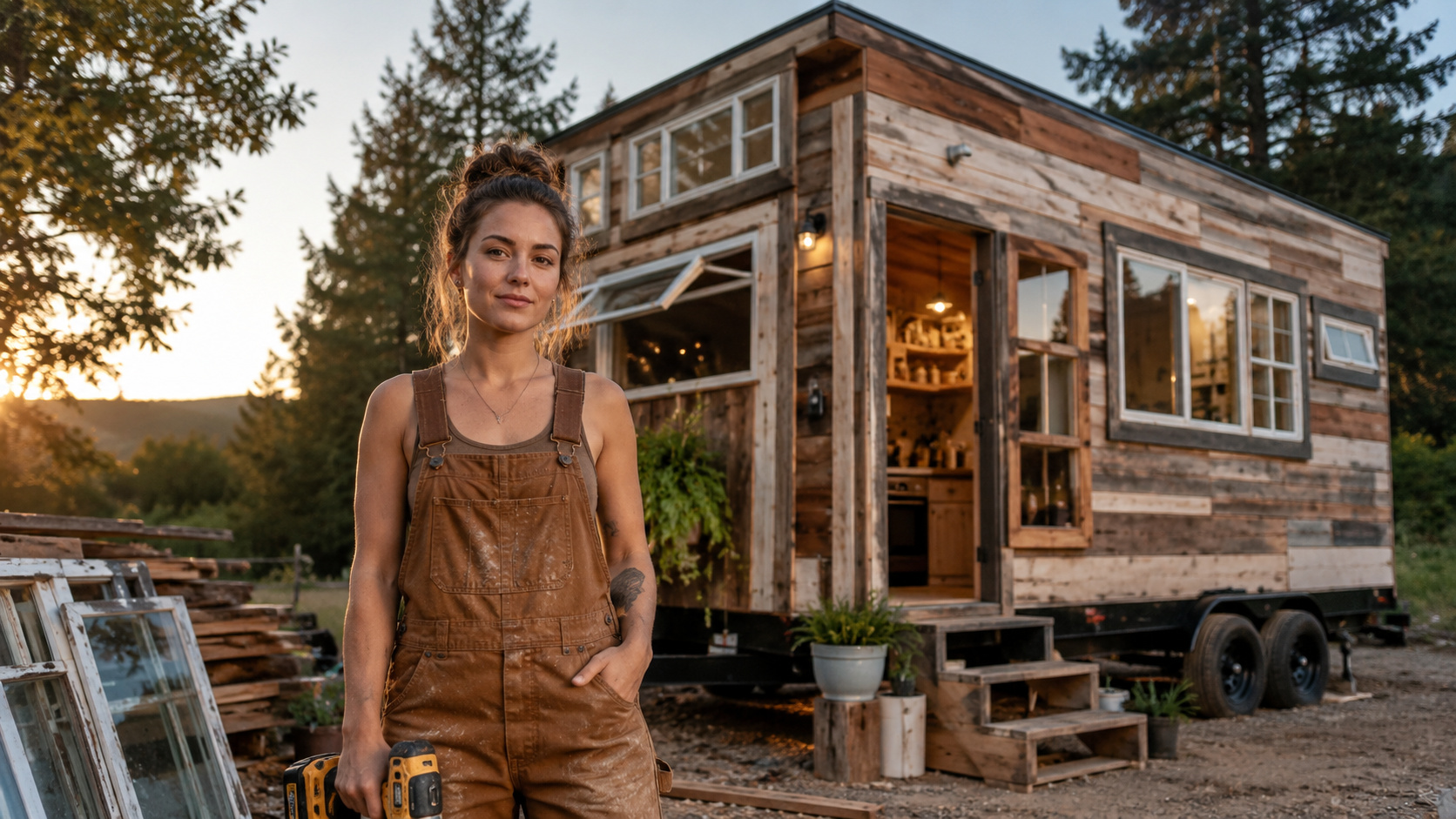
Carina Inka left renting by building a compact home on wheels using recycled materials, with a bedroom on the same floor, simple kitchen, bathroom, and solutions designed to live with less without relying on a traditional house.
Without money to buy a regular house and not wanting to continue renting, Carina Inka decided to learn construction in practice. She was a floral designer, not working in construction, but went through a process of research, design, and execution until she built her own compact home on wheels.
The house was built over 2 years. During this period, Carina needed to understand tools, measurements, materials, and basic construction decisions. The choice also had a clear personal reason: she did not want to be tied to renting and still did not know where she wanted to live.
The information was published by Treehugger, a site specialized in sustainability and residential design, on November 9, 2022. The home was already completed when the story was presented, using recycled materials and internal organization designed to make use of every corner.
-
Women in a Brazilian Community Empowered to Renovate Homes Independently Through Design and Planning Skills

-
Man Builds Solar-Powered Tiny Home to Escape Rent, Faces Demolition Order in Expensive Australian Region
-
Facing a Shortfall of 83,900 Homes, Curitiba Considers Social Housing with Public Units, Reduced or Free Rent, Prioritizing Seniors, Victims of Violence, and the Homeless

-
Abandoned Building in Brazil’s Vitória to Be Transformed into 44 Affordable Housing Units with Government Funding


Woman with no construction experience turned renting into a starting point for her own home on wheels
Carina Inka did not start the project as a construction professional. She ventured into this path because she was looking for a more feasible way to live without relying on renting and without committing to buying a regular house.


The alternative found was a compact home on wheels. This type of dwelling can be mobile and usually has a reduced area, so it requires planning for each space to have a clear function.
The decision also reveals a situation familiar to many people: the desire to live better without having money for a traditional purchase. In Carina’s case, the answer came through self-construction, which is when the person directly participates in the building process.
It took 2 years of research, design, and construction until the compact home was ready
The house was not born from a quick decision. Carina spent 2 years researching, designing, and building the dwelling. This time shows that the project required learning and trial, not just desire.
Even without prior experience, she received guidance from her father, who is a carpenter. This help did not take away the challenge of learning by doing, but it provided support in a stage that involves safety, cutting materials, and assembling the structure.
The story is reminiscent of many gradual renovations, where the resident tries to save on labor and make use of what they already have. The difference is that Carina applied this logic to an entire house on wheels.
Reused materials shaped the house and reduced waste in construction
Carina’s dwelling used reused materials in various parts. Recovered windows and finishes were incorporated into the project and helped give identity to the space.
This reuse has a practical impact. Instead of buying everything new, the project gained pieces that already existed. This reduces waste and can lower costs, provided the materials are in good condition and used with care.
Treehugger, a site specialized in sustainability and residential design, detailed that Carina used recovered items throughout the house. The choice matched the proposal of living with less and creating a simple, functional, and more personal space.
House measures 3 meters wide by 7.3 meters long and gained an open interior to avoid a cramped feeling
The dwelling measures about 3 meters wide by 7.3 meters long. This measurement made the house wider than many compact homes on wheels and opened up more space to organize the interior.
The living room received two entrance doors with glass. Natural light helps to make the environment brighter and reduces the feeling of crampedness, which is important in small houses.
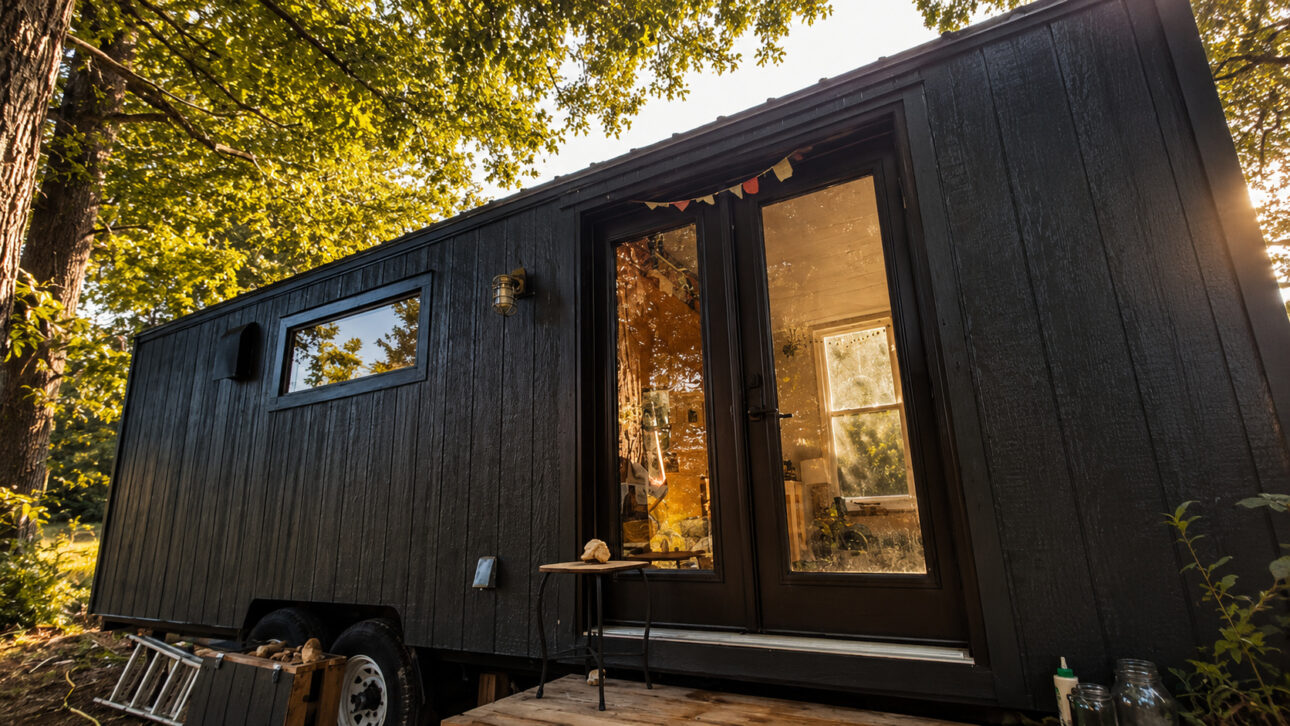
The higher roof also contributed to giving a sense of spaciousness. In a reduced area, height, light, and few furniture pieces make a difference in how the resident perceives the space.
Kitchen, bathroom, laundry, and bedroom on the same floor show how every corner was thought out
The kitchen and bathroom were placed close to each other. This choice facilitates the passage of water and energy, as it concentrates part of the structure in a smaller area of the house.
The kitchen features a countertop made of reclaimed wood, appliances hidden behind sliding doors, and a support area for meals. These are simple but important solutions in a compact dwelling, where nothing can take up space unnecessarily.
The bathroom received a glass shower box, a small sink, a composting toilet, and space for a compact washing machine. A composting toilet is a type of bathroom that treats waste differently from a regular toilet, often used in small homes and projects with less fixed infrastructure.
Bedroom without a high bed facilitated the routine and also became a space to store objects
Carina preferred a bedroom on the same floor, without relying on a high bed. This choice makes daily life more comfortable because it eliminates the need to climb up to sleep.
The bed was also designed as a wardrobe. It lifts to reveal an internal space for storing objects. Integrated drawers increase storage capacity.
This detail shows a basic rule of small homes: the furniture needs to solve more than one problem. In limited space, a bed, bench, and wardrobe are no longer just furniture but become part of the home’s organization.
Open living room became a space for relaxation, movement, and creative projects
The living room was kept more open, with few fixed pieces of furniture. Carina wanted an open environment where she could relax, move around, and carry out creative projects.
This decision aligns with the proposal for a simpler life. When the house is small, each object needs to justify its presence because excess weighs on circulation and routine.
The story shows that self-construction is not just about raising walls. It’s also about deciding how a person wants to live, what really needs to be stored, and which choices make sense within a smaller space.
Building her own house changed Carina’s relationship with tools, space, and autonomy
By building the home, Carina learned to handle tools and came to know every part of the house. This type of involvement creates a different relationship with the space because the resident understands what was done and why each decision was made.
The experience also reinforces the female presence in an environment still largely associated with men. The story does not romanticize the difficulty of construction but shows a woman learning, making mistakes, adjusting, and arriving at a finished house.
A compact home on wheels by Carina Inka brings together three strengths: getting out of rent, reusing materials, and practical learning in construction. The result is a small house, but full of well-thought-out decisions for daily life.
For those who follow renovations and construction in Brazil, the case leaves a simple message: reducing waste and better planning of space can change a project. Even so, building on your own requires time, care, and technical support when necessary.
Do you think a compact home on wheels would be a real solution to escape rent, or does this type of housing still face challenges that are too difficult? Share your opinion and share with those who enjoy creative construction.






Be the first to react!