






 Portuguese
  Spanish
  5 min of reading
  0 comments


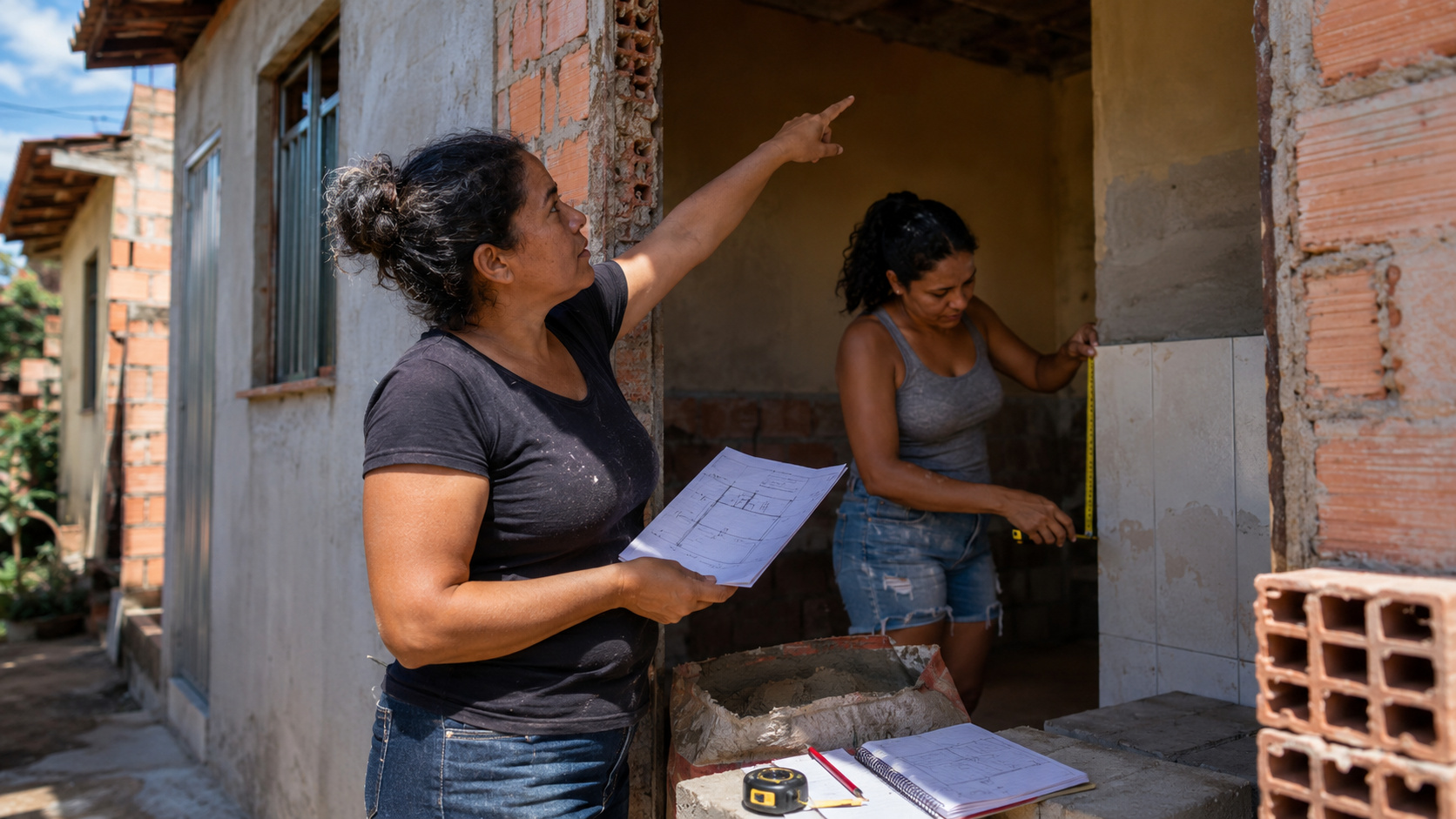
The popular renovation took a different path in Belo Horizonte when peripheral women began to understand construction planning, budgeting, materials, and simple design before altering the house, reducing decisions made in haste and increasing control over each stage of construction
Women from the outskirts of Belo Horizonte learned to draw, calculate materials, and plan renovations to transform their own homes more safely before the work begins.
The information was released by Arquitetura na Periferia, a technical advisory project for women. The initiative highlights a common reality in Brazil: many families renovate their homes gradually, with little money, without an architect, and with fear of overspending.
The central point is simple. When the resident understands the renovation, she makes better decisions. This changes the relationship with builders, materials, budgeting, and priorities within the home.
-
Man Builds Solar-Powered Tiny Home to Escape Rent, Faces Demolition Order in Expensive Australian Region

-
Facing a Shortfall of 83,900 Homes, Curitiba Considers Social Housing with Public Units, Reduced or Free Rent, Prioritizing Seniors, Victims of Violence, and the Homeless

-
Abandoned Building in Brazil’s Vitória to Be Transformed into 44 Affordable Housing Units with Government Funding
-
Brazil Launches First National Registry to Identify Millions of Gifted Children Hidden in Classrooms, with Only 56,000 Officially Recognized So Far


When the woman stops just requesting the renovation and starts understanding the work
In many peripheral homes, the work begins out of urgency. A room needs improvement, a wall is bothersome, the bathroom has issues, or the family needs to adapt the space.
Without guidance, the renovation can become a series of quick decisions. Buy material, break a wall, change the plan, run out of money, and the family tries to resolve it as best as they can.


The project changes this logic by teaching women to look at the house before the first purchase. They learn to make simple drawings, understand measurements, think about materials, and organize what needs to be done first.
This learning does not turn the resident into a professional in construction. It provides a foundation for her to participate in decisions and not be completely dependent on others.
The project was born from Carina Guedes’ research at UFMG
Architecture in the Periphery, a technical advisory project for women, notes that the work began in 2013, during the master’s research of architect Carina Guedes at the School of Architecture of the Federal University of Minas Gerais, UFMG.
The research dealt with technical advisory for low-income women’s groups, focusing on housing improvement. In simple terms, this means providing architectural guidance to those who usually build and renovate without this type of support.
Between 2015 and 2017, the work continued within ASF Brazil, a non-profit association located in Belo Horizonte. In 2018, with the growth of the initiative, it was formalized by the Institute of Women’s Advisory and Innovation, IAMÍ.
The origin of the project helps to understand why the proposal is not limited to teaching construction. The focus is also on autonomy, information exchange, and women’s participation in choices about their own homes.
Calculating materials before purchase avoids costly mistakes in renovation with limited funds
In popular renovation, every bag of cement, every piece purchased, and every service contracted weighs on the budget. When money is tight, a mistake can delay everything.
Therefore, calculating materials before starting makes a difference. The resident begins to better understand what will be necessary, what can wait, and what needs to be prioritized.
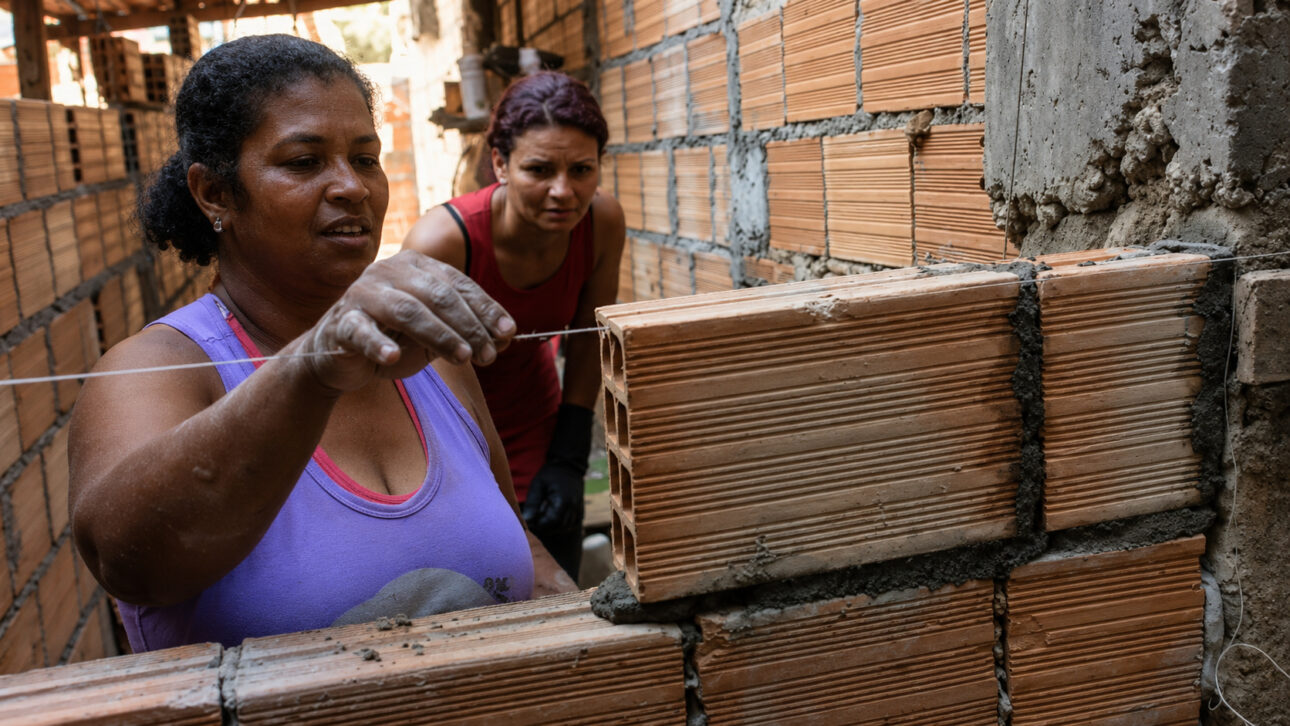
This type of planning helps reduce waste. It also prevents the family from buying impulsively or accepting changes without understanding the impact on the final cost.
The renovation remains difficult because it involves money, time, and work. But the decision becomes clearer when the family knows what they intend to do and where they need to start.
The simple drawing helps transform the resident’s idea into a renovation plan
Many people know what bothers them at home, but cannot explain it in the form of a plan. The simple drawing solves part of this problem.
With a sketch, the resident visualizes the space better. A sketch is a basic drawing of the house or room, made to organize ideas before the construction.
This drawing helps to communicate with the person who will execute the service. It also facilitates the comparison between what the family desires, what fits the budget, and what can be done at that moment.
When the idea moves from just conversation to drawing, the renovation no longer relies solely on memory. The house starts to be thought of more calmly.
Technical guidance changes the conversation with builders and reduces dependency
The presence of builders remains important in many renovations. What changes is the resident’s position in this relationship.
When she understands measurements, materials, and stages of the work, she can ask better questions. She also notices when a decision might increase costs or create a new problem later.
This reduces the total dependency on the person executing the service. The woman stops just accepting a ready-made guidance and starts participating in the choice.
In practice, the work gains more dialogue. The resident understands better what she wants, the professional understands the request better, and the chance of improvisation decreases.
Why popular renovation needs planning before any wall breaking
In Brazil, many houses grow gradually. A room appears when there is extra money. An improvement is made when the problem becomes urgent. A stage is left for later because the budget ran out.
This way of building is part of the reality of thousands of families. However, when there is no planning, the house may accumulate poor solutions, repeated expenses, and projects that never end as the family imagined.
The project in Belo Horizonte shows that technical guidance can fit into the lives of those who renovate with little. It is not about luxury. It’s about understanding one’s own house before spending.
For women in peripheral areas, this knowledge also carries another weight. It places the resident at the center of the decision and shows that construction, budgeting, and building do not need to be distant topics from the female routine.
The experience in Belo Horizonte shows that planning popular renovation can change life inside the house even before the wall is ready.
When women learn to draw, calculate materials, and organize the work, the house stops being renovated just on improvisation and starts being thought of with more autonomy.
Do you think guidance projects for popular renovation should reach more neighborhoods in Brazil to avoid waste, debt, and total dependency on third parties?






Be the first to react!