






 Portuguese
  Spanish
  6 min of reading
  0 comments


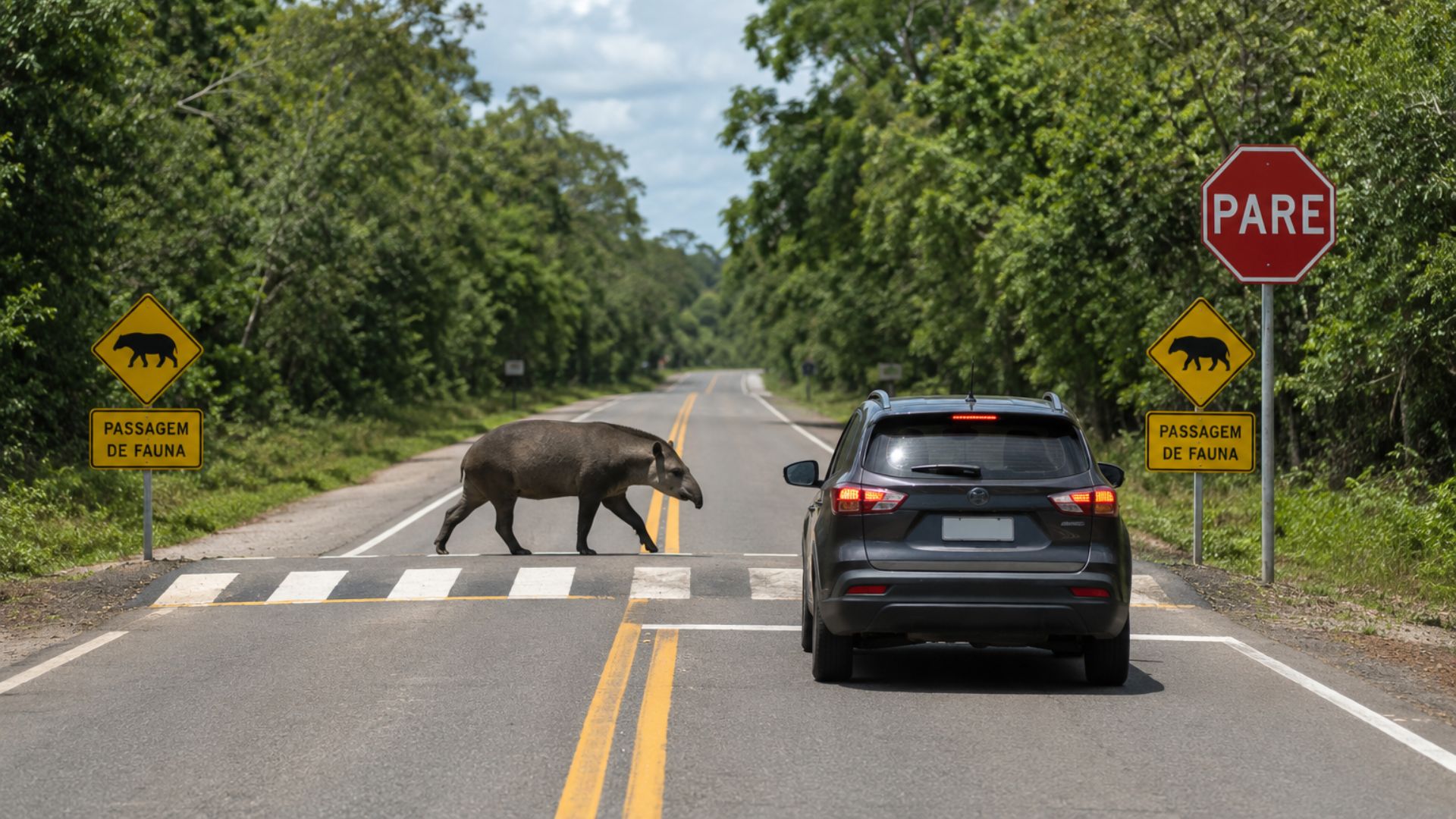
Project approval in the Chamber paves the way for the installation of wildlife crossings on Brazilian highways and railways, after more than a decade of processing. Planned measures include tunnels, green bridges, fences, signage, and national monitoring to reduce accidents involving wild animals and drivers.
After more than a decade of processing in the National Congress, the Chamber of Deputies approved, this Wednesday (06), Bill 466/2015, which establishes rules to reduce accidents involving wild animals on Brazilian roads, highways, and railways.
Now, the proposal goes to the Federal Senate for analysis, a stage considered decisive for the creation of a national policy aimed at protecting fauna and preventing collisions that also put drivers and passengers at risk.
The text establishes the National Road Safety Plan for Wild Fauna, a mechanism that should guide works, environmental studies, signage, and the installation of crossing structures in sections considered critical by environmental authorities and bodies responsible for road infrastructure.
-
6-Year-Old Boy Finds 1,000-Year-Old Viking Sword During School Activity in Norway

-
Mother Who Orchestrated Her Daughter’s Genius Education Enters History After Crime That Still Mystifies Spain

-
Brazil to Allocate 3% of Affordable Housing Program in 38 Cities for Homeless, Paving Way for First Property Transfers to Formerly Unhoused Residents

-
Man Builds Handcrafted Wooden Cabin in Canadian Forest Using Only Trees and No Construction Crew



With this, the expectation is to reduce the number of run-over incidents recorded annually in the country and, at the same time, decrease accidents capable of causing deaths, serious injuries, and material damage in different Brazilian regions.
According to the project approved in the Chamber, construction, recovery, and capacity expansion works on terrestrial routes must consider, whenever technically necessary, solutions aimed at preventing accidents involving wild species in areas of intense circulation.
Among the planned measures are aerial and underground crossings, guiding fences, bridges, walkways, warning signs, speed reducers, and other protection structures, which can be adapted according to the environmental characteristics and animals present in each section.
Project creates national policy to protect wild fauna
The proposal approved by the Chamber is a substitute reported by Congresswoman Duda Salabert, from PSOL of Minas Gerais, to PL 466/2015.
The project was presented by congressmen Ricardo Izar and Célio Studart and received other appended propositions during its processing.
In the session, Duda Salabert stated that the country needs to face the impact of roads on biodiversity.
“We have the greatest biodiversity, but we are the country that runs over the most animals on highways,” said the rapporteur during the vote on the proposal.
The plan should function as a planning and coordination instrument between public authorities, environmental agencies, road managers, and concessionaires.
Actions should prioritize sections with a higher incidence of accidents, especially where highways and railways cross environmentally sensitive areas.
Priority includes conservation units, buffer zones, ecological corridors, and areas already identified as critical points for fauna.
In these locations, prevention measures may combine physical structures, technical monitoring, and guidance for road users.
National registry will map animal run-overs
In addition to the changes planned for road infrastructure, the project determines the creation of the National Registry of Accidents with Wild Animals, a platform that will be under the responsibility of the Union and should gather updated information on occurrences in different regions of the country.
This database will concentrate information produced by bodies responsible for roads, highways, and railways, as well as surveys conducted by concessionaires, researchers, and institutions that monitor the impact of traffic on Brazilian fauna.
The platform should record information such as locations with the highest incidence, affected species, number of occurrences, and characteristics of the accidents.
This data should help in defining works, educational campaigns, and public policies aimed at road safety and biodiversity conservation.
The proposal foresees periodic updating of information to guide decisions based on evidence.
With this, risk sections can be mapped more precisely, allowing for the installation of structures appropriate to the reality of each region.
In addition to works and protection equipment, the Bill determines education and awareness actions.
The campaigns should reach drivers, riparian communities, road users, and the general population, focusing on collision prevention and activating rescue when an animal is injured.
Brazil records 475 million wildlife roadkills per year
Data from the Brazilian Center for Road Ecology Studies, linked to the Federal University of Lavras, indicates that approximately 475 million wild animals are run over every year on highways and roads across Brazilian territory.
In practice, this represents approximately 15 animals hit per second, a number frequently cited by researchers and environmentalists to demonstrate the scale of the impact caused by the road network on national biodiversity.
Most deaths involve small vertebrates, such as birds, amphibians, and reptiles.
Even so, roadkills also affect medium and large-sized animals, including capybaras, armadillos, crab-eating foxes, ocelots, maned wolves, tapirs, pumas, and jaguars.
The problem has environmental and road safety impacts.
When a large animal crosses a road, a collision can cause deaths, injuries, and material damage, in addition to affecting populations of threatened or vulnerable species.
In Mato Grosso do Sul, the death of tapirs on highways has become one of the most cited examples by conservation specialists.
Surveys by the National Initiative for the Conservation of the Brazilian Tapir pointed to hundreds of deaths of the species over a decade in the state.
The tapir, scientifically known as Tapirus terrestris, is considered vulnerable to extinction in Brazil.
By circulating through large areas and crossing roads in search of food, water, and shelter, the species is especially exposed in regions where roads cut through natural areas.
Highways and railways will have structures for animal crossing
Unlike previous proposals focused solely on highways, the text approved by the Chamber includes roads, highways, and railways, expanding the scope of measures for different types of infrastructure used in cargo and passenger transport.
The inclusion of railways was advocated by animal protection organizations and also by specialists who monitor the impacts caused by the expansion of logistics infrastructure on native vegetation areas and ecological corridors.
Crossing structures may vary according to the type of animal and the environment.
Tunnels usually serve smaller and medium-sized terrestrial species, while aerial passages and green bridges can favor arboreal animals and species that avoid crossing open roads.
Guiding fences also play an important role, as they prevent animals from entering the road directly and guide them to safer crossing areas.
Without this combination, isolated passages may lose efficiency or not be used by the intended species.
The proposal does not create a single solution for the entire country.
Instead, it establishes that the measures must consider the necessity, effectiveness, technical feasibility, and environmental characteristics of each section, a point considered essential in a territory with very different biomes and species.
Bill proceeds to Federal Senate for analysis
After approval in the Chamber of Deputies, Bill 466/2015 will be forwarded to the Federal Senate, where it will undergo a new stage of discussion before a possible presidential sanction.
If the senators approve the text without changes, the proposal will go directly to the President of the Republic for analysis, who is responsible for the sanction that could transform the bill into federal law.
If there are changes, the bill will return to the Chamber for new analysis.
The processing took more than a decade to reach the Chamber’s plenary.
During this period, the topic gained support from civil society organizations, researchers, parliamentarians linked to the animal cause, and groups working on road safety.
World Animal Protection classified the approval as an advance in the wildlife protection agenda and highlighted that the proposal brings environmental conservation and accident prevention closer together.
The organization also advocates that implementation be accompanied by public data and technical criteria.
The effectiveness of the future law, if approved by the Senate and sanctioned, will depend on regulation, available budget, and integration among federal, state, municipal bodies, and concessionaires.
Practical execution will be decisive in transforming risk maps into road interventions.





Be the first to react!