






 Portuguese
  Spanish
  4 min of reading
  0 comments


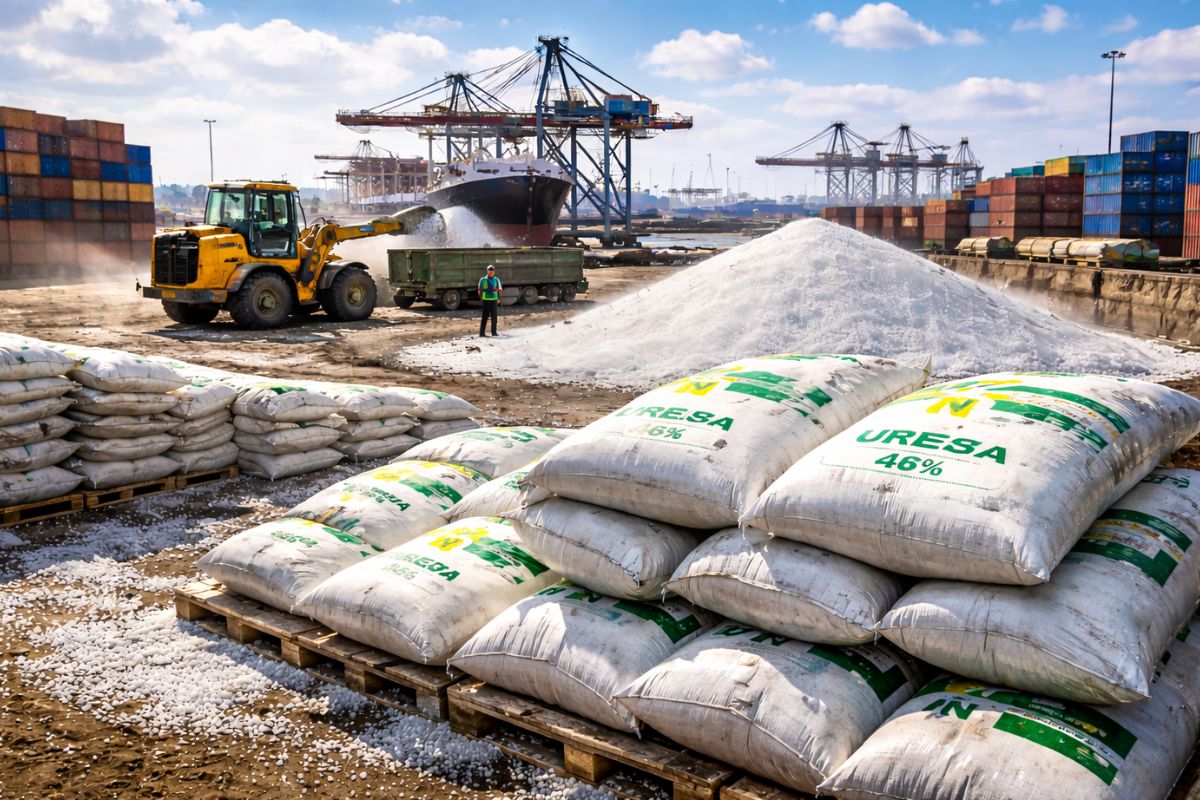
With urea prices rising, imports come into focus and fertilizers become more expensive; producers seek efficiency to secure nitrogen.
On April 14, 2026, urea was already priced at R$ 272 per bag in one region of Brazil, according to reports from the database. The price rose quickly, and the explanation pointed out is the conflict involving Israel, the United States, and Iran, which affects expectations, logistics, and import costs.
What makes many people cautious is that, according to the same explanation, the biggest impact may not have arrived yet. The strongest window for imports related to this route usually runs from May to December. So, if tensions continue into May, the trend is for the market to become even tighter.
Why urea has risen now and what is the cited trigger

The database relates the increase to the conflict and cites that from January to March, there was an increase of almost 75% in the price of urea at the ports. There is also a data point to gauge the risk: today, the amount of urea that Brazil brings from these regions represents about 36% approximately.
-
Brazilian Joins Homeownership Consortium, Faces Decade of Dual Payments Totaling $141,000, Surpassing Traditional Mortgage

-
Land Rover to Halt Production in July, Putting 371 Jobs at Risk, as Chinese Automaker Negotiates to Convert Factory to 100,000 Vehicles Annually by 2027

-
Mexican Pest Threatens U.S. Cattle Herds at Historic Lows, Potentially Boosting Brazilian Beef Exports as Burger Prices Soar

-
Brazilian Freight Bill Progresses in Congress with $5,000 Minimum Wage, 70% Advance Payment, and Fines Up to $1 Million, as Agriculture and Industry Warn of Rising Costs and Legal Uncertainty


This does not mean that the country depends solely on this, but it is a sufficient volume to affect the market. When the scenario becomes unstable, prices tend to react even before the product runs out.
The game-changing point: stronger imports from May to December
The most important part of the reasoning is the calendar. The database states that urea imports from this region typically occur from May to December and that about 70% of these imports are concentrated in this period.
Translating to everyday terms: if the conflict prolongs into May, June, and July, the chance of urea prices rising further increases. If there is an agreement and the situation eases, the market may gradually adjust supply and demand, without an immediate turnaround.
What else besides the conflict factors into the price
The database reminds us that it is not only the input coming from the region that weighs in. Other factors include:
Dollar
Diesel and oil
Supply and demand
Inflationary pressure
Even so, the message is that the duration of the conflict tends to have the greatest weight, as it involves uncertainty and the period in which imports actually occur more strongly.
2026 with less fertilizer: high price and tight cash


According to the data, there is already a forecast for lower fertilizer use in 2026 compared to 2025. The cited data is:
2025: 49 million tons
Forecast 2026: 47 million tons
The justification appears in two points: high fertilizer prices in general and the tight financial condition of the producer. The data also mentions an increase in judicial recoveries in 2025, with more than 200 farms and companies requesting judicial recovery, as a sign of tight margins and more constrained purchases.
In the short term, there is no “miracle”: the path becomes efficiency
The data is quite realistic: there is no easy alternative in the short term. Replacing urea with ammonium nitrate, for example, can also be expensive and does not change much when you look at the cost per unit of nitrogen delivered.
The practical solution is to gain efficiency, because urea has significant nitrogen losses, mainly due to volatilization. And, with tight margins, these losses weigh more.
Among the points mentioned to reduce losses:
Good incorporation
Apply at more strategic moments
Fertilize close to rain, for the rain to incorporate
When possible, consider fertigation and splitting
Protected urea is mentioned as an option, but with the caveat that it is more expensive and needs to be evaluated on a case-by-case basis.
Long term: organic matter, straw, and cover crops
For the medium and long term, the data points to the addition of organic matter as the most solid path. The logic is to increase nitrogen in the soil and gradually reduce dependence on soluble nitrogen fertilizers.
Examples such as manure, chicken litter, composting, and practices like cover crops and straw are highlighted as fundamental. The data itself reinforces that this is not an immediate solution, but it builds protection against expensive fertilizers in subsequent harvests.
Dependence on imports and its weight in real life
The text mentions that Brazil imports a large part of its fertilizers, citing “about 80%” and also “88%”, with the observation that the exact number would need to be checked. Regardless of the percentage, the message is that external dependence limits quick reactions when geopolitics tighten and costs rise.
In the end, urea becomes a thermometer of risk: when the conflict escalates and the import period approaches, price tension tends to increase.
And now tell me, in the simplest way: how much is urea in your region and are you already changing anything in fertilization to avoid losing nitrogen unnecessarily?





Be the first to react!