






 Portuguese
  Spanish


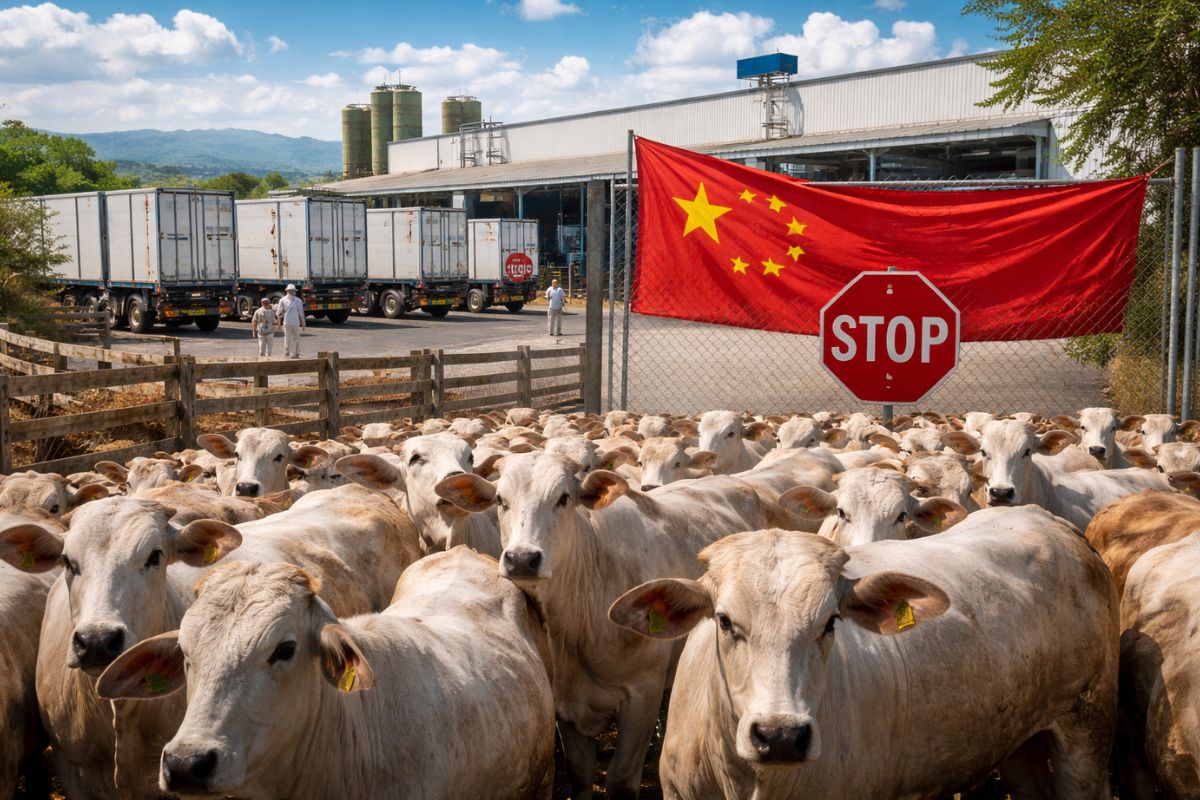

The import of meat to China faces a temporary blockage in Várzea Grande; analyst says demand continues and cattle prices do not automatically drop.
The suspension of beef imports to China, involving a slaughterhouse in Várzea Grande, Mato Grosso, has become fuel for anxiety in the market. However, according to analyst Júlio Briss, director of Rural Business, the case needs to be understood calmly, as this type of blockage happens and does not always have a broad effect.
The point, he says, is to separate what is fact from what is noise. Not every news of halted meat imports means a general embargo, nor does it automatically lead to a drop in fat cattle prices. Before drawing conclusions, it is worth looking at the scope of the blockage and the context of supply and demand.
What was suspended in the meat import, according to the cited document
The report states that Chinese importers have temporarily suspended new import declarations for meat and products from the establishment located in Várzea Grande, attributed to Frigoçul, commercially known as “Sul Bif”.
-
At 14 years old, she worked in a factory in Hong Kong, studied economics abroad, and then entered the Chinese real estate market, which helped change the landscape of Beijing.

-
While NATO secured more than $10 billion in missiles and space surveillance at a single forum, Brazil still spends 1.1% of its GDP on defense and is stalling its own anti-aircraft system.

-
Corn ethanol attracts R$ 23 billion in 21 new plants and prepares for a nearly 50% jump in Brazilian production by 2027, even with high interest rates.
-
A newly opened terminal in the middle of the Amazon has begun transporting soy and corn through Amapá, eyeing the queue of ships that is congesting the ports in the South.


The reason mentioned is the detection of a substance that, according to the Chinese authority, is not approved for use in animals intended for food production and whose presence in food would be prohibited by Chinese legislation.
What China requested and the deadline for response

According to the text, after the detection, the GAC rejected the shipment and temporarily suspended new import declarations for meat products from the establishment, considering shipments from April 13 from the port of origin.
The Chinese authority also requested that the Brazilian side conduct the investigation, identify the causes, and adopt corrective and preventive measures, with results to be sent within 45 days. The same report states that, when contacted, the Ministry of Agriculture and the company did not provide comments by the time of publication.
Why the analyst says this blockage is not the “end of the world”
In the assessment presented, temporary blocks on a batch or a refrigeration unit are normal in international trade. It mentions that occurrences of this type also frequently appear in countries like the United States and Australia.
The reading is that the importation of meat goes through filters and controls, and temporary blocks can happen without becoming a structural problem for the entire sector. The mistake is to turn a specific episode into a panic headline.
It may just be a batch and that completely changes the size of the case
A detail that the analyst highlights is simple but changes everything: the block may have been directed only at a batch. If that is the case, the unit can continue operating normally while the issue is investigated and corrected.
Furthermore, the base mentions that the company would have other units in other states. In this hypothesis, even with the importation of meat temporarily suspended for one establishment, part of the demand could be directed to other plants, depending on operational organization and the requests from importers.
Cattle price and headline: why they don’t always go together
Another point of the comment is to observe what is happening with fat cattle in the state. The example used in the base points to an appreciation in well-finished cattle in Mato Grosso, mentioning that on April 15, 2025, the value was R$ 345 and that it reached R$ 385@ in proposals, an increase of 11.5% in that period.
The message here is very direct: if the price is supported by supply and demand fundamentals, a headline about meat importation does not collapse everything overnight. It can generate noise, it can create psychological pressure, but it is not automatic.
China’s demand in 2026 and the argument that remains on the table


The analyst also uses projections attributed to the USDA to say that China continues to have a relevant demand scenario in 2026. The base mentions a declining local cattle herd, a projected reduction in beef production, and consumption above production, generating an estimated deficit.
In the reading presented, this reinforces the idea that China still needs to seek large volumes of beef, and that, for this reason, meat importation should not be treated as if it were “ending” due to a specific block.
What to follow from here on, without entering hysteria
If the news caught you by surprise, it’s worth following three things that the case itself puts on the table:
If the blockage is of batch or plant, because the impact changes a lot
What corrective measures appear in the investigation, within the mentioned timeframe
How the market uses the headline, because not all alarm is information
The import of meat to China is important, but the actual size of the effect depends on the scope of the suspension and the market context. When the conversation turns into a generic threat, usually someone is trying to buy cheap by making a fuss.
And for you: in what you follow, news of suspended meat imports usually really affects cattle prices or, most of the time, it just becomes talk to pressure the producer?








