Portuguese
  Spanish


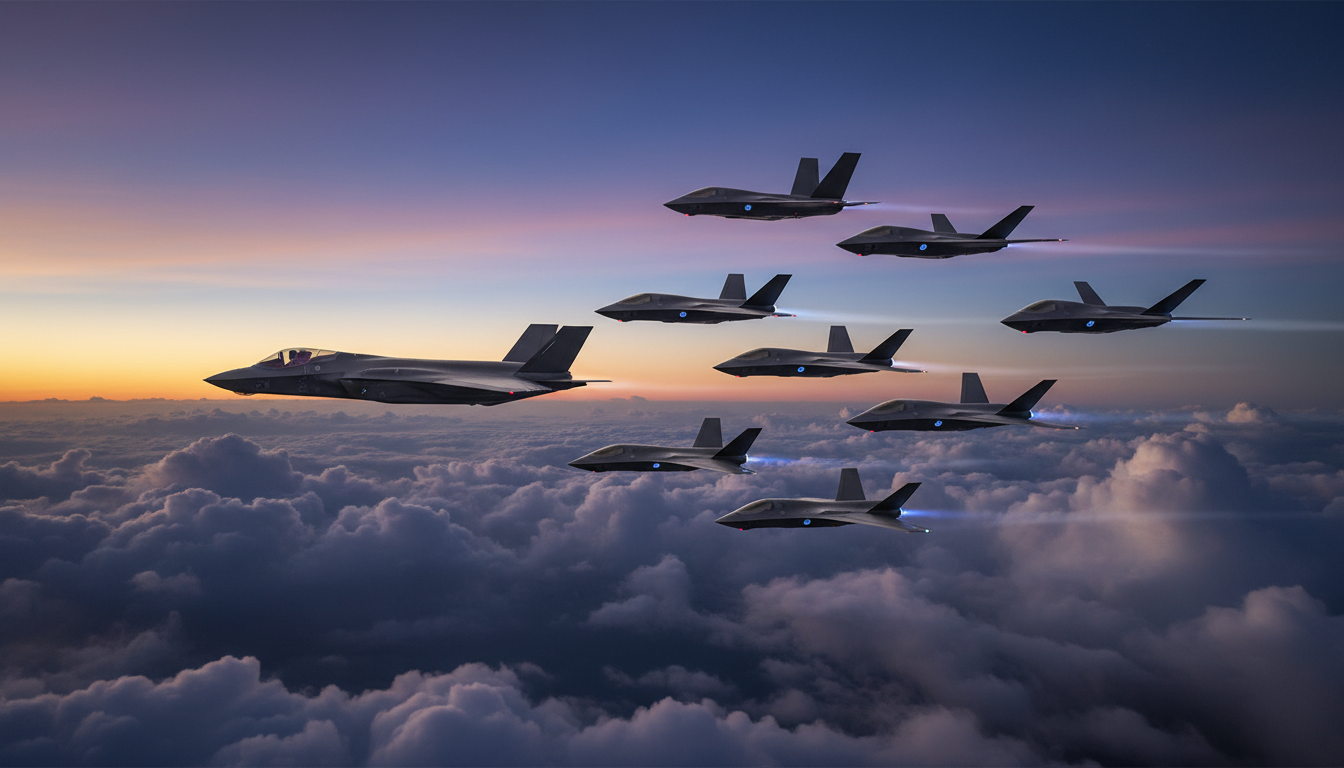

The United States Air Force has just taken a step that could redefine the future of aerial combat around the planet, and this time there is no pilot inside the aircraft leading the change.
In April 2026, American military personnel from the Air Combat Command’s Experimental Operations Unit conducted for the first time a series of semi-autonomous flights of the YFQ-44A Fury autonomous combat drone, developed by Anduril Industries, at Edwards Air Force Base, California.
The test marks a watershed moment in the CCA program, short for Collaborative Combat Aircraft, which aims to have at least a thousand autonomous combat drones flying alongside the most advanced manned fighters in the American arsenal in the coming years.
-
Scientists Develop Battery Using Mineral Found in Bones and Chalk, Surviving 1,000 Charges While Retaining 75% Capacity, Paving the Way for a Lithium-Free Future

-
Super-Earth Twice the Size of Our Planet Discovered Nearby, Offering Clues About Life Beyond the Solar System
-
Teen Invents Promising AI Device to Detect Eye Misalignment Using 3D-Printed Visor and Small Cameras for $300

-
Bosch Unveils Series 8 Dishwasher with Zeolith Drying, Voice Control, and Energy-Efficient Features




The central idea of the program is simple in theory, but revolutionary in practice: to create a fleet of unmanned aircraft controlled by artificial intelligence that function as “loyal wingmen,” accompanying F-22, F-35 fighters, and the future F-47 in real combat missions.