Portuguese
  Spanish


Biological devices with living human cells simulate organ functions in space to reveal the impacts of microgravity and radiation on astronauts, aiding future missions to the Moon, Mars, and terrestrial medical research.
While giant rockets and lunar bases dominate the announcements of the new space race, one of the most important research projects of NASA literally fits in the palm of your hand. Scientists are sending small biological devices to space, approximately the size of a flash drive, that can mimic functions of human organs such as the heart, lungs, liver, and brain. The goal is to discover how the human body reacts to the extreme environment of deep space before future trips to the Moon and Mars.
These devices are known as “organ chips” or “organs on chips.” Despite their small size, they contain living human cells organized in microstructures capable of partially reproducing real biological behaviors. Some models can simulate heartbeats, blood flow, lung respiration, and even inflammatory responses observed in the human body.
The experiment gained importance because long space missions are still surrounded by biological uncertainties. Scientists know that microgravity and radiation affect muscles, bones, and blood circulation, but they still cannot fully predict the cumulative impact on vital organs during years away from Earth.
-
Scientists Convert Food Waste into Aviation Fuel, Successfully Test 50% Blend with Conventional Kerosene to Cut Emissions and Promote Sustainable Flights

-
OnePlus N6 Smartphone to Launch in India with 8,000mAh Battery and 45W SuperVOOC Charging, Lasting Up to Three Days
-
Scientists Plan to Release Air Bubbles Underwater to Protect Antarctica’s “Doomsday Glacier” from Melting

-
Chinese R6000 Drone Combines Airplane and Helicopter Features, Carries Up to 12 People for Multiple Missions
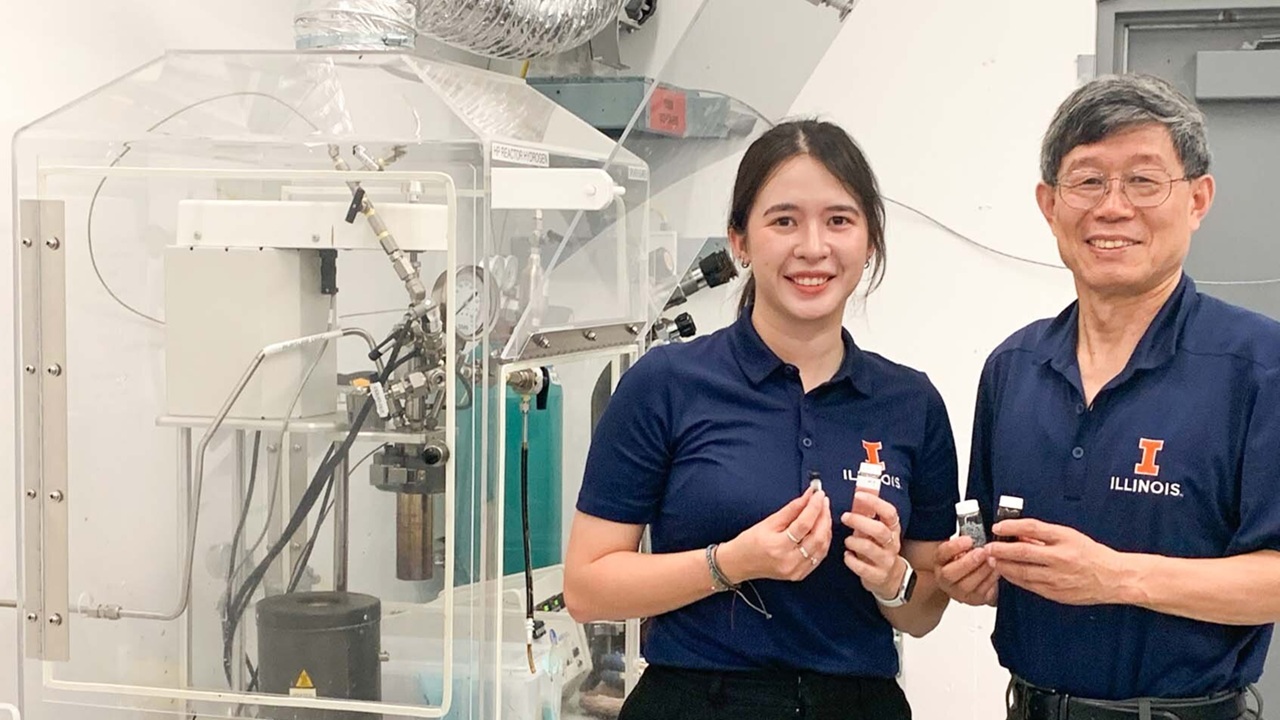



Biological chips the size of a flash drive attempt to reproduce real functions of the human body in space
The organs on chips use microscopic microchannels lined with living human cells capable of mimicking the basic functioning of real tissues. According to scientific materials released by NASA, these devices can reproduce important biological interactions involving fluid circulation, nutrient absorption, and cellular response to extreme environments.

The compact size allows dozens of these chips to be transported simultaneously on space missions. This transforms small devices into extremely sophisticated biological laboratories capable of operating within the International Space Station or on future lunar missions. In practice, researchers have created miniaturized versions of human organs to observe how living tissues behave outside the planet’s natural protection.
NASA wants to discover how microgravity and space radiation affect the heart, lungs, and brain
One of the biggest concerns of future space missions involves the impact of the deep space environment on the human body. Outside of Earth’s low orbit, astronauts are exposed to much higher levels of cosmic radiation and energetic solar particles.
Scientists suspect that this exposure could cause cardiovascular changes, neural degeneration, lung damage, and unpredictable cellular changes in short missions. Organs on chips allow observation of these effects in living tissues before exposing humans to extremely long journeys. This is considered crucial because a manned mission to Mars could last years, leaving astronauts completely isolated from Earth-based medical support.
Chips can “beat,” “breathe,” and simulate miniature blood circulation
The most impressive aspect of these systems is the ability to reproduce real biological functions on a microscopic scale. Some heart models can generate contractions similar to heartbeats, while lung chips simulate respiratory movements and gas exchanges.
There are also models that reproduce vascular barriers, liver tissues, and simplified neural connections. All of this in devices small enough to easily fit in an astronaut’s hand. These systems allow real-time observation of how human cells react to the absence of gravity and prolonged space radiation.
Missions to Mars may depend more on human biology than on rocket power
For decades, space exploration was primarily seen as an aerospace engineering challenge. Today, scientists believe the biggest obstacle may be biological. Even if rockets can reach Mars, there is still doubt whether the human body will withstand years in deep space.

Cardiovascular problems, bone loss, muscle degeneration, and neurological changes have already been observed in relatively short missions on the International Space Station. On much longer journeys, these effects could become much more severe. Therefore, research involving organs on chips has become strategic for the future of human space exploration.
AVATAR project uses real astronaut cells to create personalized mini-organs
Among the most advanced experiments is the AVATAR initiative, which uses cells from the Artemis II mission astronauts themselves to produce personalized tissues on chips. The proposal is to create biological models extremely close to the real organisms that will participate in future lunar missions.
This allows for the analysis of how specific individuals might react to the deep space environment. In practice, scientists can study potential biological vulnerabilities in advance, even before the mission launch. This approach represents a significant shift in space medicine, bringing research closer to a more personalized and preventive model.
The International Space Station has become an advanced medicine laboratory off Earth
The International Space Station is no longer just a platform for traditional physics and astronomy experiments. In recent years, it has also started functioning as an advanced center for biomedical research involving human tissues, organoids, and bioprinting.
The microgravity environment offers conditions impossible to perfectly reproduce on Earth. This allows researchers to observe unique cellular behaviors, accelerating studies on aging, neural degeneration, and regenerative medicine. Biological chips are precisely part of this new generation of space experiments focused on human health.
Scientists believe that space can accelerate biological processes difficult to study on Earth
Some researchers suspect that microgravity might accelerate certain cellular phenomena related to aging and human tissue degeneration. This would transform the space environment into a sort of “biological shortcut” for studying complex diseases.
Instead of waiting years to observe certain changes on Earth, scientists could analyze similar changes in much shorter periods in space. This would aid research related to the heart, brain, lungs, and cellular aging. The possibility has made organ-on-chip an extremely promising tool for both space exploration and terrestrial medicine.
Artificial intelligence helps scientists interpret millions of biological signals generated by the chips
The experiments produce enormous amounts of data involving cellular metabolism, electrical activity, genetic expression, and structural changes in tissues. To handle this, researchers use advanced artificial intelligence systems capable of detecting patterns invisible to traditional methods.

These algorithms help scientists identify early signs of cellular damage caused by radiation and microgravity. Without this automated processing, it would be nearly impossible to interpret the enormous volume of information generated by biological chips. This shows how future space missions will increasingly depend on the integration between biotechnology and artificial intelligence.
Small chips can define the biological limits of human exploration of deep space
The most impressive aspect may be the fact that devices approximately the size of a flash drive are being used to answer some of the most important questions of modern space exploration. Before sending humans on extremely long journeys, scientists want to discover which organs withstand space better and which tissues present the greatest biological risk.
These small living laboratories may end up defining how far humanity can travel without the human body itself becoming the greatest obstacle to space exploration. In the end, the mini-organs sent to space may be as important for future missions as rockets, ships, and lunar bases.