Portuguese
  Spanish


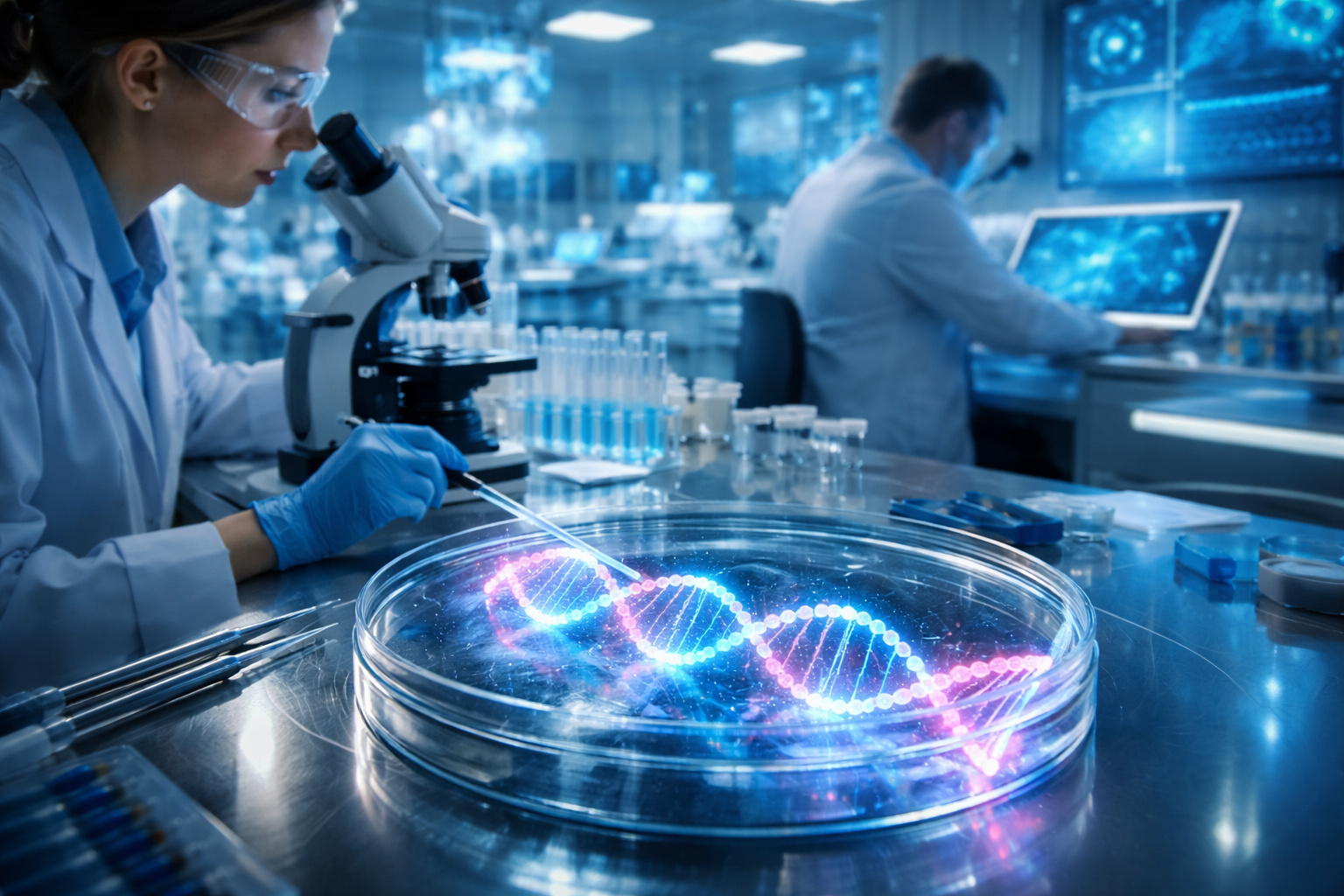

Synthetic Human Genome Project Redefines Scientific Expectations, Deepens Studies on DNA and Repositions Ethical Limits of Biotechnology
A significant scientific breakthrough was recently announced by researchers in the United Kingdom, attracting the attention of the global academic community. The development of artificial human life has begun to be regarded as a concrete scientific possibility, albeit initial and strictly controlled. The central point of this advancement is the start of the Synthetic Human Genome Project (SynHG), which aims to create human DNA from scratch in the laboratory, using digital data from the genome.
This movement represents a significant shift in synthetic biology. Unlike traditional approaches, the project does not modify existing genes, but seeks to construct complete genetic sequences, ushering in a new phase of studies on how human genetic material functions.
Institutional Support and Funding Structure the Project
The SynHG has support from leading scientific institutions, such as the universities of Cambridge and Oxford, as well as governmental and private entities. To enable the initial phase, the project received funding of £10 million, an amount equivalent to about R$ 72.5 million, considered strategic for the development of the research.
-
Detectorist found a 900-year-old silver coin

-
A newly discovered caterpillar in Hawaii wears the remains of its prey that it devoured as a macabre armor, stitching bones and insect shells to its own back for camouflage.

-
She heard for decades that space was not a place for women, became a pioneer in aviation, was part of the Mercury 13, and at 82, finally traveled with Jeff Bezos before dying at 87.
-
Scientists investigate microplastics in the airways of patients with sleep apnea and reveal a new focus for research on environmental pollution, human exposure, and possible impacts on breathing quality.



According to the scientists involved, the goal is to develop a synthetic human chromosome within five to ten years. This chromosome would correspond to approximately 2% of total human DNA, a proportion sufficient to allow in-depth analyses without advancing to the creation of a complete organism. Thus, the project remains experimental and controlled, aligned with international scientific standards.
Building DNA from Scratch Expands Genetic Understanding
The central proposal of SynHG is to use only digital information from the human genome to build synthetic DNA in the laboratory. Subsequently, this material would be inserted into living cells, allowing for the observation of its behavior, stability, and biological impact.
Researchers emphasize that the goal is not to create an artificial human, but to better understand how DNA functions, how genes interact with one another, and how genetic failures result in diseases. In this way, the knowledge generated could transform the understanding of human biology.
Medical and Scientific Applications in Focus
Among the expected impacts, advancements in the treatment of rare genetic diseases, cancer, and degenerative disorders stand out. With synthetic chromosomes, scientists could design cells more resistant to viruses, correct complex mutations, and create more accurate biological models for pharmacological testing.
Furthermore, the technology could reduce dependence on animal experiments, contributing to more ethical scientific practices. At the same time, areas such as regenerative medicine, gene therapies, and tissue production could be directly benefited.
Ethical Debates Accompany Scientific Advances
Despite the scientific potential, the project raises relevant ethical concerns. Experts warn of the risks of misuse of the technology, as well as possible inequalities in access to future treatments. The moral limits of creating artificial human genetic material are also under discussion.
Therefore, those responsible for SynHG state that the project will be monitored by independent ethics committees. In addition, the development anticipates extensive public debate, reinforcing commitments to transparency, accountability, and compliance with international standards.
The Advancement of Artificial Life in a Broader Perspective
The development of synthetic human DNA is part of a global trend of increasingly advanced research in biotechnology, which seeks to deeply understand the mechanisms of life. At the same time, these advancements require a balance between scientific innovation and ethical responsibility.
Thus, the Synthetic Human Genome Project enters a new stage of science, where the knowledge of the human genome advances in a controlled manner, yet with transformative potential for medicine and for understanding life itself.
In light of this scenario, to what extent should the advancement of synthetic biology be driven to enhance medical treatments without crossing ethical boundaries that are still being redefined by science itself?