Portuguese
  Spanish


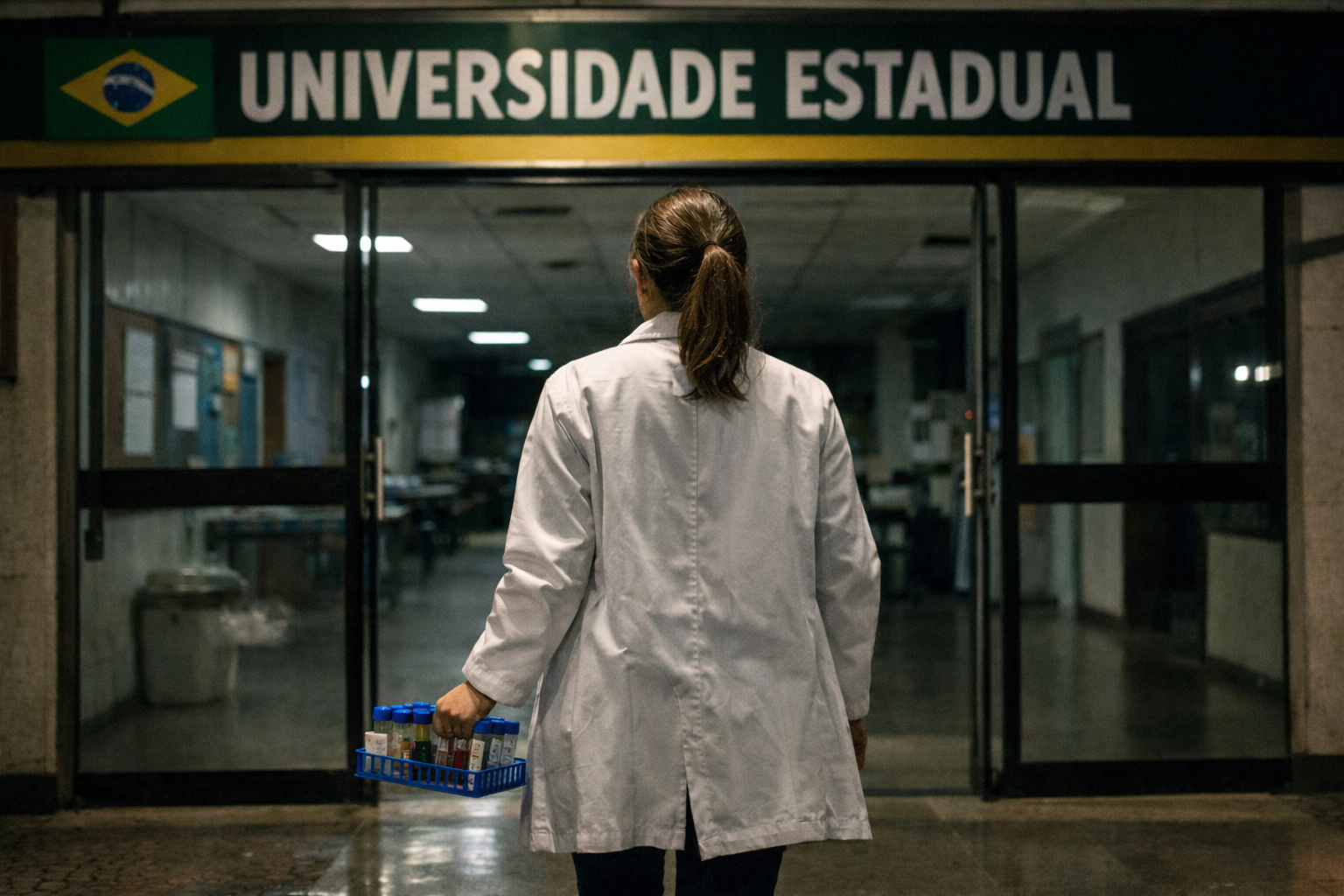

Case of stolen viruses at Brazilian university put Unicamp at the center of a federal investigation after the disappearance of biological material from a laboratory classified for agents with potential to cause severe diseases.
Unicamp came under national scrutiny after biological materials were stolen from the Laboratory of Virology and Applied Biotechnology of the Institute of Biology, an environment classified as biosafety level 3 (NB-3). The case gained immediate attention because this type of laboratory is intended for handling agents capable of causing severe diseases, with the possibility of respiratory transmission and the requirement for enhanced containment.
The university itself confirmed the biosafety level of the space, while the Federal Police reported that the investigation began after communication made by the institution.
The investigation progressed quickly. On March 23, the Federal Police caught a suspect in the act of stealing the material, executed two search and seizure warrants in Campinas, and located the stolen samples, which were sent to the Ministry of Agriculture and Livestock for analysis.
-
Oceanographer Turns Abandoned Fishing Nets from Brazilian Waters into Bags, Creating Jobs and Earning Over $7,000 Monthly

-
Australia deploys poisoned sausages and uses traps, shooting, and fences in a battle against invasive cats that kill over 1.5 billion native animals annually, threatening more than 200 species.

-
NASA Rover Captures “Tired Face” on Mars, Highlighting Human Brain’s Tendency to See Faces in Rock Formations

-
Ancient Stone City in the Desert, Once Home to 30,000, Puzzles Scientists with Nabateans’ Water Mastery 2,000 Years Ago




The operation had technical support from Anvisa, and those investigated began to face charges, according to each individual’s responsibility, for crimes such as qualified theft, procedural fraud, and irregular transportation of genetically modified organisms.


What does a NB-3 laboratory mean within Unicamp
The significance of the case lies in the type of facility involved. The guidelines from the Ministry of Health describe the NB-3 as an environment focused on working with biological agents of risk class 3, associated with high individual risk and moderate risk to the community.
These are agents that can cause serious or potentially lethal diseases, requiring physical barriers, strict protocols, access control, and specific containment practices. Among the examples cited by the ministry itself are Bacillus anthracis and HIV.
At Unicamp, this type of structure is neither improvised nor recent. The official history of the Institute of Biology records that, in 2022, the Laboratory of Virology and Applied Biotechnology NB-2 and NB-3 was inaugurated, which helps to underscore the scientific importance and the level of control required by the space where the diversion occurred.
Stolen viruses increased tension, but Anvisa dismissed risk to the population
The repercussions increased when information came to light that the displaced material included 24 viral strains, among them samples associated with dengue, chikungunya, zika, herpes, Epstein-Barr, human coronavirus, and viruses that infect animals.
Even with the seriousness of the episode and the symbolic weight of discussing stolen viruses at a State University, the technical response from health authorities cooled the fear of a collective threat.
In an official statement published on March 30, Anvisa stated that, based on the information available at that time, it found no evidence of a health emergency resulting from the material.
The following day, the Rectorate of Unicamp reinforced that the agency had officially confirmed that the stolen items did not pose a risk to public health or the general population.
The university also stated that there were no genetically modified organisms among the materials and classified the episode as isolated, occurring under atypical circumstances.
Federal Police, internal investigation, and technical silence keep the case under pressure
Even with the recovered material, the case remains open and serious. Unicamp reported that it has initiated an internal investigation and maintains full cooperation with the Federal Police and judicial authorities.
In another note, the rectorate made it clear that it would not disclose technical details or the specific content of the materials while the investigation is ongoing, to avoid compromising the inquiry.
The episode hit even harder because it affected a university that remains among the most respected in the region.
In December 2025, Unicamp itself announced that it ranked 2nd in the THE Latin America 2026 ranking, one of the main international surveys on higher education in the continent.
This does not diminish the impact of the theft, but helps to show why the case escaped common police news and entered the center of the debate on scientific security, biosafety, and control of sensitive material in Brazil.
What remains after the scare
The case of the stolen viruses at Unicamp mixed three elements that explode together: a NB-3 laboratory, material associated with serious diseases, and a federal investigation within one of the strongest universities in Latin America.
The rapid recovery of the samples and Anvisa’s opinion alleviated the risk of a health crisis, but did not erase the dimension of the alert.
When a high-containment environment makes the news due to the theft of biological material, the impact goes far beyond the campus walls.
Do you think the Unicamp case exposes a specific failure or reveals a larger problem in the protection of laboratories with sensitive material in Brazil? Share this article with those who follow science, security, and public universities.