






 Portuguese
  Spanish
  4 min of reading
  0 comments


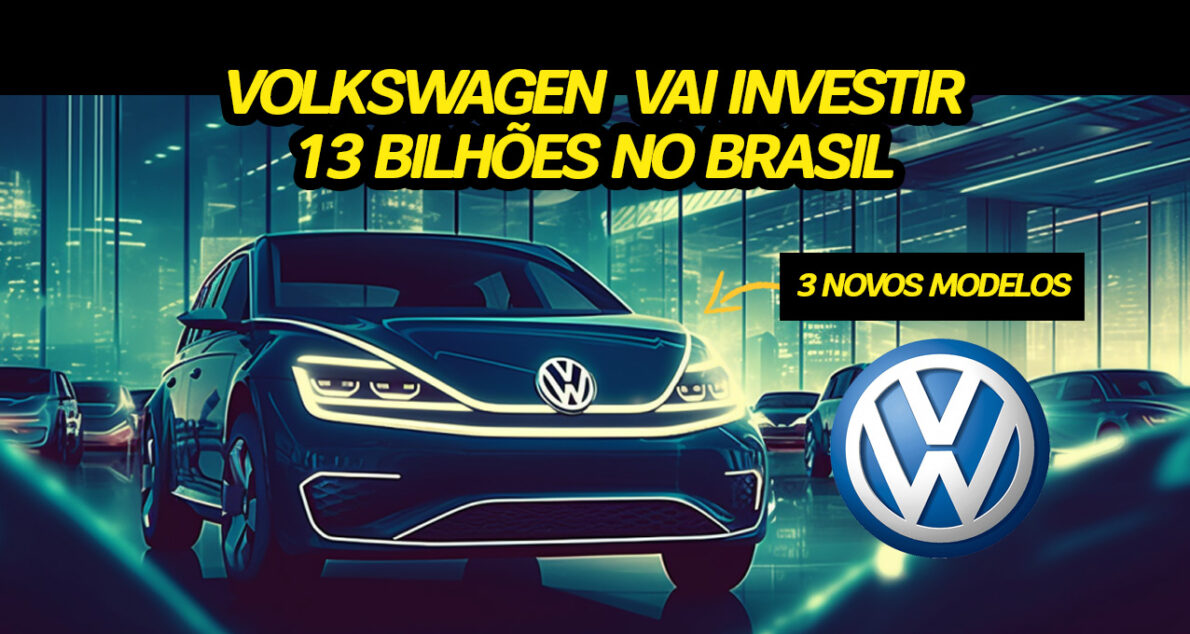
Volkswagen Surprises by Announcing Investment of R$ 13 Billion in Brazil, Focusing on the Production of New Models and Sustainable Innovation. The Automaker Bets on Modernization, Strategic Partnerships, and New Jobs, Positioning the Country as a Possible Automotive Innovation Hub.
In a move that caught many by surprise, Volkswagen announced a historic investment of R$ 13 billion in its factories in Brazil, putting the market on alert and the competition on notice.
This move is not only a reflection of the automaker’s confidence in the potential of the Brazilian market but also a clear signal that the country may be consolidating as an automotive innovation hub. But what lies behind this billion-dollar investment? And how will it impact the industry and the local economy?
Volkswagen’s Billion-Dollar Bet in Brazil
Volkswagen do Brasil revealed an ambitious plan to invest R$ 13 billion by 2028, as part of a total package of R$ 16 billion to modernize and expand its operations in the state of São Paulo.
-
Brazilian Joins Homeownership Consortium, Faces Decade of Dual Payments Totaling $141,000, Surpassing Traditional Mortgage

-
Land Rover to Halt Production in July, Putting 371 Jobs at Risk, as Chinese Automaker Negotiates to Convert Factory to 100,000 Vehicles Annually by 2027

-
Uber Faces Shareholder Scrutiny as Board Accused of Ignoring Safety, Compliance, and Harassment Warnings Amid Over 3,500 U.S. Lawsuits
-
Mexican Pest Threatens U.S. Cattle Herds at Historic Lows, Potentially Boosting Brazilian Beef Exports as Burger Prices Soar


According to the automaker, this massive investment aims not only at the production of new vehicle models but also at innovation in sustainable technologies and the development of more efficient engines.
Expansion and Modernization: Factories in Focus
Three Volkswagen units in São Paulo – Anchieta, Taubaté, and São Carlos – are the major beneficiaries of this investment.
The Anchieta plant, located in São Bernardo do Campo, will be responsible for the production of two new models, while the Taubaté unit will have the mission of developing a new vehicle, designed entirely in Brazilian territory.
In São Carlos, Volkswagen will invest in a new engine, designed to be more efficient and aimed at hybrid vehicles, as part of the company’s strategy to lead the sustainable vehicles market.
Innovation and Sustainability: Pillars of the New Investment
A significant portion of the investment will be directed to Volkswagen’s Design and Engineering Center at the Anchieta plant.
This center, recognized as one of the most advanced in the Volkswagen Group, plays a fundamental role in the development of new technologies, including those focused on sustainability.
An example of this is the adoption of biomethane as an energy matrix in the Anchieta and Taubaté plants, an initiative that promises to reduce CO2 emissions by up to 99% in part of the production process.
The Economic and Social Impact
In addition to technological advancements, Volkswagen already produces more than 22 million vehicles in the state of São Paulo in its 71 years of operation in Brazil.
The automaker’s factories currently generate about 10,000 direct jobs and over 100,000 indirect ones, highlighting the company’s importance to the local economy.
With the new investment, the expectation is that these numbers will increase, generating more opportunities and strengthening the automotive sector in the country.
Strategic Partnerships and Local Development
The Design and Engineering Center also maintains strategic partnerships with renowned universities, such as Unicamp, USP, and UFABC, for research in biofuels, ethanol, and sustainable materials.
These collaborations not only reinforce Volkswagen’s commitment to innovation but also ensure that Brazil remains at the forefront of technological development in the automotive sector.
The Future of Volkswagen in Brazil
With this investment, Volkswagen not only strengthens its presence in Brazil but also signals its bet on the future of the national automotive industry.
The creation of the MQB Hybrid platform, which has already enabled the launch of two new vehicles – the New T-Cross and the New Amarok – is a clear indication that the automaker is committed to leading the transition to a more sustainable and technologically advanced market.
The Global Impact of a Local Decision
The decision to invest massively in Brazil could have global repercussions, especially considering that the Volkswagen Design and Engineering Center in Anchieta is responsible for developing global products, including Total Flex engines.
With the inauguration of the most advanced solar simulator in the Americas, SoLiSi, scheduled for 2024, Volkswagen positions itself as a leader in innovation, capable of optimizing the development of new products with greater efficiency.
What to Expect from the Future?
The question that remains is: will this billion-dollar investment from Volkswagen manage to transform Brazil into a true center of automotive innovation?
With the promise of new models, sustainable technologies, and thousands of new jobs, expectations are high. It remains to be seen whether the automaker will be able to fulfill all promises and, more importantly, whether the Brazilian market will be ready to embrace this new era of innovation.
Did you find any mistakes? Let us know!





Be the first to react!