





 Portuguese
  English
  Spanish
  3 min of reading
  0 comments



Among people with higher income and education, liking nature did not mean emitting less. The study shows that those who talk the most about the environment can also maintain a travel and consumption pattern that weighs more on the climate.
Even among people who say they value nature, the environmental footprint can remain high — and, in some cases, even higher. This is pointed out by a study cited by newscientist, showing that among groups with higher income, education, and professional prestige, those most aligned with ecological discourse also appear among those who emit the most carbon.
The research drew attention for contradicting a common idea: that concern for the environment, by itself, would change consumption behavior. In practice, the study indicates that green values are not enough when the lifestyle remains dependent on frequent flights, larger homes, and other high-impact habits.
The scientists involved argue that the focus needs to shift from the individual to more stringent changes in public policies. For them, campaigns that rely solely on environmental awareness tend to have a limited effect given the lack of truly accessible alternatives for many people.
-
13 researchers from the USA, Italy, Germany, the United Kingdom, and Spain have discovered new traces of the megaflood that returned the Mediterranean to the map: 5.97 million years ago, the sea turned into a salt desert for 640,000 years and was then invaded by the Atlantic in a geological catastrophe that still challenges science.

-
Brazil has just joined the select group of countries capable of manufacturing a 100% national jet turbine for military drones, alongside the United States, United Kingdom, France, Israel, and China. It is the heart of the new Albatroz Vortex, which flies for 24 consecutive hours and reaches an altitude of 12,000 meters.

-
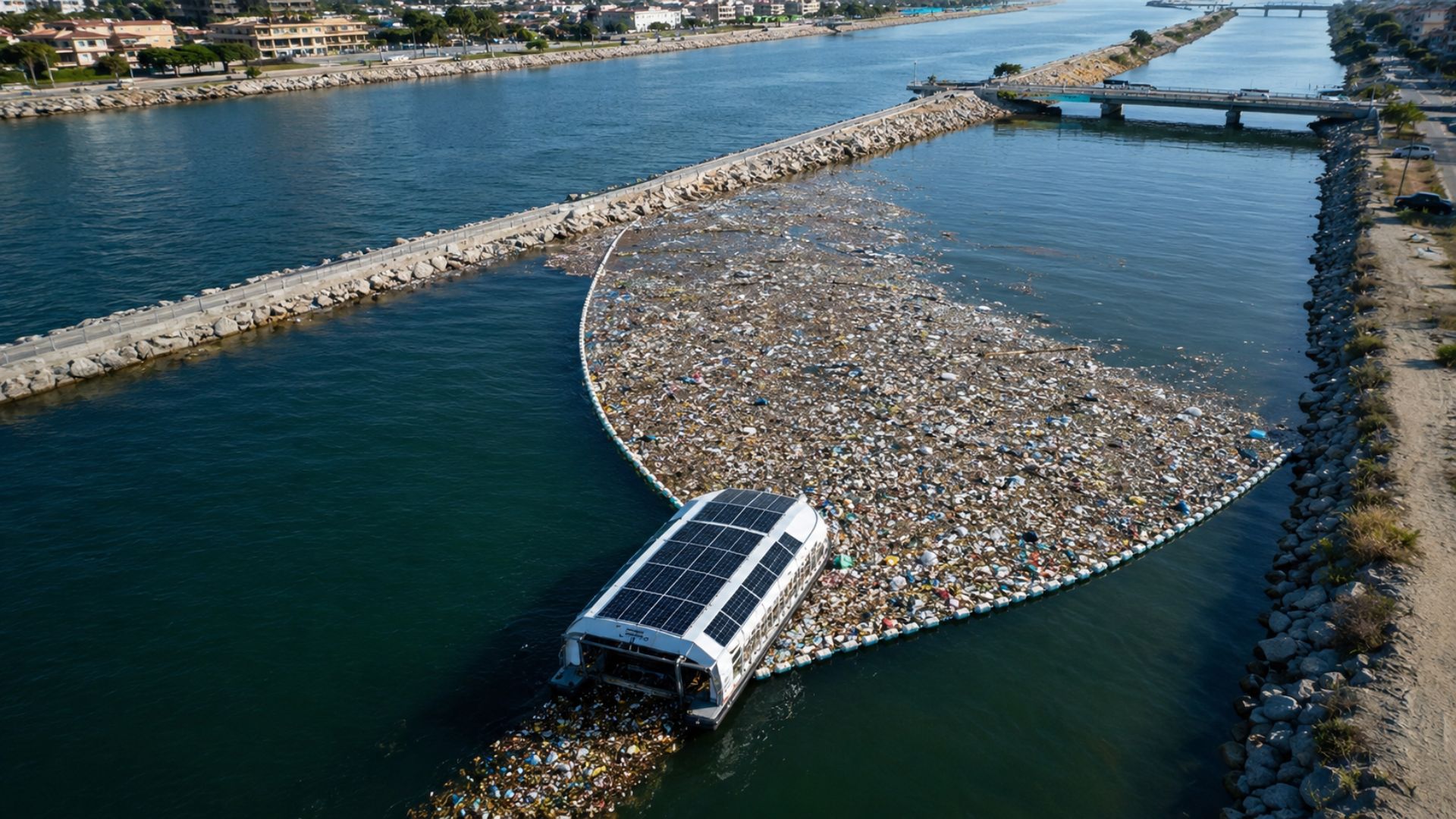
A silent boat powered solely by solar energy sits in the middle of the planet’s most polluted rivers, swallowing up to 50 tons of trash per day, and it does this alone, without fuel and without stopping, before the plastic reaches the ocean.
-
SpaceX will dock a $843 million vehicle to the International Space Station to push a nearly 420-ton laboratory against the atmosphere and make the debris fall in a controlled manner into the ocean.




What the researchers found in 5,000 people
The survey interviewed 5,000 people in Canada, France, Germany, Italy, the United Kingdom, and the United States. Participants answered questions about income, wealth, education, and job prestige, in an attempt to measure each one’s socioeconomic status.
Then, the researchers asked what these people thought about nature, climate, and waste. Next, they cross-referenced the responses with information about meat and dairy consumption, house size, waste generation, vehicle use, and flight hours, to estimate a broader ecological footprint.
Among the majority of respondents, an expected relationship appeared: the more importance someone gave to nature preservation, the smaller their environmental footprint was. But this logic changed among the top 30% richest and most educated.
When love for nature does not reduce emissions

At the top of the socioeconomic scale, the people most sympathetic to the environmental cause ended up having a larger footprint than their peers. According to the researchers, the main reason was simple: this group travels more by plane.
And the airplane remains one of the most carbon-intensive forms of emission per person. The research suggests that, in this context, the habit of flying frequently weighs much more than actions like recycling, which help but have a much smaller effect on total emissions.
For Malte Dewies, from the University of Cambridge, one of the authors of the work, it is not about placing all the responsibility on individuals. He notes that low-carbon alternatives are still difficult to find for activities like flying, which limits behavior change even among those who want to reduce their impact.
Pressure on governments, not just on consumers
The study also contradicts the so-called environmental Kuznets curve, a hypothesis that suggested a decrease in pressure on the environment after a certain level of wealth. The authors state that the results do not support this view when the focus is on individuals, not just countries.
In the team’s assessment, trying to change emissions only with campaigns aimed at individual attitudes does not solve the problem. Micha Kaiser, also from the University of Cambridge, was direct in saying that, at some point, stronger measures will need to be adopted.
This comes at a time when some governments are already trying to change the price of air travel, with higher taxes on aviation in countries like the United Kingdom and Germany. Even so, the researchers assess that recent fare increases are probably not enough to deter high-income passengers.
The final message of the study is less about hypocrisy and more about limits. Even those who claim to be committed to the planet may remain stuck in habits that drive emissions up — and, for the authors, it is public policy that will determine if this truly changes. If the topic interests you, share the article and leave your opinion.




Be the first to react!