Portuguese
  Spanish


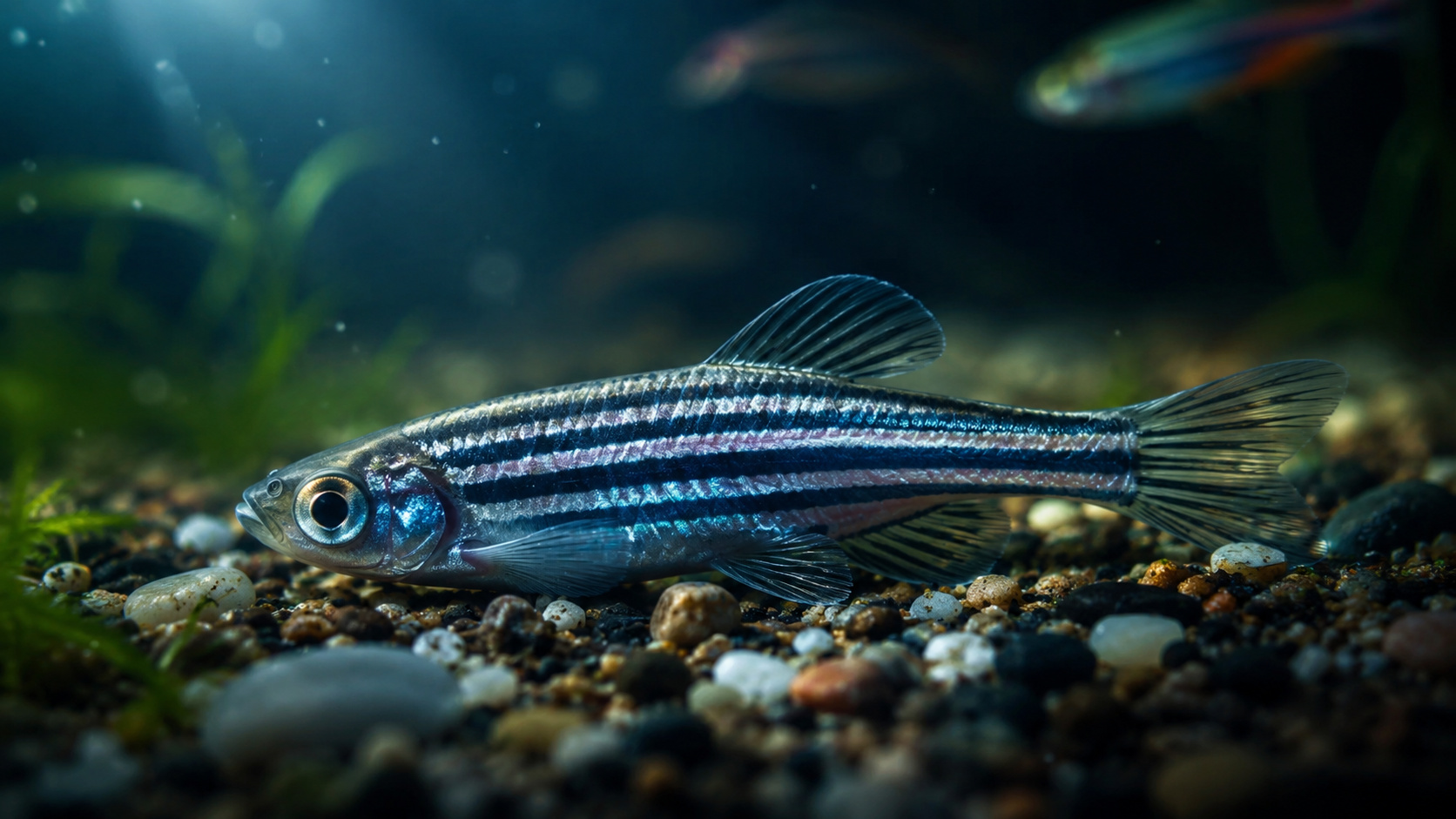

Researchers from Germany reveal new details about fish sleep and show how fish sleep, expanding the scientific knowledge of marine life.
For a long time, sleep was considered a characteristic more associated with mammals and birds. Now, a discovery made by researchers from Germany shows that fish also go through different stages of rest and exhibit surprisingly complex behaviors.
The study was conducted by the Max Planck Institute for Biological Cybernetics and published by the institution on May 6th. The research analyzed 105 zebrafish and identified four distinct sleep phases, including periods of deep rest accompanied by eye movements.
The discovery expands the knowledge about fish sleep and helps explain how fundamental biological mechanisms have emerged over hundreds of millions of years of evolution. Additionally, it offers new answers to a question that has intrigued scientists for decades: how fish sleep and why this behavior is so important for survival.
-
Iraq floats and sinks under an arm of the Euphrates 10 giant concrete boxes of 46,000 tons and 125 meters each to assemble a 2.4 km submerged tunnel and open a new land route between Asia and Europe.

-
Scientists use more than 20,000 artificial birds and solar speakers to “trick” seabirds, reactivate nesting routes, and revive a colony on an island that seemed abandoned.

-
She spent 73 years breathing inside an iron lung, survived the aftereffects of polio, and became the last woman in the United States dependent on the equipment before dying at 78 years old.
-
Brazilian students created a $1 filter using pine bark, cotton, and 3D-printed parts to clean cassava wastewater, reduce the toxicity of a hazardous waste, and transform contaminated water into biofertilizer.



Researchers from Germany reveal a more complex sleep architecture than previously imagined
The scientists developed an automated system equipped with cameras and microscopes to continuously track the animals’ eye movements. The monitoring allowed for the observation of behavioral patterns that previously went unnoticed.
The choice of zebrafish was not by chance. During the first weeks of life, they have transparent bodies, a characteristic that allows direct visualization of brain activity while they rest.
With this, the researchers were able to relate neural changes to the different sleep stages observed in the animals.


Fish sleep presents four distinct phases throughout the day
The results showed that fish go through four different states of rest.
Among the main characteristics identified are:
- A stage without eye movements;
- A phase with small lateral eye movements;
- A period in which both eyes remain directed in the same direction;
- Daytime episodes of deep sleep accompanied by frequent eye movements.
According to scientists, three of these phases occur predominantly at night, while the fourth occurs mainly during the day.
This organization drew attention because it presents similarities with patterns observed in other vertebrates, even after millions of years of independent evolution.
How fish sleep without closing their eyes
One of the biggest curiosities about the topic is related to the fact that fish do not have eyelids. Therefore, they do not close their eyes when they rest.
This characteristic made it difficult for decades to understand how fish sleep. Unlike humans, they do not show obvious external signs that clearly indicate the onset of sleep.
Thanks to new technologies used in the study, scientists were able to monitor the animals’ eye movements in real-time and observe important changes in brain activity during rest periods.
The results provide some of the strongest evidence yet obtained about the functioning of sleep in aquatic species.

The deep nap that surprised scientists
Among all the discoveries, one caught attention in a special way.
Researchers identified a daytime stage where fish remain motionless for short periods while making frequent eye movements. During this state, brain activity significantly decreases.
Additionally, the animals become more difficult to awaken, even becoming temporarily more vulnerable to predators.
This behavior was described by scientists as a kind of deep nap, something that further reinforces the complexity of fish sleep.
Scientific marine life gains new clues about the evolutionary origin of sleep
The researchers observed similar patterns in different individuals of the genus Danio, the group to which zebrafish belong.
The discovery suggests that this organized sleep structure may have arisen long before the appearance of modern mammals.
For scientific marine life, this conclusion is extremely relevant because it points to a very ancient evolutionary origin of the rest mechanisms currently observed in various groups of vertebrates.
In recent years, other studies have also identified sleep-like behaviors in simpler organisms, including jellyfish and sea anemones. These results strengthen the hypothesis that sleeping is a biological necessity deeply rooted in the history of animal life.
What eye movements can reveal about the brain
Despite the advances made by the research, many questions remain unanswered.
Scientists believe that the eye movements observed during certain phases may be related to important brain functions, such as information processing, memory consolidation, and neural maintenance.
Researcher Jennifer M. Li, one of the study’s authors, highlights that there is still great interest in understanding the specific function of each identified stage.
Zebrafish offer a rare opportunity for this type of investigation because they allow direct observation of brain processes that would be much more difficult to follow in other animals.
How fish sleep to save energy and increase survival
Rest is not only for recovering the organism. In evolutionary terms, it also represents an efficient strategy for conserving energy.
During some sleep phases, fish significantly reduce body and brain activity. This slowdown helps optimize the use of biological resources and can increase survival chances in challenging environments.
Among the benefits associated with sleep are:
- Energy conservation;
- Maintenance of brain functions;
- Physiological recovery;
- Better adaptation to the environment;
- Greater metabolic efficiency.
These factors help explain why fish sleep has been preserved over millions of years of evolution.
A discovery that changes the way we understand animal life
The work carried out by researchers from Germany shows that sleep is much older and more complex than science believed until recently.
By revealing details about how fish sleep, the research expands knowledge about brain evolution and offers new perspectives for the study of vertebrates.
For scientific marine life, the results represent an important advancement and indicate that many of the mechanisms present in humans may have much deeper roots in the planet’s evolutionary history.
Even separated by hundreds of millions of years of evolution, fish and humans seem to share a fundamental need: to periodically slow down so that the brain continues to function efficiently.