






 Portuguese
  Spanish


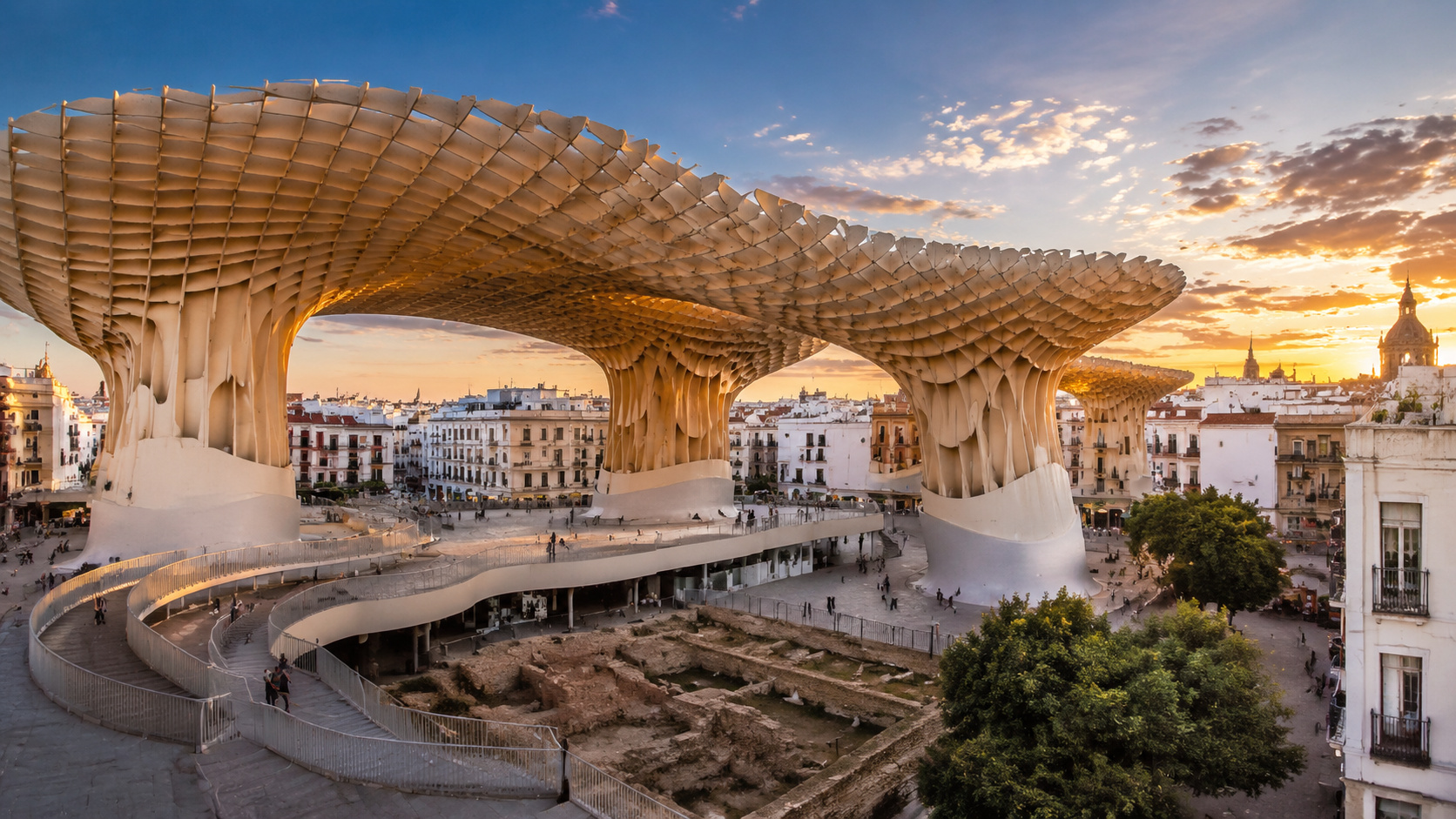

The square of Seville has gained six wooden mushrooms that transform the historic center with a panoramic viewpoint, active market, elevated walkways, and preservation of archaeological ruins, offering visitors a complete and innovative urban experience in a multifunctional space that integrates commerce, leisure, and history
The center of Seville now features one of the largest urban wooden structures in the world, covering the Plaza de la Encarnación with six giant mushrooms that stretch over 150 meters in length. The construction reorganizes the space, creates shade, and offers a panoramic viewpoint for residents and tourists, while maintaining the visibility of the archaeological ruins.
The project combines contemporary infrastructure with historical memory, bringing together a market, walkways, and a communal space in a single ensemble. Wood was chosen for allowing bold architectural solutions and ensuring stability for thousands of visitors daily.
The information was released by Archello, a platform specialized in architecture and design, an international reference in covering innovative urban projects, detailing the composition of the structure and its multifunctional role in the square.
-
Former Atacadão Employee Turns Online Cake-Baking Lessons into a Confectionery Brand with Factory, Store, Delivery, and Nearly $400,000 in Revenue

-
Brazilian Startup Sells Nearly 9 Million Surprise Bags of Near-Expiry Food, Prevents Thousands of Tons of Waste, Aiming for $42 Million Revenue by 2026
-
How to Prevent Brown Recluse Spider Bites: Common Hiding Spots and Free Tips to Reduce Risks

-
Natto: The Unusual Japanese Superfood Gaining Popularity on Social Media and Driving Record Exports




Why Seville built wooden mushrooms
The city needed to revitalize the historic center, creating a public meeting point with shade, organized circulation, and integration of commerce and leisure. The vertical structure allows efficient use of space without harming the existing ruins.


The project occupies an area of 150 by 70 meters and reaches 26 meters in height, providing visitors with a striking visual experience. Each mushroom is formed by thousands of wooden elements precisely connected, ensuring safety and durability.
How the curved structure supports itself over the historic square
The curved design of the mushrooms allows the construction to adapt to the terrain’s limitations and archaeological ruins. The structure is not just aesthetic, it supports pedestrian circulation and provides shade, becoming a functional element of the square.
The lower space keeps the ruins accessible and visible, balancing historical preservation and urban modernity. This model reinforces the cultural value of the square, bringing residents, tourists, and history closer together.
Market, viewpoint, and archaeology in the same project
The Metropol Parasol houses a public market at the square level, offering a variety of commerce. Above, walkways connect the mushrooms, providing panoramic views of Seville.
The archaeological ruins remain integrated into the complex, visible through open areas and elevated platforms. This arrangement combines leisure, culture, and commerce, creating a unique experience for visitors.
Technical challenges and construction costs
The complexity of the project resulted in engineering challenges and high costs. Creating one of the largest wooden structures in the world over ruins required innovative technical solutions.
Archello, a platform specialized in architecture and design, detailed the wooden elements, connectors, and support forms that provide stability and resistance against wind and the weight of the structure, showing the precision required at each stage of the construction.

What the project reveals about reoccupying old centers
The Metropol Parasol demonstrates that it is possible to revitalize historical areas with contemporary architectural solutions, integrating public space, commerce, leisure, and cultural heritage.
The structure shows that modernity and preservation can coexist, transforming the square into an urban and cultural reference point, valuing history and offering new experiences to visitors.
The report was published by Yatzer, an international architecture, design, and art outlet, known for covering contemporary urban projects, highlighting the innovation and impact of the Metropol Parasol in the center of Seville.
The historic square has become an urban landmark, combining beauty, functionality, and archaeological preservation.
Could you imagine yourself walking on these walkways and observing the history of Seville at the same time?








