Portuguese
  Spanish


Crossing over hostile sea combines scale, seismic risk, and unprecedented engineering solutions in one of the world’s largest suspension bridges, built over a decade and adapted after an earthquake during construction, solidifying its global reference in maritime infrastructure.
The Akashi Kaikyō Bridge in Japan has established itself as a global benchmark by connecting Kobe, on Honshu island, to Awaji island via a 3,911-meter suspension crossing, positioned over the Akashi Strait, a region marked by intense currents, constant navigation, and high seismic risk.
Japanese engineering and island connection
Between May 1988 and April 1998, the structure was built as part of the Honshu-Shikoku project, an initiative conceived to integrate the islands of Honshu and Shikoku through road and rail infrastructure, expanding connectivity in a strategic area of Japanese territory.
Over ten years, the work required specific solutions to overcome an open sea stretch without interrupting vessel traffic, which led to the development of techniques adapted to the natural conditions of the strait and the intense maritime flow of the region.
-
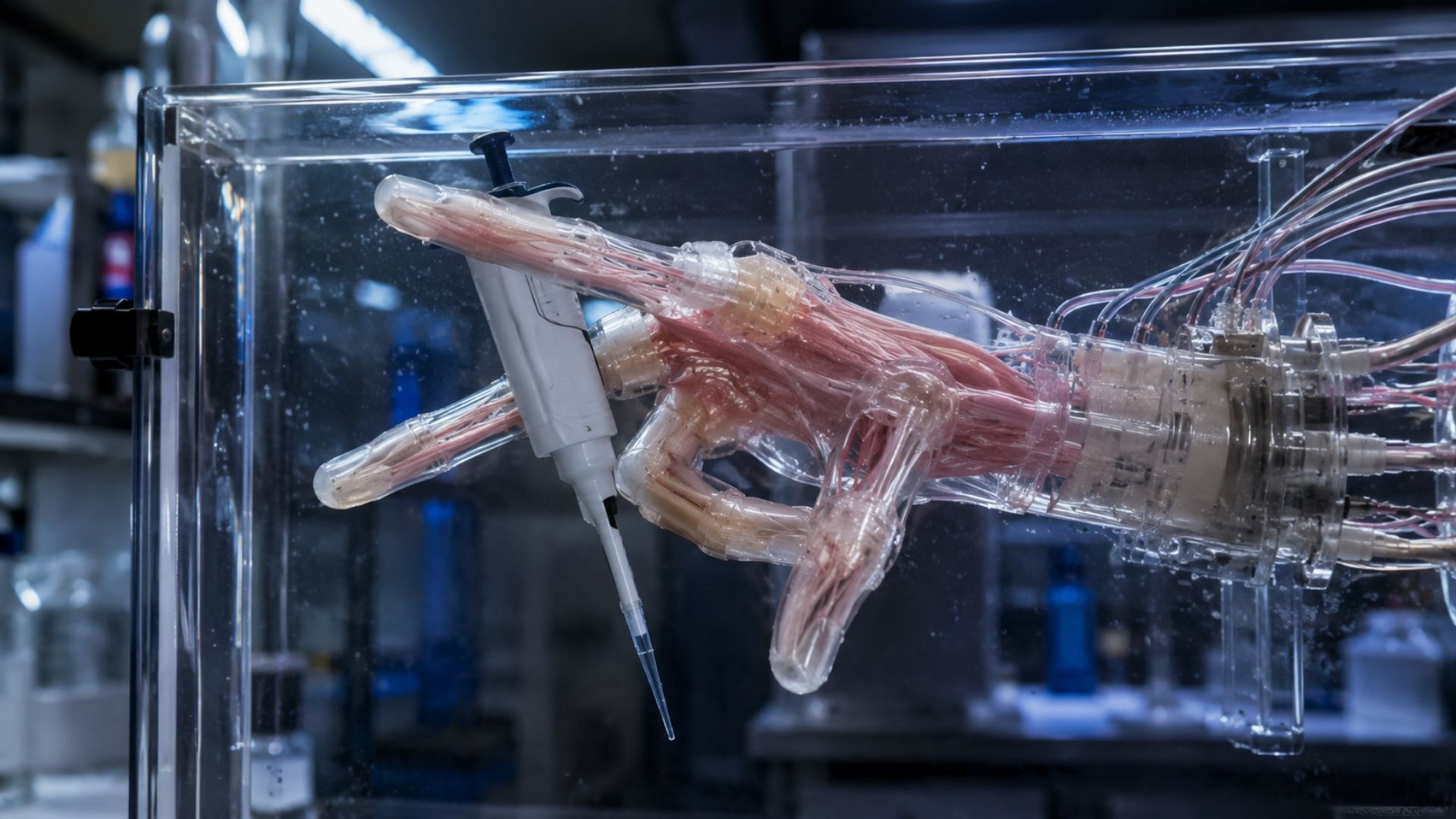
Tokyo Scientists Create First 18cm Biohybrid Hand Using Human Muscle, Capable of Scissor Gesture and Holding a Pipette

-
Brazil Faces Norway in World Cup at Stadium Linked to Jimmy Hoffa’s Mysterious Disappearance

-
Retired Woman Leaves French Public Housing Due to Fear, Lives in Van for Weeks, Prompting Response from Local Authorities and a Priest
-
9-Year-Old Fabio Isaac Wins Gold at Copernicus Math Olympiad in Singapore, Representing Peru Against Global Young Talents



According to the Honshu-Shikoku Bridge Expressway, responsible for the bridge, the main span reaches 1,991 meters, while the two side spans are 960 meters each, a configuration that positions the structure among the largest suspension bridges in the world.
Challenges of the Akashi Strait
In the Akashi Strait itself, natural conditions already posed considerable challenges, with about 4 kilometers in width, a maximum depth of nearly 110 meters, and tidal currents that can reach speeds of up to 4.5 meters per second.

In addition to these characteristics, the area functions as an international shipping route, receiving approximately 1,400 vessels per day, which required the structure to be designed without interfering with maritime passage.
To ensure this coexistence, the deck was elevated to about 65 meters above sea level, a sufficient height to allow safe ship traffic in a strategic region between Osaka Bay and the Seto Inland Sea.
Design to withstand winds and earthquakes
From the conception phase, the bridge was designed to withstand intense winds and major earthquakes, considering extreme gusts and seismic scenarios similar to those already recorded in the Hyogo prefecture region.
One such event occurred on January 17, 1995, when an earthquake struck the area during construction, at which time the main towers were already completed and the cables were still in the installation phase.
After the tremor, technical analyses indicated that the spans had changed in length, a result of the displacement of the foundations along the supporting ground, without any sliding between the structural base and the soil.
Impact of the earthquake during construction
Given this scenario, engineers had to revise the length of the main girder before the assembly was completed, adapting the design to the new conditions identified after the earthquake.
Instead of rebuilding already completed parts, the solution consisted of adjusting components that had not yet been manufactured, allowing the work to continue without compromising the integrity of the existing structure.

This episode was marked by an alteration of approximately 1 meter in the central span, becoming one of the most well-known characteristics of the Akashi Kaikyō and highlighting the need for adaptation in large-scale projects.
Structure and volume of the work
In addition to seismic risk, the execution of the foundations in open sea represented one of the most complex points of the work, with installation at depths close to 60 meters under conditions of rapid currents and challenging operation.
In this context, specialized equipment, divers, and support vessels operated in an environment that required constant precision to ensure the stability of the structural bases.
The dimension of the superstructure also highlights the magnitude of the project, as towers, cables, and girders total approximately 193.2 thousand tons, according to data from the Honshu-Shikoku Bridge Expressway.
Within this assembly, the girder accounts for approximately 89.3 thousand tons, reinforcing the volume required to support the crossing in a demanding marine environment.
When conceived, the bridge featured a central span about twice as large as previous suspension structures, requiring the development of proprietary technologies and specific tests to enable its execution.
Wind control and durability
Among the main technical challenges, wind control played a central role, leading to wind tunnel tests to evaluate the structure’s behavior against vibrations and gusts.
This care is justified by the fact that large-span suspension bridges exhibit greater sensitivity to aerodynamic movements, especially in exposed marine environments.
In parallel, durability was treated as a priority, with maintenance and operation planning aimed at preserving the bridge for more than 200 years, as reported by the operator.
Among the adopted technologies, the dry air injection system in the main cables stands out, responsible for maintaining controlled humidity levels inside the structure.
This reduces the risk of corrosion, a critical factor in constructions continuously exposed to the marine environment and decisive for the safety and longevity of the crossing.
Engineering landmark in an extreme environment
More than a road connection, the Akashi Kaikyō came to symbolize the ability to transform a critical crossing point into permanent, highly complex infrastructure.
By bringing together deep sea, intense traffic, severe winds, rapid currents, and seismic activity in a single work, the project established itself as an international engineering reference.
Its recognition stems not only from its dimensions but from the combination of scale, structural calculation, adaptation to unforeseen events, and long-term maintenance strategies in one of the most challenging environments for a suspension bridge.