Portuguese
  Spanish


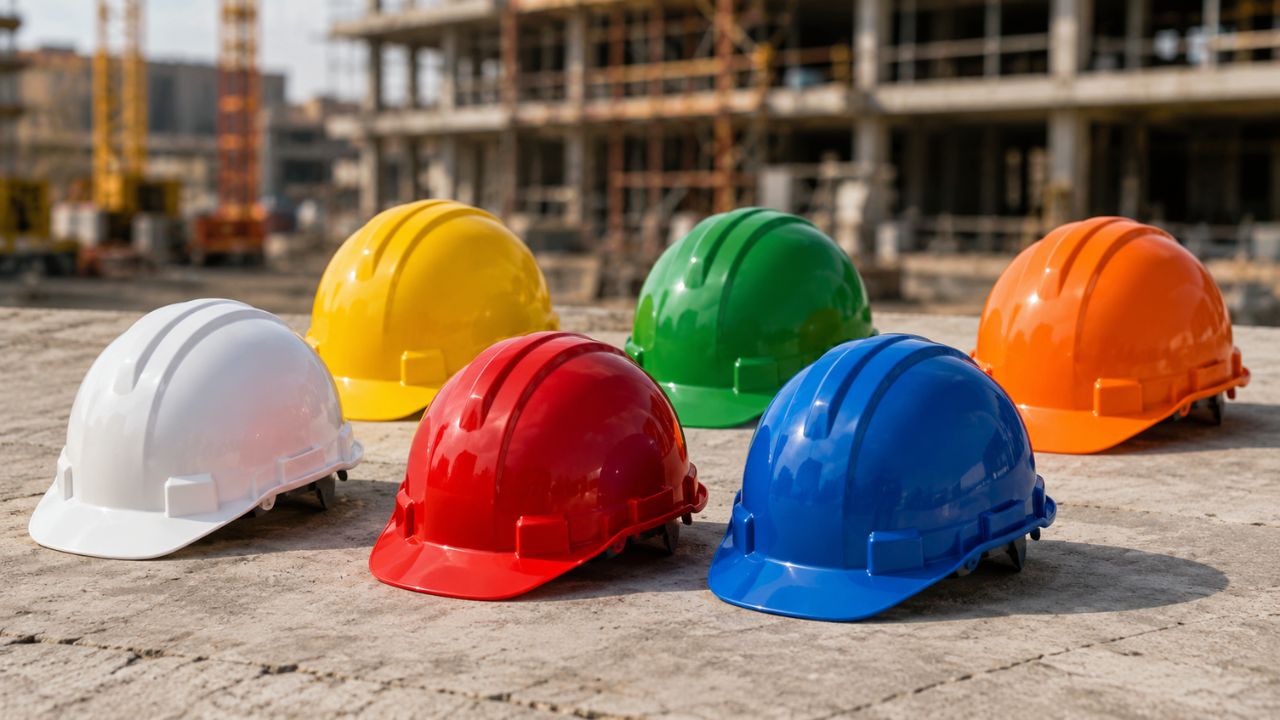

Helmet is mandatory in civil construction and its colors help identify roles, areas of activity, and safety teams.
Upon entering a construction site, one of the first visible differences among workers is the color of the helmet. More than a visual detail, this identification aids in team organization, facilitates the location of specific professionals, and contributes to safety procedures. Although Brazilian legislation does not mandate a national color standard by position, the sector has established widely used conventions to distinguish roles within civil construction.
Besides serving as a quick identification system, the helmet is a mandatory Personal Protective Equipment (PPE) in construction. According to the site Engenharia 360, its use is required by occupational safety standards and its main function is to reduce risks related to impacts, falling materials, contact with certain substances, and, in some cases, exposure to electricity.
Why has the color of the helmet become important in construction?
In environments where dozens or even hundreds of people work simultaneously, visual communication gains strategic importance.
-
Singapore Turns Incinerated Waste Ash into Construction “Sand” in Ambitious Project to Revolutionize Megacity Waste Management

-
Brazilian Entrepreneur Turns Passion for Amazonian Cocoa into a Million-Real Chocolate Business After Studying in France

-
Structural Report Reveals Serious Issues at Historic Corinthians Stadium, Engineer Recommends Partial Demolition

-
For a Decade, a Young Sudanese Innovator Builds Robots from Electronic Scrap in a Makeshift Lab in Omdurman




Instead of looking for specific badges or uniforms, field teams can quickly identify certain professionals just by observing the color used in head protection. This practice has been adopted over time as a solution to make construction sites more organized and functional.
Visual identification also helps during unexpected occurrences. In situations requiring immediate response, locating a technical manager, a member of the emergency brigade, or an electrician can make a difference in the speed of response.
According to the sector, this recognition system contributes both to safety and to the operational management of activities.
The most common helmet colors and their functions in civil construction
Among the colors most easily associated with specific functions is white.
Usually, this shade is used by professionals responsible for the technical coordination of activities. In this category are typically engineers, architects, and foremen.
As these workers participate in supervision and decision-making related to the project, quick identification facilitates contact with teams that need guidance or authorization during the execution of services.
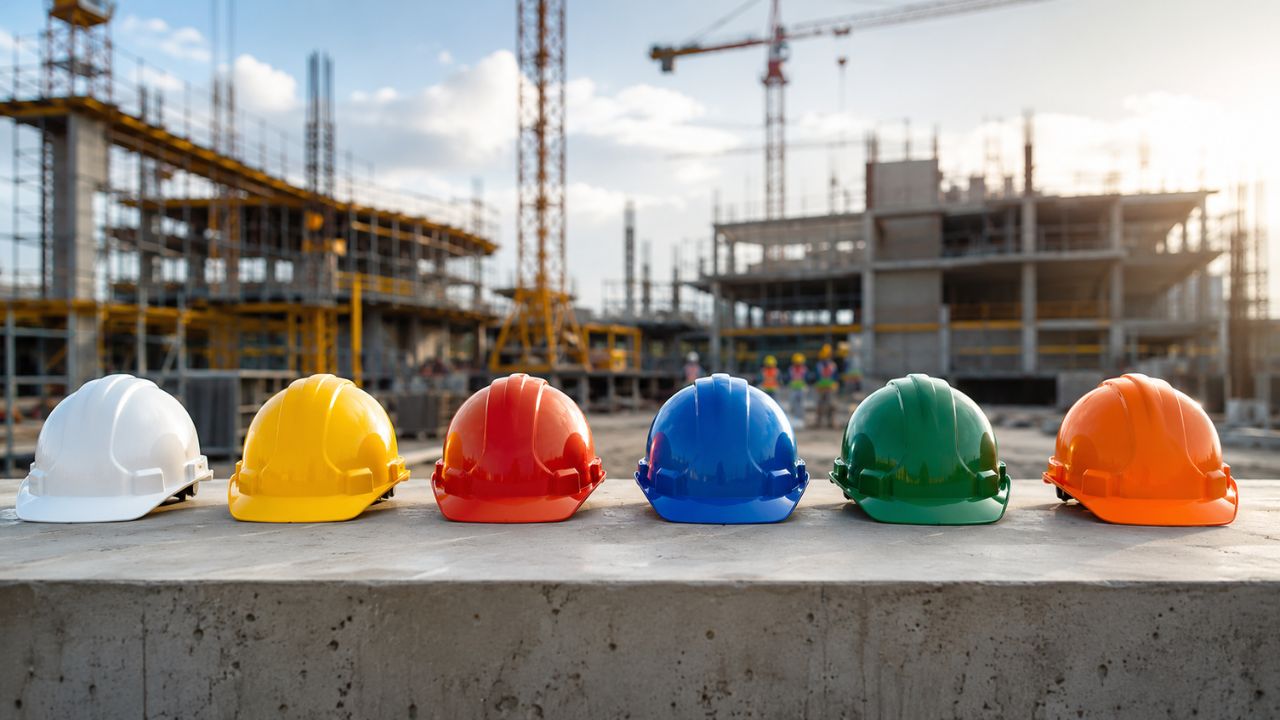
Although each company can adopt its own adaptations, some color associations have become widely recognized on Brazilian construction sites.
Among the most frequent examples are:
- White: engineers, architects, and foremen;
- Yellow: general operational workers;
- Red: firefighters and emergency teams;
- Blue: electricians and installation technicians;
- Green: professionals related to occupational safety and environment;
- Orange: visitors, suppliers, and external contractors.
The use of this pattern reduces doubts and facilitates the immediate identification of each person’s assignments on the site.
Yellow helmet dominates the sites
Among all the colors, yellow is usually the most seen in the routine of construction.
This identification is normally intended for professionals who perform operational activities. Bricklayers, laborers, carpenters, steel fixers, and helpers generally use this color.
As it represents the majority of the workforce present on sites, yellow has become one of the images most associated with the sector.
Technical and emergency teams use specific colors
Some roles require even faster identification due to the nature of the activities performed.
Professionals involved in emergency response are usually identified by red. Fire brigades, rescue teams, and workers involved in safety actions frequently use this color.
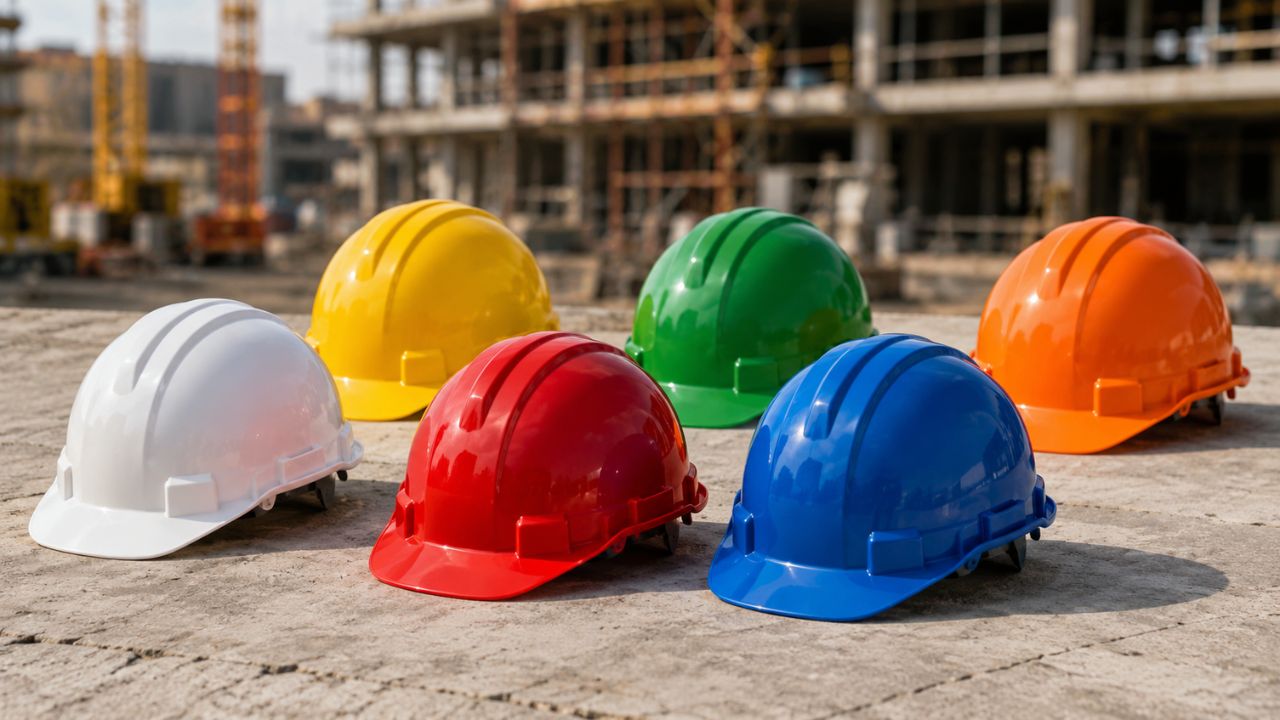
The blue is usually reserved for specialists responsible for electrical, hydraulic, gas systems, and other technical structures.
The green, in turn, is often seen with professionals focused on occupational safety and environmental management. In certain sites, it can also be used by interns.
What happens when there are visitors on the site
Not all people present on a site are part of the fixed team.
Commercial representatives, suppliers, and temporary service providers also circulate in these environments. To differentiate them from other workers, many companies adopt the orange helmet.
This identification helps the safety team quickly recognize who needs supervision and which people are not authorized to move freely in certain areas.
Not every helmet rule is related to colors
Despite the popularity of this visual system, Brazilian legislation focuses its requirements on another aspect: the protection offered by the equipment.
The Regulatory Standard No. 6 (NR 6) establishes obligations related to the supply, maintenance, and replacement of Personal Protective Equipment.
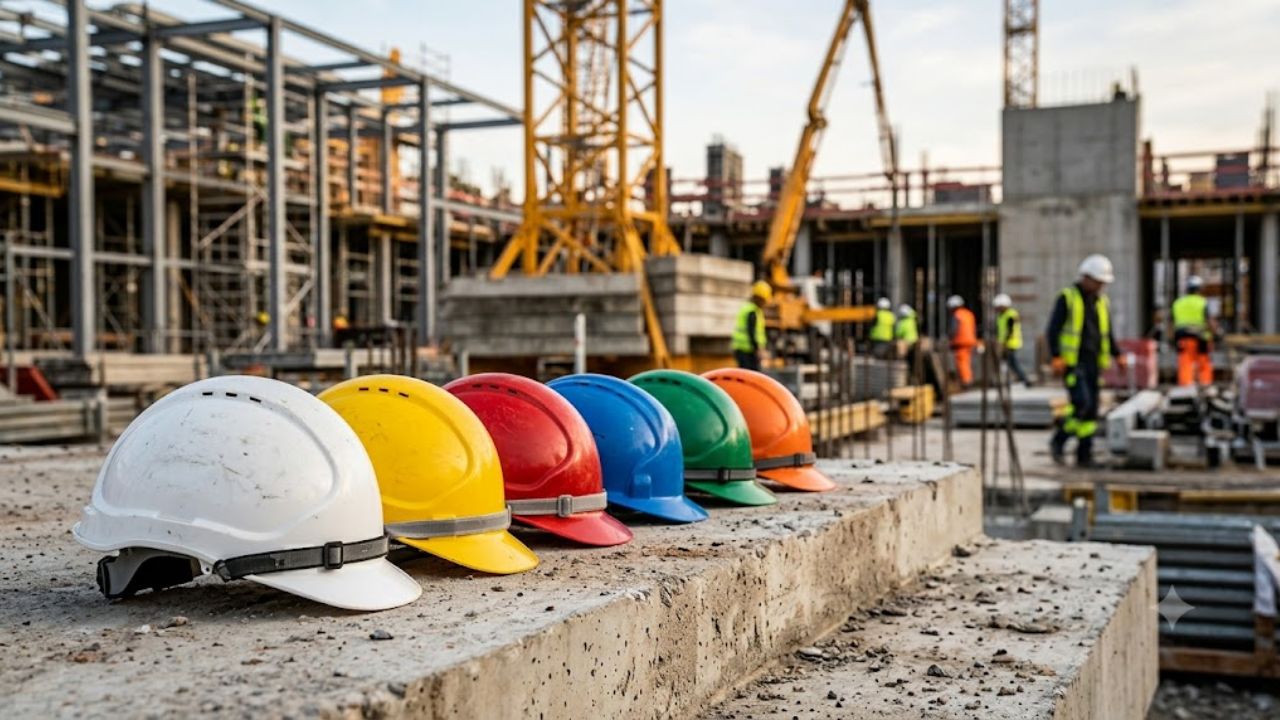
Additionally, every helmet used professionally must have an Approval Certificate (CA), a document issued by the Ministry of Labor that verifies the product’s compliance with the required technical standards.
Therefore, the color helps in identification, but the certificate is what ensures that the equipment meets the minimum safety criteria.
Helmet classes and types require attention
Another important point involves the suitability of the equipment to the risk faced by the worker. The ABNT NBR 8221 standard establishes requirements related to helmet resistance and provides specific classifications.
For most construction activities, Class A helmets are used, intended for mechanical protection against impacts.


Professionals working near energized installations need to use Class B helmets, which also offer protection against electrical hazards. The standard also covers different structural formats:
Type I — Full brim
Provides protection around the entire external structure, including sides and rear. It is recommended for activities performed outdoors and in areas subject to falling objects or splashes.
Type II — Front brim
A very common model in Brazilian construction sites. The protection is concentrated at the front and helps against dust, splashes, and frontal impacts.
Type III — No brim
Features a more compact design and is often used in confined spaces, such as tunnels and confined areas.
PCMAT can also define internal standards
In larger enterprises, the organization of equipment is usually formalized in safety documents.
The Program of Conditions and Work Environment in the Construction Industry (PCMAT), required by NR 18 for projects with more than 20 workers, can record criteria related to the use, maintenance, and identification of PPEs.

It is in this context that many companies internally formalize their color systems, making them mandatory for all professionals in that project.
Helmet conservation is as important as identification
There is no point in having an efficient color system if the equipment is compromised. Manufacturers often recommend replacing the helmet five years after the manufacturing date, even when there are no apparent damages.
Continuous exposure to heat, solar radiation, and environmental conditions can gradually reduce impact absorption capacity. Moreover, any occurrence involving cracks, deformations, contact with chemicals, or significant impacts requires the immediate replacement of the equipment.
For this reason, specialists emphasize that protection does not depend solely on the color used or the function performed by the worker. Certification, the correct choice of protection class, and proper helmet maintenance are equally essential factors to ensure safety within construction sites.
With information from Engenharia360