Portuguese
  Spanish


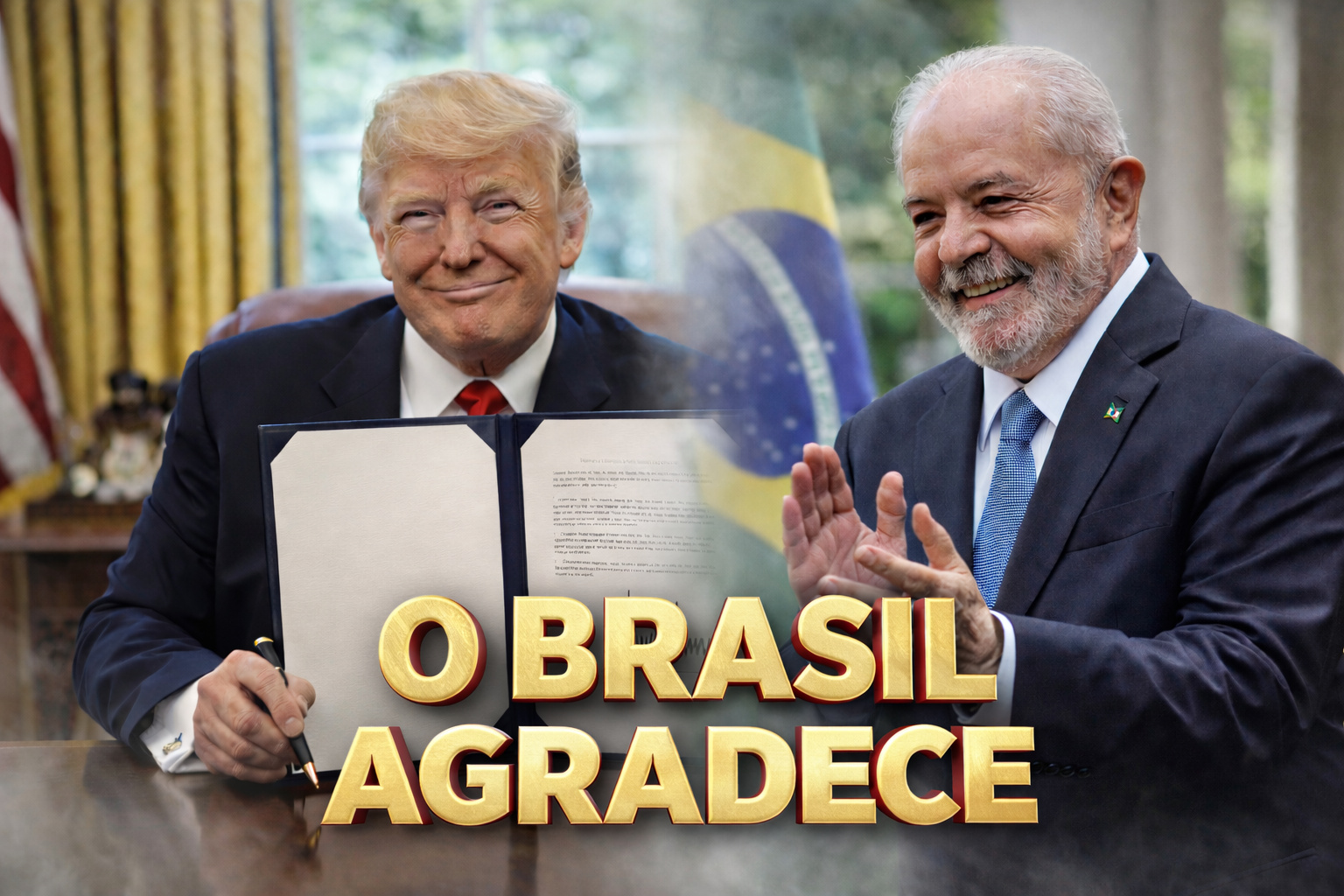


International Survey Indicates Drop in Average Tariffs Applied to Brazilian Products Following Decision Announced in the United States
The United States announced on Saturday (21) a significant change in trade policy and, according to a survey by Global Trade Alert, Brazil emerges as the main beneficiary among the partners affected by the new measure.
The global tariffs of 15% on American imports, announced by Donald Trump, replace the 10% rate disclosed on Friday (20) and, nonetheless, according to the study, should cause a 13.6% decrease in the average rate applied to Brazilian exports destined for the North American market.
Before the Supreme Court of the United States invalidated the previous tariff, Brazilian products faced average tariffs of approximately 26.3%, a percentage that is now expected to drop to 12.8% with the new global charge of 15%.
-
Ayatollah Ali Khamenei’s Funeral Draws 15 to 20 Million in Tehran, Calls for Revenge Against Trump After Joint Israel-U.S. Attack

-
U.S. Establishes Permanent Embassy in Jerusalem, Reigniting International Debate Over Israel’s Capital
-
The world has nearly 12,000 nuclear warheads, with the majority held by the United States and Russia; see the figures for China, France, and the United Kingdom.

-
Venezuela Faces UN Alert for Hunger, Disease, and Service Collapse After Earthquakes Cause Nearly 2,000 Deaths and $6.7 Billion in Damages


Technical Survey Details International Impacts
The Global Trade Alert, a platform specialized in monitoring trade policies, conducted the study and pointed out Brazil at the forefront among countries with a positive impact.
Additionally, China recorded a reduction of 7.1%, while India showed a decline of 5.6% in the average tariffs applied to exports to the United States, according to consolidated data.
On the other hand, countries that have entered into trade agreements with Washington have started to face increases in average tariffs, such as the United Kingdom (+2.1%), Italy (+1.7%), Singapore (+1.1%), as well as Japan (+0.4%) and South Korea (+0.6%).
American Authorities Advocate for Continuity of Agreements
Despite the changes, the United States Trade Representative, Jamieson Greer, stated on Sunday (22) that no partner signaled an exit from the agreements following the court decision.
On the same day, the US Treasury Secretary, Scott Bessent, told CNN International that all partners showed interest in maintaining the agreements established with the US government.
According to Bessent, the government maintains constant dialogue with its foreign partners and emphasizes the intention to preserve the existing trade agreements.
Brazilian Government Considers Measure Positive
In Brazil, the acting president and Minister of Development, Industry and Foreign Trade, Geraldo Alckmin (PSB), stated on Sunday (22), in Aparecida (SP), that the new tariff policy generated a favorable balance for the country.
According to Alckmin, the implementation of a uniform global rate of 15% ensures more balanced competitive conditions, as the rule applies equally to all trade partners.
The minister also highlighted that the average tariff on American products entering Brazil is 2.7% and stressed that, although the United States has a deficit with several countries, it maintains a surplus with Brazil in goods and services balances, which, according to him, prevents a loss of Brazilian competitiveness in international trade.