Portuguese
  Spanish


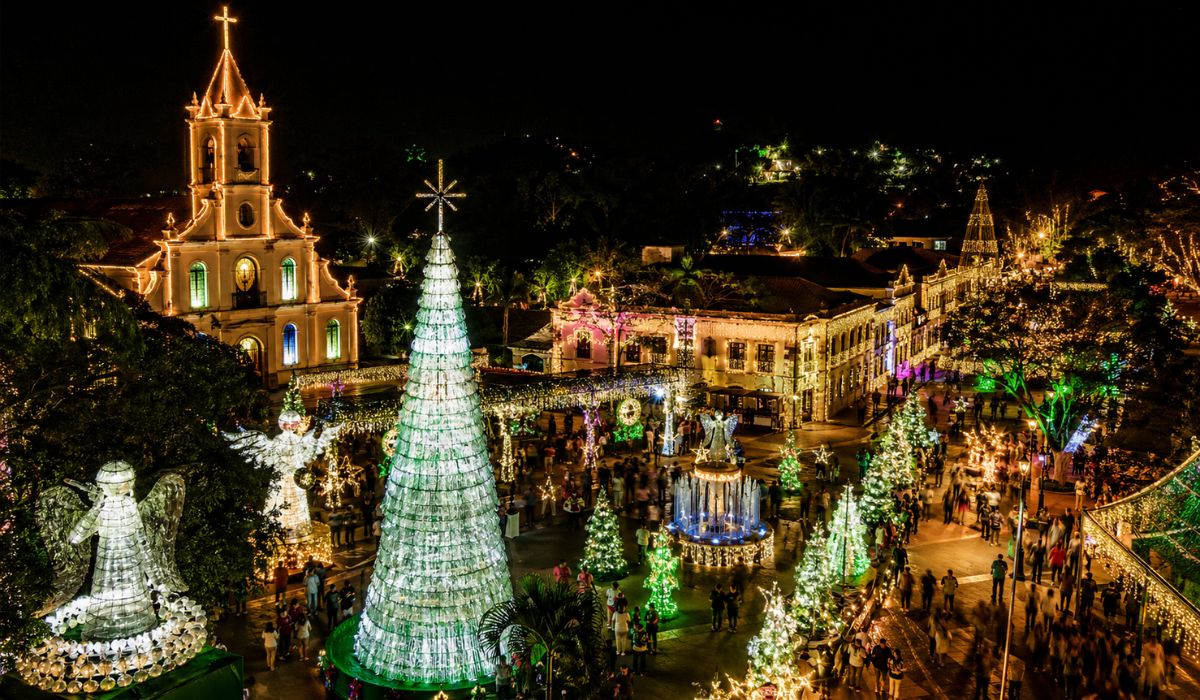

Between PET bottles, LED lights, and railway memory, Guararema transformed its Christmas program into a case of urban reuse that mixes tourism, simple technology, and historical preservation in the interior of São Paulo.
Guararema, in the Alto Tietê region, has linked part of its year-end tourist program to the reuse of PET bottles in Christmas decorations.
The Guararema Cidade Natal project, which began as an environmental education initiative and was incorporated into the municipality’s cultural calendar starting in 2010, has already used more than 6 million containers in decorations installed on streets, squares, and public buildings, according to city hall records released in previous years.
The initiative brings together craftsmanship, waste reuse, and urban lighting.
-
Nepal’s Flag: The World’s Only Non-Rectangular National Flag Preserved by Tradition and Constitution

-
Archaeologists Discover 1,600-Year-Old Church with Colorful Mosaics and Ancient Christian Worship Site in Italy

-
Humanoid Robots and AI Take Over Texas Park in Apptronik’s Apollo 2 Training for Factory and Logistics Work

-
Volunteer in London Discovers Rare Copy of U.S. Declaration of Independence Missing for Nearly 250 Years



PET, an acronym for polyethylene terephthalate, is a thermoplastic polymer used in the manufacturing of bottles and packaging.
In the case of Guararema’s decorations, the material was transformed into pieces such as trees, bells, angels, reindeer, and illuminated structures.
In previous editions, the bottles collected throughout the year went through workshops and preparation stages before being incorporated into the Christmas scenes.
Each unit needed to be separated, cleaned, cut, and shaped to form larger elements.
The process combined manual labor, visual planning, structural assembly, and electrical installation.
A report from the Guararema Municipal Secretariat of Culture and Tourism recorded, in the 11th edition of the program in 2022, an audience of over 700,000 people and decorations made with more than 90% reused PET bottles.
The same document noted the participation of professionals such as artisans, metalworkers, and electricians in the project’s assembly.
How PET bottles become Christmas decorations in Guararema
The large-scale use of PET bottles explains part of the visual effect of Cidade Natal.
Individually, a single container has little scenic presence.
Grouped in hundreds or thousands of units, however, the pieces form translucent surfaces that reflect light and allow for the creation of volumes, contours, and textures.
This type of assembly depends on repetition, standardization, and fitting.
The bottles need to be cut into similar shapes so that the ensemble has visual and physical stability.
For public installations, planning also includes securing the pieces, wind resistance, pedestrian traffic, and electrical safety.
LED lighting was another resource used in the traditional editions of the event.
In 2022, a report from O Diário stated that the program featured more than 45 kilometers of LED strip lights and more than 200,000 recycled PET bottles in that edition.
From an urban perspective, the combination of PET and LED allows for the creation of large illuminated areas with reused materials.
In 2023, the city hall also regulated selective collection procedures during Guararema Cidade Natal, with the separation of recyclable waste in commercial establishments, gastronomic spaces, and event areas.

What changed in Guararema’s Christmas
The last full edition of Guararema Cidade Natal took place between December 2023 and January 2024.
In 2024, the traditional event was not held.
According to the city hall, in a statement reported by regional media, the resources would be redirected to areas and works considered priorities by the municipal administration.
In 2025, the Christmas program was resumed in a different format.
The Guararema City Hall announced the Festival Encantado de Guararema, held from December 4, 2025, to January 4, 2026, with free admission, live music, decorated gastronomic spaces, and a craft fair.
The program took place in the parking lot of Recanto do Américo, known as Pau D’Alho, and the Professora Deoclésia de Almeida Mello Leisure Park.
On weekends, the Trama, Cor & Arte Fair was held at the Guararema Railway Station Museum, with an exhibition and sale of handmade products made by participants of workshops from the municipal vocational school.
The change in format reduced the scale of the old Cidade Natal event, but maintained the presence of year-end activities on the local tourist calendar.
For visitors, the itinerary remained concentrated in central areas, with pedestrian access between historical points, social spaces, and cultural attractions.
Guararema’s historic center brings together railway, river, and public areas
The center of Guararema contains an important part of the tourist route.
The region includes Praça 9 de Julho, Boulevard Major Paula Lopes, the Juvenal Alves Pereira Municipal Market, the Guararema Railway Station Museum, the Pontilhão (Large Bridge), and areas near the Paraíba do Sul River.
The Guararema Railway Station is part of the memory of railway transportation in the municipality.
The building was associated with the transport of cargo and passengers and is currently linked to historical tourism.
The site also serves as a starting point for the tourist train operated by the Brazilian Association of Railway Preservation.
Nearby, Recanto do Américo is located on the banks of the Paraíba do Sul River and features walkways, circulation areas, and observation spaces.
Ilha Grande, accessed by a bridge, offers light trails, a playground, and equipment for outdoor activities.
Another point on the itinerary is the Prefeito Gerbásio Marcelino Viewpoint, located in an elevated area of the municipality.
From there, visitors can observe the urban layout, stretches of vegetation, and the course of the Paraíba do Sul River.
The attraction helps to place the city within the landscape of the Paraíba Valley.
Nossa Senhora da Escada Church and the devotion to São Longuinho
Outside the central core, the Nossa Senhora da Escada Church gathers historical and religious information linked to the formation of Guararema.
According to the city hall, the first chapel of the settlement was built in 1652 by colonists and indigenous people guided by the Jesuits.
In 1732, due to its poor state of conservation, the structure was demolished.
After the departure of the Jesuits from the Captaincy of São Vicente, the administration of the settlement passed to the Franciscans, who built a new church and an attached lodging.
The complex was listed as a heritage site by Iphan on January 25, 1941, and also by Condephaat.
The temple is known for the image of São Longuinho on an altar.
Popular devotion associates the saint with the search for lost objects, a tradition that includes the gesture of giving three little jumps after finding what was sought.
A few kilometers away, the Nossa Senhora D’Ajuda Church is also part of the historical itinerary.
The temple is located on a hill and is mentioned in the municipality’s tourist materials as part of the city’s set of religious and architectural references.
Maria Fumaça (Steam Train) connects Guararema to the Village of Luís Carlos
The Maria Fumaça ride connects the Guararema Central Station to the Luís Carlos Station.
According to the tourist train operator, the route is 6.8 kilometers each way and totals 14 kilometers for the round trip.
The trip lasts about two hours, considering the travel time, the stop in the village, and the return to Guararema.
Departures occur on weekends, national holidays, and extended holidays, with schedules subject to confirmation by the operator.
In the Village of Luís Carlos, the station dating from 1914 is part of the restored railway complex.
The site has been adapted for tourist services and brings together shops, food, and services aimed at visitors.
The ride also preserves an experience linked to steam railway technology.
The locomotive, the restored cars, and the short route allow one to observe how the railway influenced the settlement of São Paulo’s municipalities and later became part of historical tourism itineraries.
Tourism in Guararema includes gastronomy and short itineraries
Gastronomy appears as a complement to the tour in Guararema.
The downtown area and Vila de Luís Carlos are home to cafes, restaurants, ice cream parlors, artisan shops, and dining areas.
During peak tourist seasons, these establishments welcome visitors attracted by the train, public areas, and seasonal programs.
The Juvenal Alves Pereira Municipal Market, in the downtown area, is also part of the urban circuit.
The structure serves as a hub for foot traffic and consumption for residents and tourists, especially on short-term itineraries.


During the 2025 Enchanted Festival, the city hall organized decorated gastronomic spaces at Recanto do Américo and Professora Deoclésia de Almeida Mello Leisure Park.
The official proposal included operation on Thursdays, Fridays, Saturdays, and Sundays, with live music and participation from local artists.
For those coming from the São Paulo state capital or from nearby cities in the Alto Tietê and Vale do Paraíba regions, Guararema is a perfect fit for day trips or weekend getaways.
The concentration of attractions facilitates short trips between the railway, historic center, churches, green areas, and gastronomic spaces.
In the case of the former Cidade Natal event, the city became associated with a specific experience: transforming plastic waste into large-scale urban decorations.
A scientific analysis of the project involves the reuse of PET, large-scale manual assembly, the use of LED lighting, and the organization of recyclables collection.
The recent change in the Christmas calendar altered the program’s format, but it did not erase the history of reusing PET bottles that made Guararema well-known during this time of year.
Between its railway memory, religious heritage, and material reuse initiatives, the city still offers a case of interest for those observing the relationship between tourism, simple technology, and waste management.