






 Portuguese
  Spanish


Subsidence in Brazil advances in Recife, Santos, Rio, and Maceió with urban damage, condemned properties, and an alert for dozens of municipalities
The ground is sinking in different parts of Brazil, and the problem is already appearing in large cities, coastal areas, and entire neighborhoods affected by construction, mining, and groundwater extraction.
In Recife, urban areas record subsidence of nearly 2 cm per year. In Santos, over 300 leaning buildings expose decades of construction on fragile ground. In Maceió, neighborhoods were evacuated after a collapse linked to rock salt mining.
The problem is not limited to a single municipality. Cases of subsidence, the name used for ground lowering, appear in various regions of the country and reveal a serious failure in the official monitoring of urban soil.
-
After three years living in a van, a couple bought an abandoned historic house and had to deal with mold, damaged plumbing, raccoons, and heavy cleaning before moving in.

-
In the city that the market called “road cockroach,” between Balneário Camboriú and Florianópolis, he launched a planned neighborhood worth R$ 1 billion with a marina for 90 boats and sold 80% of the lots in the first phase in 1 week.

-
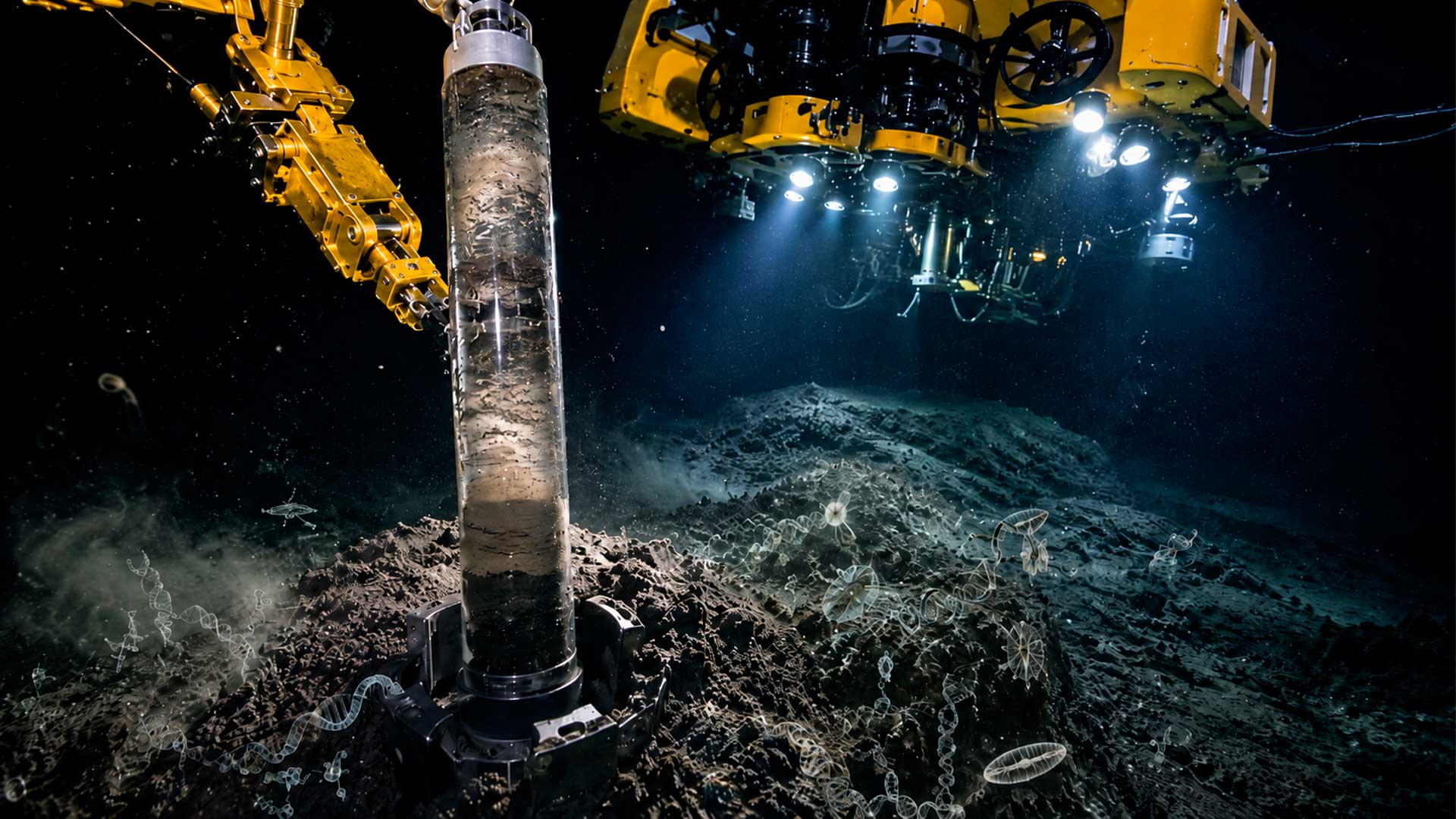
At a depth of 5,000 meters, where there is no sunlight, researchers found ancient DNA preserved in the mud of the South Atlantic and discovered signs of organisms that did not match known records.

-
At 77 years old, a retired woman who never tires of learning completes her second degree in design in Ceará and moves people by revealing the help of her 98-year-old mother in the final project.



Recife has areas sinking by nearly 2 cm per year in western neighborhoods
Recife appears among the most concerning cases. Areas in the western zone record subsidence of nearly 20 millimeters per year, equivalent to about 2 cm annually.
The advance was identified in neighborhoods such as Várzea, Caxangá, Engenho do Meio, Cordeiro, Torrões, and San Martin. In more sensitive areas, the lowering could be even greater.
The phenomenon occurs in regions characterized by soft soils, landfills, urban expansion, and pressure on areas that were once mangroves, floodplains, or wetlands. When heavy constructions advance on this type of soil, the ground loses stability and begins to sink.
Leaning buildings in Santos show the effect of constructions on fragile ground

Santos concentrates one of the most visible signs of the problem. The city has 319 leaning buildings, with dozens of them in a more pronounced situation.
The explanation lies in what is called differential settlement. In simple terms, this happens when one part of the building sinks more than the other. The result appears in the crooked facade, cracked walls, and the feeling that the building is off-axis.
This type of problem is usually linked to shallow foundations in terrains formed by soft and irregular layers. The weight of the construction presses on the soil, which reacts unevenly over the years.
According to Geo UERJ, an academic geography journal of the Fluminense university, there are 75 events registered in the country
The national dimension of the problem appears in a survey that identified 75 subsidence events in Brazil. The Southeast concentrates most of the records, followed by the Northeast, South, Central-West, and North.
More than half of the cases are related to human activity. Among the main causes are mining, groundwater extraction, urban construction, occupation of fragile areas, and alterations to the natural balance of the terrain.
Excessive groundwater extraction is particularly sensitive. When aquifers lose volume, soil layers can compact. As a result, streets crack, properties undergo deformations, and the city gradually begins to sink.
Rio de Janeiro has areas with faster subsidence in neighborhoods on soft soil
In Rio de Janeiro, areas in the western zone also draw attention. In Rio das Pedras, subsidence can reach levels higher than those observed in other Brazilian cities.
The problem is linked to clayey and organic soils, which are more fragile when subjected to the constant weight of houses, buildings, and paved roads. Over time, these materials lose water, decrease in volume, and cause the ground to lower.
Neighborhoods built on reclaimed areas, former wetlands, and unstable terrains are more exposed. The risk increases when occupation grows rapidly without adequate geological planning.
Maceió became a national symbol after entire neighborhoods were evacuated
Maceió is the most serious and well-known case. The subsidence affected neighborhoods such as Pinheiro, Mutange, Bebedouro, Bom Parto, and Farol, with thousands of properties vacated.
The origin is linked to rock salt mining in an urban area. Cavities opened in the subsoil lost stability and caused cracks, tremors, deformations, and risk of collapse.
The impact was direct on the lives of residents who had to leave homes, businesses, and entire streets. The city began to live with empty areas, condemned properties, and an urban crisis that changed the map of several neighborhoods.
Lack of official map leaves municipalities vulnerable to cracks and subsidence
The advance of subsidence in Brazil exposes a serious gap. Many municipalities live with signs of subsidence without a detailed, standardized, and updated national map.
This hinders prevention. Without continuous monitoring, cracks in streets, leaning buildings, and soil deformations can be treated as isolated cases until the damage becomes too expensive or too dangerous.
The country already has enough signs to treat the issue as an urban risk. Recife, Santos, Rio de Janeiro, and Maceió show that the soil can give way for different reasons, but the final effect impacts the same foundation of life in cities.
Subsidence pressures housing, public works, water, sewage, drainage, and mobility networks. Without control over occupation, mining, and groundwater extraction, the ground that supports entire neighborhoods begins to change the strategic understanding of Brazilian cities.


