Portuguese
  Spanish


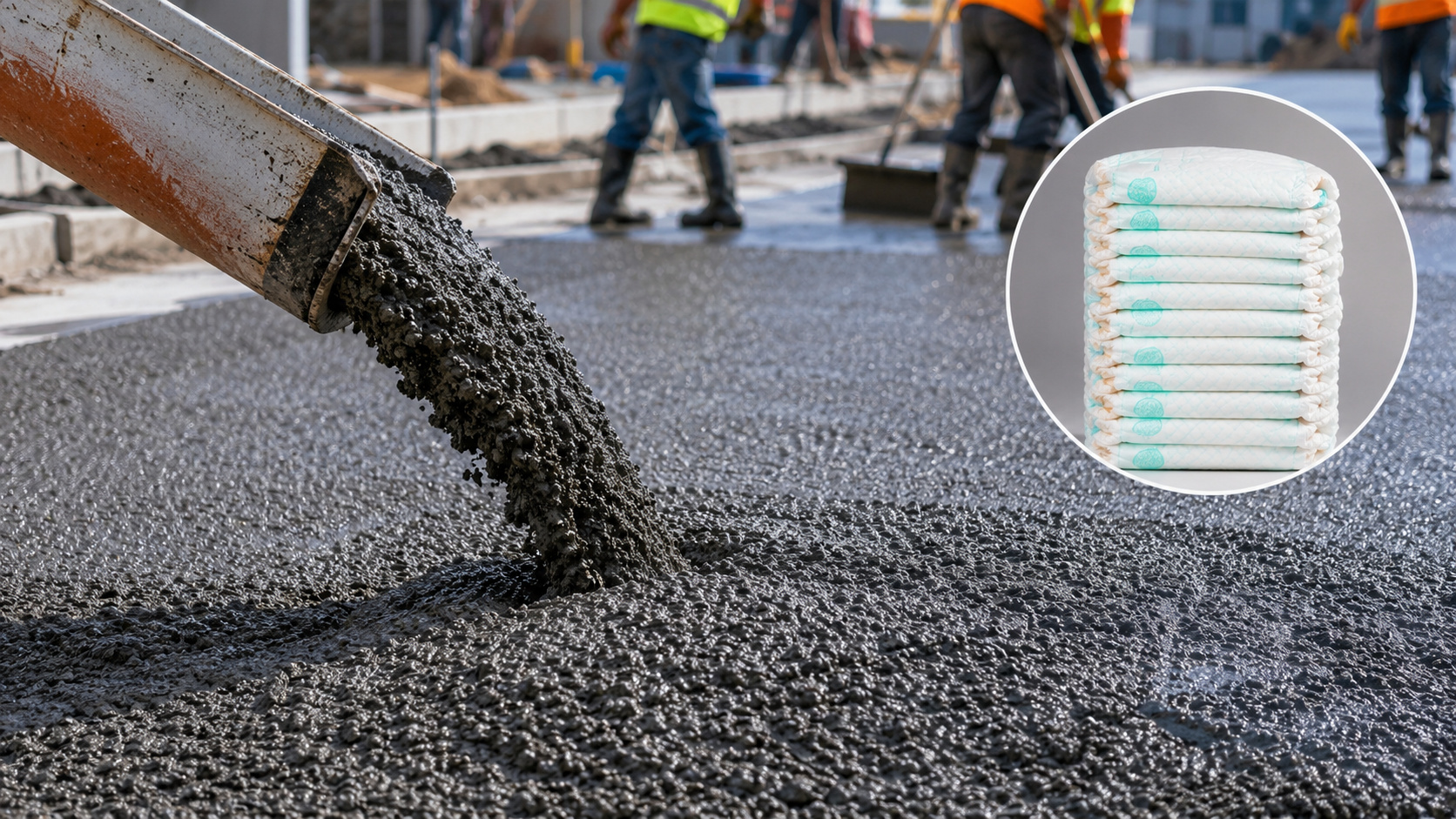

Wales uses 107,000 recycled diapers in the asphalt of the A487 and transforms difficult waste into experimental pavement.
Wales tested an unusual solution for one of the most difficult household wastes to recycle: transforming used disposable diapers into a component for asphalt. The project was applied to a stretch of 1.4 miles of the A487 highway, between Cardigan and Aberystwyth, in western Wales. According to ITV Wales, about 107,000 diapers were used in resurfacing the stretch. The conversion of the extension shows the scale of the work: 1.4 miles x 1.609 km = approximately 2.25 km of experimental pavement.
The Welsh government reported that 4.3 tons of fibers recovered from used diapers replaced materials normally imported for asphalt production. The mixture was added to the bitumen, the binder that joins the aggregates and forms the asphalt layer.
A487 highway became a laboratory to transform disposable diapers into recycled pavement
The project was conducted as a joint initiative between the Welsh government, Pura company, and NappiCycle, specialized in recycling diapers and absorbent products. The technology was applied to a real stretch of the A487, not just in a laboratory.
-
16-Year-Old from Brazil’s Sertão Wins Young Scientist Award for AI Predicting Rainfall with 94.5% Accuracy to Aid Farmers

-
Netherlands Reports First Child Euthanasia Case Since Rule Expansion for Minors

-
Brazilian Innovator Survives Homemade Submarine Dive in Paraty Despite Hatch Leak and False Oxygen Alarm
-
China Develops Custom 140-Ton Electric Mining Truck with 770 kWh Swappable Battery, Deploys 290 Units in Xinjiang’s Largest Zinc Mine





The diapers do not go directly onto the road. The material goes through a process of sanitization, separation, and reuse, in which plastics and cellulose fibers are separated for new uses.
In the case of the A487, the recovered fiber was used as an additive in the bitumen. NappiCycle claims that this type of application can help produce quieter and longer-lasting pavements.
More than 107,000 diapers avoided landfills and became part of the road
According to ITV Wales, 107,000 diapers were used in the resurfacing, preventing this material from being sent directly to landfills.
This type of waste is problematic because it combines plastic, cellulose, absorbent polymers, and organic material. Therefore, disposable diapers usually have low recycling value and often end up in landfills or incineration.
NappiCycle presents itself as a company dedicated precisely to recovering valuable materials from used diapers and absorbent products. The company claims that these materials can be turned into boards, panels, insulation, and also fibers for paving.
Asphalt with diaper fiber replaced imported materials and used local aggregate
The Welsh government highlighted another important technical point: the recovered fibers replaced materials used in asphalt that would normally be sent from other European countries or even more distant regions.

Moreover, the aggregate used in the work was obtained within a radius of 45 miles, about 72 km, which reduced transportation distance and kept part of the production chain within the region.
The road became a test of circular economy: local waste, local processing, regional aggregate, and application in public infrastructure.
Technology tries to make pavement more durable, but still needs to be treated as a test
Pura, NappiCycle, and local reports claim that asphalt with diaper fiber can be more durable than conventional asphalt and have a lower carbon footprint.
The most surprising part of the technology is that it uses a material that almost no one associates with road engineering. Disposable diapers usually represent environmental cost, landfill volume, and reuse difficulty.

In the Welsh test, this waste turned into fiber incorporated into the asphalt binder, helping to transform household waste into a layer of public infrastructure. It is a small solution given the total volume of discarded diapers, but technically symbolic.
In the end, the A487 turned into a strange and powerful showcase: a road where more than 107,000 diapers stopped being waste and started supporting cars, trucks, and buses under a layer of recycled asphalt.