Portuguese
  Spanish


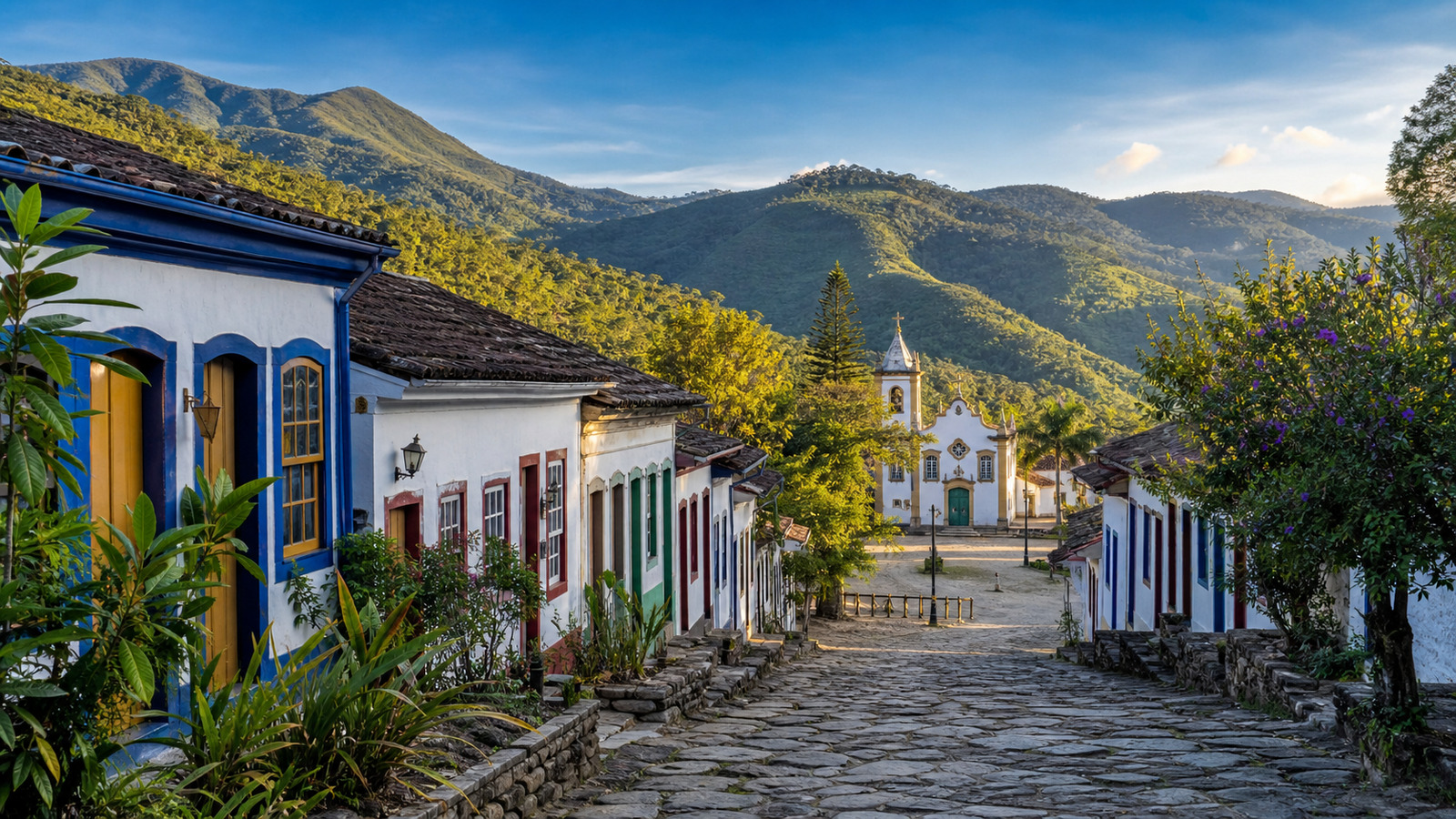

Nominated by the UN in 2025, Conceição de Ibitipoca combines stone streets, colorful houses, rural life, and Minas Gerais’ most visited park at 1,100 meters of altitude
With 1,195 residents, the Minas Gerais village Conceição de Ibitipoca, in Lima Duarte, was nominated by the UN in 2025 among the Best Tourist Villages in the world, for bringing together history, nature, and tourism in the Serra da Mantiqueira.


Minas Gerais village recognized in 2025
Conceição de Ibitipoca is located at 1,100 meters of altitude, in the Serra da Mantiqueira. The district has stone streets, colorful houses, and two centuries of history.
The locality belongs to Lima Duarte and is 27 km from the headquarters, via a narrow dirt road. The territory totals 187.94 km², 502 households, and 1,195 residents.
-
Engineers spend a decade building a $2.3 million bridge, but the project features a surreal curve, becomes a joke, and ends with seven suspended.

-
7-year-old boy acts without hesitation and saves his 1-year-old brother from drowning in the family pool in Texas: the boy’s courage impressed the sheriff and he may now receive an official police commendation.

-
The forgotten Atari stock that seemed like something out of a movie: millions of sealed cartridges were buried underground and were sold for very low prices.

-
Collector adapts forklift electric motor in a Kombi Corujinha pickup, hides 16 batteries under the bed, and makes the Brazilian classic run silently with up to 90 km of range.


In May 2025, the village was selected by the Minas Gerais Secretariat of Culture and Tourism among the eight Brazilian villages that competed for the UN Tourism’s Best Tourist Villages award.
The name Ibitipoca comes from the Tupi ybytyra, mountain, and pok, to burst. The meaning is “burst mountain,” a reference to the geological fissures of the mountain range mentioned in 1692 by Father João de Faria Fialho.
Rural routine and disconnection
Daily life has the rhythm of a Minas Gerais countryside. The stone-paved streets are used more for walking than driving, and the Praça da Matriz (Main Square) is where people gather at the end of the day.
Most residents work with tourism generated by the State Park. Subsistence agriculture and livestock farming are still part of the rural routine.
Artisanal cheeses, jellies, cachaças, and local beers come from the surroundings. Banking commerce does not exist in the village, and cash remains common with an oscillating cell phone signal.
Some guesthouses offer limited connection. This daily life attracts those seeking real disconnection, neighbors who know each other by name, and a slower routine, far from the hustle and bustle of big cities.
Most sought-after neighborhoods and areas
The village is compact but has areas with distinct profiles. The choice depends on the desired activity, proximity to the State Park, and preference for commerce, isolation, or ecotourism.
The Village Center concentrates the Main Church, restaurants, and local commerce, with colonial houses and stone streets. The area around the Praça da Matriz (Main Square) gathers colorful little houses.
The rural area has farms and properties with mountain views. At the accesses to the Park, there are guesthouses and residences of residents connected to ecotourism.

State Park drives the economy
Ibitipoca State Park is 3 km from the center and is the economic engine of the district. Created in 1973 and managed by the State Forest Institute, it is the most visited park in Minas Gerais.
Entry is limited to 300 visitors on weekdays and 800 on weekends and holidays. This control preserves trails, caves, and waterfalls, in addition to maintaining a constant flow of guests.
The region is home to Janela do Céu (Window of Heaven), a natural viewpoint. It is also one of the few sanctuaries of the northern muriqui, the largest primate in the Americas, a critically endangered species.
Festivals, flavors, and access
Despite its size, the Minas Gerais village has an active cultural agenda. July hosts Ibitipoca Jazz, in the Praça da Matriz (Main Square) and downtown bars. August features Ibiti Blues, with local performances.
At the end of July, the Ibitipoca Off Road attracts motorcycling groups. In December, the Patron Saint’s Festival celebrates Nossa Senhora da Conceição (Our Lady of Conception) with masses, typical foods, and a procession.
The gastronomy brings together artisanal cheese awarded in national competitions, still-distilled cachaça, homemade sweets, jellies, feijão tropeiro (tropeiro beans), caipira chicken, pork ribs with yam, and tutu (bean paste).
The tropical highland climate defines four seasons. Cold mornings and clear skies in winter are considered by the residents as the best time to experience the mountain routine.
The nearest airport is Presidente Itamar Franco, about 90 km away. From there, the route continues via BR-267 to Lima Duarte and another 27 km on a dirt road.
Those coming from Rio de Janeiro or Belo Horizonte use BR-040 towards Juiz de Fora, taking about four hours. From São Paulo, the route uses Via Dutra, taking about six hours.
Conceição de Ibitipoca combines Atlantic Forest, waters, and life away from mass tourism. The Janela do Céu is 3 km from the nearest bakery, a detail that reinforces the hidden village atmosphere.
With information from Correio Braziliense.