






 Portuguese
  Spanish
  4 min of reading
  0 comments


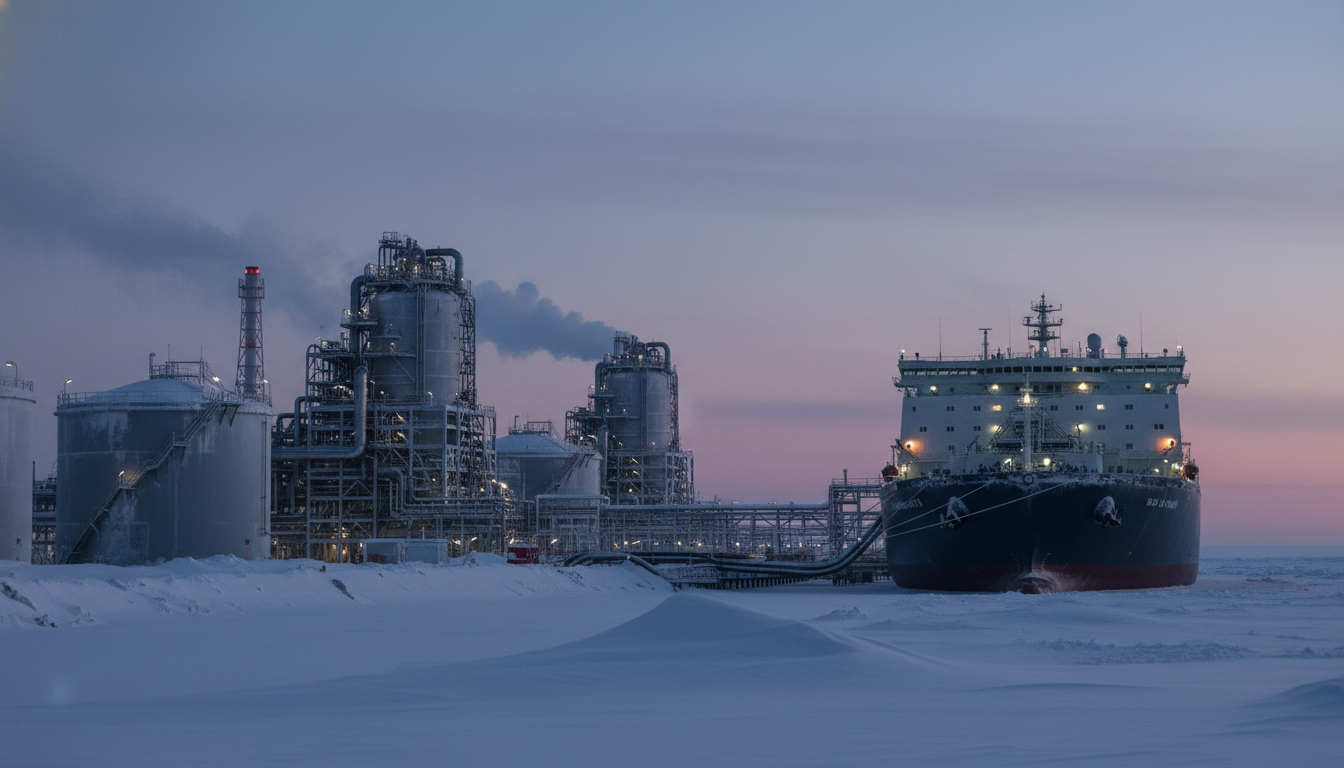
Russian terminal on the Yamal Peninsula operates three trains with a total capacity of 16.5 million tons annually. In 2024, it exceeded the project and exported 21.2 million — the equivalent of 287 icebreaker ship loadings.
The Yamal LNG, a joint venture led by Russia’s Novatek in the city of Sabetta, closed 2024 with a record export. The information appears in the Global Energy Monitor.
According to the report, 21.2 million tons were exported in 287 voyages. Compared to 2023, there was a 5% increase.
According to Novatek, the mark represents a 2.5% increase over the previous peak in 2022. Consequently, the terminal enters 2026 with an operational volume above its nominal capacity.
-
Helicopter Drops 180 Tons of Sand and Gravel on Swedish River to Revive Ecosystem Damaged by Decades of Exploitation

-
Brazilian Company Launches Retro Smartphone with 48 MP Camera, T9 Keyboard, and Privacy Features for Social Media-Free Use

-
Self-Taught Chinese Farmer Builds 5-Ton Submarine from Scrap, Launches It in Anhui River
-
Invisible Induction Technology Enables Wireless Power for Blenders, Coffee Makers, and Air Fryers, Reducing Countertop Cables





Yamal LNG and the 287 shipments: how icebreakers enable the Arctic
According to public data, Yamal LNG relies on a fleet of 15 Ark7 icebreaker ships. In fact, these ships were designed for Siberian ice up to 2.1 meters thick.

According to Wikipedia, each ship carries about 170,000 m³ of LNG. In parallel, part of the fleet travels east, via the Northern Sea Route.
In other words, the terminal operates year-round. Yamal LNG’s maritime logistics is one of the largest commercial Arctic operations in the world.
In turn, Novatek holds 50.1% of the project. Chinese shareholders (CNPC and Silk Road Fund) and France’s TotalEnergies make up the remaining 49.9%.
European Union bought 15 million tons of Yamal LNG in 2025
According to the Real Instituto Elcano, 15 million tons went to European terminals in 2025. This volume represents about one-seventh of the European Union’s LNG imports.

In parallel, this volume represents 76% of the terminal’s global exports in 2025. Consequently, the Russian terminal remains a key part of the European energy system even after sanction packages.
In fact, Russian LNG is not under a total embargo. In comparison, Russian oil has faced a price cap since 2022.
On the other hand, the European Commission announced its intention to ban all imports of Russian LNG by 2027. According to analysts, the goal depends on alternative capacity in the USA and Qatar.
Arctic LNG 2: the neighboring project stalled by sanctions
In parallel with the terminal’s success, Novatek is trying to unblock Arctic LNG 2. According to Offshore Technology, the project is in an advanced phase but is stalled by sanctions.

According to the company, the lack of new-generation icebreaker ships is the main bottleneck. In parallel, 2022 sanctions blocked access to Western liquefaction technology.
According to Offshore Technology, Arctic LNG 2 was supposed to add 19.8 Mt annually to Russian production. In turn, the project is at 0% scale for this goal.
In fact, the impasse is technical and geopolitical. In parallel, Russia announced plans to build its own fleet of icebreakers without Western components by 2030.
Sabetta: artificial city in the Arctic Circle
Sabetta is a port city built from scratch by the Russian plant project. According to official data, it houses about 30,000 rotating workers.

According to Technip Energies, a project partner, the terminal was delivered in 2017 after only 5 years of construction. In comparison, similar projects in Qatar take 10 years.
In parallel, the average temperature in Sabetta is below -20 °C between November and March. Consequently, all infrastructure has industrial thermal insulation.
In turn, the plant operates with gas extracted from the South-Tambeyskoye fields, also in Yamal. The fields contain estimated reserves of 4.9 trillion m³ of natural gas.
this project in numbers
- 21.2 million tons exported in 2024 — a record
- 287 icebreaker ship loadings in 2024
- 15 Ark7 ships in the dedicated fleet
- 15 Mt bought by the European Union in 2025
- 76% of the terminal’s global exports go to the EU
- 4.9 trillion m³ of gas reserves in the South-Tambeyskoye field
In comparison, the Sabine Pass terminal in the USA exports about 30 million tons annually. On the other hand, the Russian terminal is the largest Arctic operation of its kind.
Other Russian Arctic operations follow a similar scale. The new Russian 150 MW Lider nuclear icebreaker is part of the same strategy.
And Brazil? How Russian gas affects the national market
Brazil does not directly buy Russian LNG. According to ANP, most of the LNG imported by Brazil comes from the USA, Qatar, and Trinidad and Tobago.
According to Petrobras, Brazil’s pre-salt has associated gas reserves of about 7 trillion m³. Consequently, Brazil can reduce imports over the next decade.
In parallel, the complex’s case shows the complexity of gas geopolitics. In turn, Brazil still depends on foreign chains for liquefaction and regasification.
See how the global energy scenario unfolds in recent American movements in critical minerals in the Utah desert.
In parallel, Brazilian gas sector executives visit Sabetta as an operational reference. According to Cigás, part of the Russian technical knowledge has been incorporated into Brazilian feasibility studies.
In fact, this operation established a global standard for Arctic terminals. Consequently, countries like Canada and Norway are studying replicating part of the constructive model.
Caveat: the terminal depends on ice windows
According to Novatek, part of the exports depends on favorable windows in the Northern Sea Route. In parallel, climate change alters these windows each year.
On the other hand, the future of exports depends on sanctions. According to the European Commission, a total blockade from 2027 would reduce 70% of the Russian complex’s external market.
Will Brazil have the industrial maturity to export liquefied natural gas in the next decade? The plant’s case shows the model: well, liquefaction, specialized ship.
Still, the terminal remains an Arctic reference for the sector. Consequently, executives from Brazilian companies visit Sabetta as a logistics benchmark.





Be the first to react!