






 Portuguese
  Spanish


Ionic Mineral Technologies confirmed in December 2025 the discovery of one of North America’s largest deposits of rare minerals and rare earths, hidden in clay layers in the Utah desert — and the numbers impress even veteran geologists.
Furthermore, the project named Silicon Ridge revealed 16 types of critical metals concentrated in halloysite ionic clay, with an average grade of 2,700 parts per million, surpassing Chinese deposits which range between 500 and 2,000 ppm.
In other words, the United States may have found the key to reducing its more than 80% dependence on China for rare earth supply, essential materials for electric vehicle batteries, wind turbines, and semiconductor chips.
-
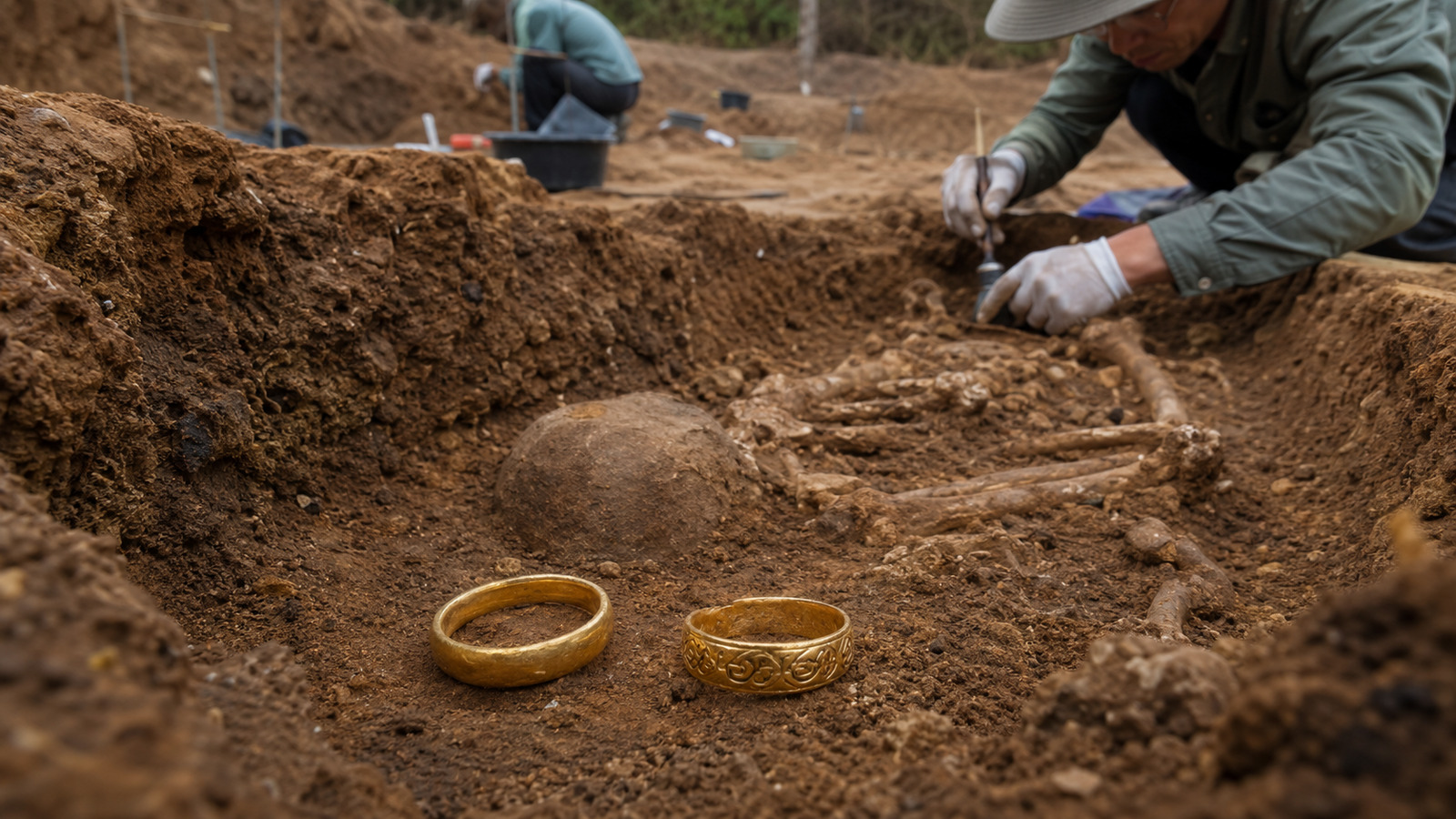
2,000-Year-Old Gold Rings Found with Human Bones in Thailand Reveal Rare Burial and Feature Ancient Indian Inscription

-
Lenovo Unveils Legion Y700 Tablet with RGB Backlighting, 5G, and SIM Card Support

-
World’s First Nuclear Hydrogen Unit Begins Operation: Copper-Chlorine Technology with Initial Capacity of 150 Liters per Hour, Aiming for 3,000 Liters per Hour
-
Mechanics Retrofit Old Fiat Uno with BYD Electric Motor for Silent, Low-Voltage Operation Reaching Nearly 60 km/h in Home Test


However, it is important to note that the results are preliminary — covering only 11% of the total resource area and limited to a depth of 30 meters — and full economic viability still depends on the assessment scheduled for the first half of 2026.
106 drillings and 10 thousand meters of sounding revealed what was hidden in Utah’s clay
Thus, the Ionic Mineral Technologies team carried out 106 drillings totaling over 10,000 meters of sounding, in addition to excavating 35 trenches across an area of 650 acres — approximately 263 hectares — in the Lake Mountains.
Consequently, independent analyses conducted by ISO-certified ALS Chemex laboratories confirmed the presence of 16 critical minerals in the halloysite clay fraction of the deposit.
In this regard, among the identified metals are lithium, gallium, germanium, rubidium, cesium, scandium, vanadium, tungsten, and niobium, in addition to a complete set of light and heavy rare earths, from lanthanum to lutetium, including yttrium.
Firstly, what makes this finding exceptional is the combined grade of 2,700 ppm, which represents a 4.74-fold enrichment compared to the host raw material, according to data released by the company itself.

Furthermore, the company named this mineralogical profile “IAC-Plus,” as the deposit exhibits hydrothermal and magmatic enrichment that goes beyond traditional rare earths found in ionic clays.
As a result, the privileged location less than 32 kilometers south of the Silicon Slopes technology hub, and about an hour from Salt Lake City, facilitates access to roads, power lines, and skilled labor.
The 2,700 ppm grade surpasses Chinese deposits and changes the geopolitical game of rare earths
To contextualize, ionic clay deposits in China — which account for 35% to 40% of the country’s total rare earth production and over 70% of global heavy elements — typically have grades ranging between 500 and 2,000 ppm.
Consequently, the Silicon Ridge deposit, with its confirmed 2,700 ppm, surpasses the upper range of Chinese equivalents, placing the United States in an unprecedented strategic position in the global critical minerals market.
Similarly, the extraction technology developed by Ionic MT promises recovery of up to 95% of the minerals, without the need for explosives or aggressive chemicals, virtually eliminating waste in the process.
However, Andre Zeitoun, CEO and founder of Ionic Mineral Technologies, highlighted that the company positions itself as “a next generation of responsible mining,” emphasizing the low environmental impact of the processing method.
Simultaneously, processing will be carried out at an already permitted 6,870 square meter facility in Provo, Utah, where the company will produce high-purity alumina IonAL and nano-silicon Ionisil in an integrated low-emission process.
However, Michael Davin, Director of Energy and Resources Policy at the National Association of Manufacturers, stated that if the reserves prove to be as extensive as believed, the benefit for the US energy and defense sectors would be enormous.
From batteries to chips: the 16 minerals fueling the technological and energy revolution
In practical terms, the minerals discovered in Utah are the backbone of technologies shaping the present and future, from electric vehicle batteries to permanent magnets for wind turbines and advanced semiconductor components.
Thus, the gallium and germanium found in the deposit are essential for the manufacture of **high-performance electronics**, fiber optic cables, and lasers used in telecommunications and defense systems.

Furthermore, the lithium identified in the clay is a central component of the batteries that drive the global energy transition, while tungsten has applications in high-strength alloys for industrial and military equipment.
In this context, heavy rare earths — such as dysprosium and terbium — are indispensable for the permanent magnets that make wind turbines and electric vehicle motors operate with maximum efficiency.
Indeed, the growing demand for increasingly larger wind turbines makes domestic access to these minerals a matter of energy security for the United States.

From the same perspective, the vanadium present in the deposit is used in vanadium flow batteries, a promising technology for large-scale energy storage connected to electrical grids.
The China-US trade war gains a new chapter with the race for critical minerals
Firstly, it is important to understand that the United States depends on China for more than **80% of its rare earth imports**, a strategic vulnerability that has worsened with trade tensions between the world’s two largest economies.
Thus, the discovery in Silicon Ridge comes at a particularly sensitive geopolitical moment, as both countries are locked in a fierce dispute over control of critical mineral supply chains.
At the same time, the deposit’s proximity to existing infrastructure and the mining permits already obtained from the State Trust Lands Administration and the Utah Division of Oil, Gas and Mining give the project a rare operational status for discoveries of this magnitude.
On the other hand, Citigroup has been hired as the exclusive capital markets advisor, signaling that Ionic MT is seeking robust financing to accelerate the scaling of the operation.
Consequently, the revenue generated by the lease — US$13 per acre per year, plus US$1.60 per ton or 10% of the gross value of the extracted clay — will be **entirely allocated to Utah’s educational system**, creating a direct social impact.
What still needs to happen before Utah changes the world map of rare minerals
Still, it is crucial to recognize that the presented results cover only **11% of the total area** of the resource and are limited to 100 feet in depth, indicating that the actual potential of the deposit could be significantly greater — or smaller — than initial estimates.
In contrast, the Preliminary Economic Assessment (PEA) is scheduled for the first half of 2026, and only after its completion will it be possible to accurately determine the commercial viability and the actual scale of production.
Nevertheless, the specific terms of the **mining permits are confidential**, which limits independent external analysis of the project’s operational and environmental conditions.
In summary, despite claims of “zero waste” processing, any mining operation of this scale will inevitably face environmental scrutiny, especially considering its proximity to Utah Lake.
Finally, the discovery in Silicon Ridge represents a potential milestone in the geopolitics of critical minerals, but the path between geological confirmation and commercial production still requires time, capital, and approvals to transform promise into concrete reality.


