






 Portuguese
  Spanish


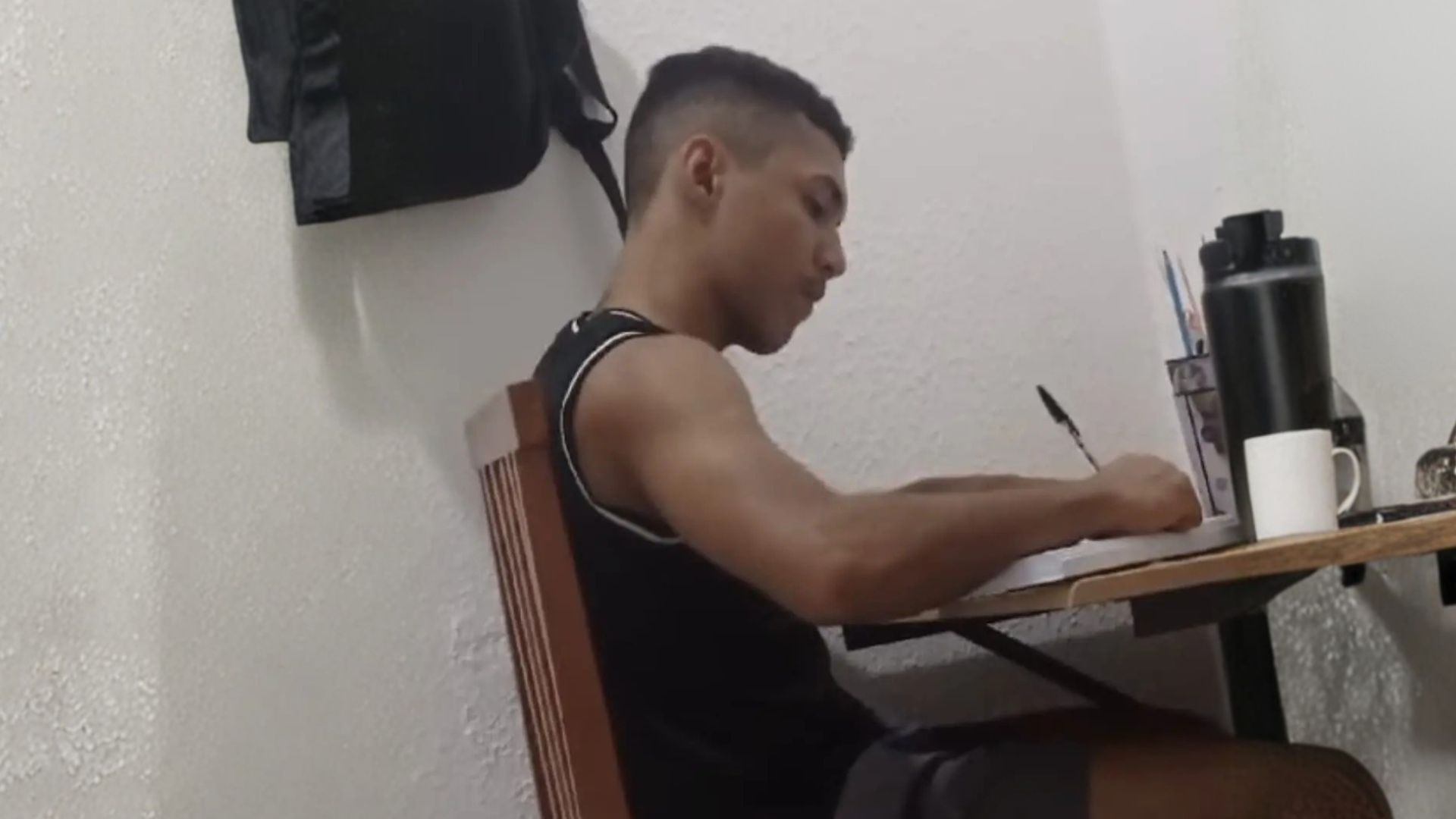

Trajectory marked by discipline, renunciations, and independent study leads student from the periphery of Fortaleza to approval in Medicine at UFC, challenging social expectations and highlighting the role of public school in the transformation of lives.
At 17 years old, Mateus Rodrigues de Freitas secured a spot in Medicine at the Federal University of Ceará after a preparation built without traditional tutoring and marked by a rigorous reorganization of his routine to prioritize performance in exams.
A resident of the Siqueira neighborhood in Fortaleza, the student, son of a driver and a housekeeper, gained visibility by contradicting recurring predictions that this course would not be compatible with his social background and educational trajectory.
Approval in Medicine at UFC without traditional tutoring
Without access to private preparation structures, the strategy adopted combined regular classes at school, individual deepening through readings, and constant use of free video lessons available on the internet.
-
Modular ‘Microhouse’ Arrives Ready to Install in Hours Without Deep Foundations or Construction Waste

-
UK Student Develops Solar Water Purification System Using Fresnel Lens, Wins Global Young Scientists Popular Vote
-
Giant Dredger “No Woman, No Cry” Arrived in Brazil in 2010 to Clear 1.8 Million m³ of Sand and Improve Port Logistics
-
UAE Installs 16 Giant Concrete Coffers in Abu Dhabi Waters to Build 600-Meter Quay for Mega-Yachts and Debut New Technique


Unlike the more common model among high-competition candidates, based on paid guidance and routines led by specialized courses, the student structured his own method and prioritized consistency over time.

During the school year, mornings were dedicated to classes at the Dona Júlia Alves Pessoa Elementary and High School, while afternoons concentrated around four continuous hours of study at home.
Even with intense academic focus, the routine included breaks for rest and participation in household chores, while weekends were used to reinforce reviews and expand contact with the content.
This journey culminated in an unprecedented result within the school itself, which began to recognize the symbolic dimension of the achievement for the school community.
Mateus became the first student from the unit approved in Medicine, a milestone that began to be treated as a concrete reference of possibility for other students from the same reality.
Change of course until the choice of Medicine
Initially, the decision to pursue a medical career was not part of a consolidated plan, as other academic options were still being considered in the final phase of high school.
Among the alternatives evaluated were courses such as Psychology and Biological Sciences, a scenario that began to change as performance improved and results in practice tests indicated room for more ambitious goals.
The turning point occurred after passing the second phase of the entrance exam for the State University of Ceará, an experience that served as a concrete indicator of feasibility and propelled the change in focus.
From that moment on, the National High School Exam became the main strategy, as it represented the direct path to entering Medicine at the federal university.
According to a report to the newspaper, the student himself acknowledged that he had not, until then, fully realized the academic potential he could achieve throughout the preparation.
Instead of an early and fixed decision, the choice was the result of a gradual process, fueled by improvement in performance, increased reading, and progressive strengthening of confidence.
Intensive routine and personal sacrifices during preparation

Throughout the preparation, significant adjustments were made in personal life to ensure greater concentration and reduce external interference in the study rhythm.
Leisure activities, such as going to malls, beaches, and meeting friends, were consciously reduced, while the use of social media was eliminated from daily life during this period.
As a practical strategy to avoid distractions, the cellphone was kept in another room during study sessions, which helped maintain the planned regularity.
Additionally, a relationship was ended amicably, as both recognized that this moment required priority dedication to the academic project.
Although the changes were significant, there was no complete isolation, as there was still controlled space for personal activities, provided they did not compromise the continuity of the preparation.
In a published statement, Mateus emphasized the importance of constant discipline over time as a central element of the learning process.
Studying regularly, even if for fewer daily hours, was pointed out as a more efficient strategy than alternating periods of high workload with frequent interruptions.
Public school and teachers at the center of the conquest
The student’s own reading of their journey attributes a relevant role to public school, especially regarding the academic foundation built over the years.
When mentioning the teachers, Mateus emphasized that the support received in the classroom had a direct impact on consolidating learning and developing the confidence to compete for a highly sought-after spot.
This perception was shared by the school team, who began to treat the result as a collective reflection of the work developed at the institution.
Physics teacher Neudo Teodoro assessed that similar trajectories are still an exception, but serve as an indication that public education maintains the capacity to promote social transformation.

Coordinator Luã Rodrigues Lopes highlighted the student’s profile as a factor that amplifies the symbolic reach of the achievement within the educational debate.
According to him, the fact that this is a Black student, living in the periphery and a graduate of the public network reinforces the representativeness of the achieved result.
In the school environment, the approval began to be understood as evidence that continuous pedagogical initiatives can produce concrete effects even in contexts of resource constraints.
The school maintains actions such as large classes, seminars, lectures, and vocational tests, strategies that help structure life projects and broaden academic horizons.
Approval received on the bus reinforces the symbolism of the story
The moment when the approval was confirmed contributed to amplifying the narrative impact of the presented journey.
The news arrived while the student was on a bus, on the way home, a scenario that highlights the common routine and contrasts with the magnitude of the achievement reached.
This image encapsulates the distance between the daily life of a young person from the periphery and access to one of the most competitive courses in the country.
Furthermore, it was reported that the score obtained in the Enem would allow approval in any course at the Federal University of Ceará.
This data reinforces the level of academic performance achieved throughout the preparation.
The start of classes is scheduled for the second semester of 2026, a period in which Mateus will begin his university education.
Case reignites debate on access to higher education
The repercussions of the case can be explained by the combination of factors that directly relate to structural inequalities in access to higher education.
Elements such as working-class background, comprehensive education in public schools, lack of preparatory courses, and facing social disbelief often act as barriers even before the attempt to enter.
By stating that he wishes to serve as a reference for other young people, the student places his own journey within a broader debate about opportunities and social mobility.
In this context, the journey highlights that the combination of school environment, discipline, and guidance can yield significant results even in adverse scenarios.
In a national scenario where Medicine is often associated with high preparation costs and restricted access, the approval shifts the axis of the discussion.
Mateus’s experience repositions public schools as a central agent in expanding opportunities and in the debate on access to higher education.


