






 Portuguese
  Spanish


A Canadian experiment combined compressed air, water pressure, and large submerged structures to test an unusual energy storage solution, a topic that returned to debate with new projects from Hydrostor.
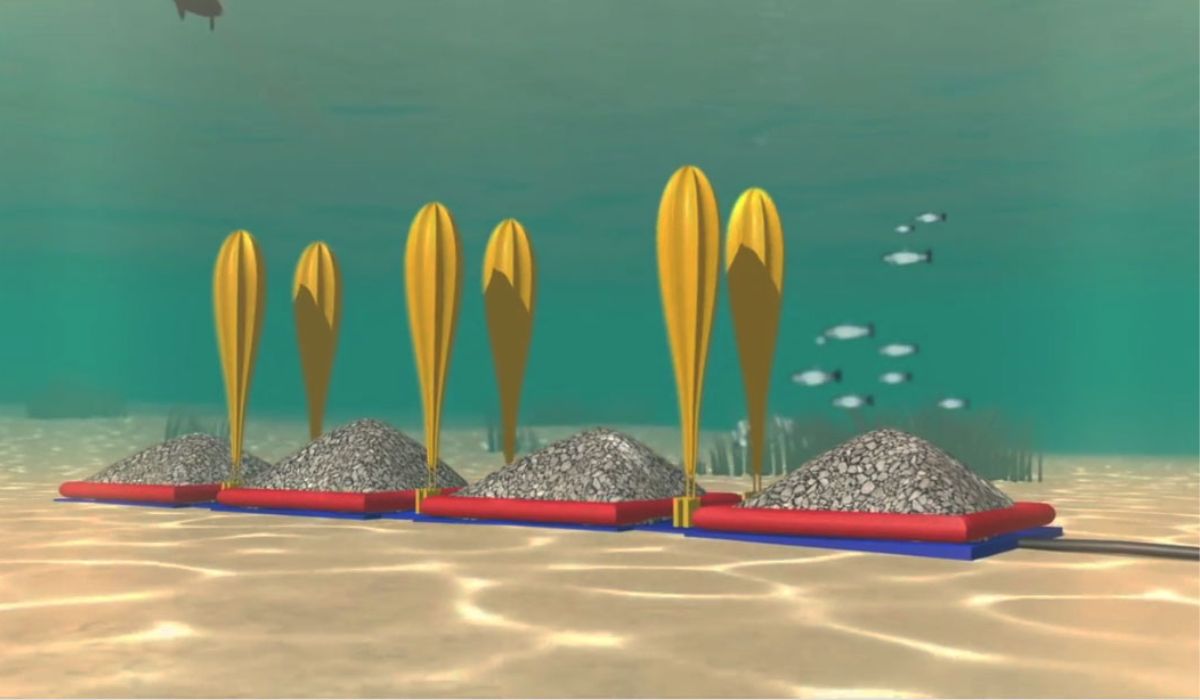
Six structures resembling giant balloons were installed at the bottom of Lake Ontario, Canada, to test a way to store energy with compressed air and water pressure.
The project was launched in November 2015 by Hydrostor, in partnership with Toronto Hydro, and has gained current relevance because the Canadian company advanced, in 2025 and 2026, in larger long-term storage initiatives with technology based on compressed air.
The original experiment was located about three kilometers from Toronto Island, in an area 55 meters deep, according to an official statement from Toronto Hydro.
-
Astronauts Returning from Space Develop Early Cataracts Due to Eye Lens Radiation, Highlighting Risks for Future Mars Missions

-
Brastemp Unveils New Dishwasher with Smart Sensor, 14 Place Settings, Acquaspray Jet, 70°C Rinse, Water Efficiency, and Intelligent Drying
-
Antarctic Sea Creature Yields Promising Compound Against Melanoma, Captivating U.S. Researchers

-
Underwater Guardian: The Autonomous Robot Monitoring Submarine Cables, Self-Returning, Wirelessly Charging, and Transmitting Data Without Onboard Crew




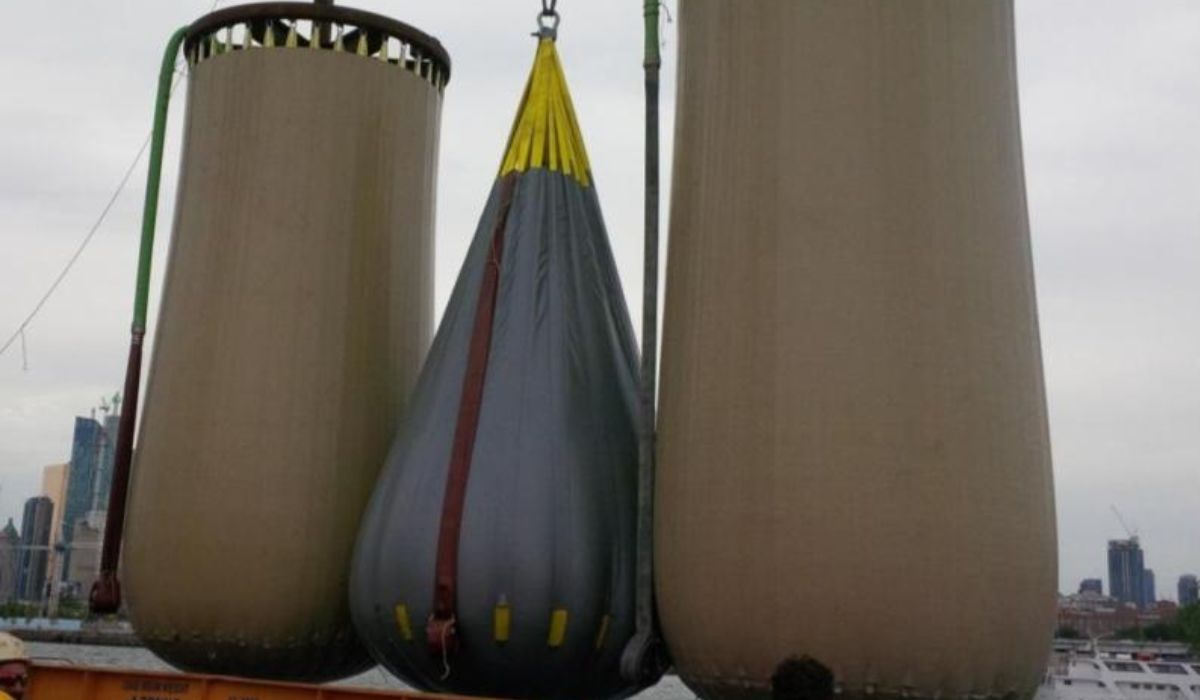
Reports published at the time also describe the system approximately 60 meters below the surface and mention six nylon-coated bags, with a height equivalent to three stories, attached to the lake bed.
Together, they occupied an area approximately the size of a basketball court.
The system functioned as a submerged battery, but without the chemical components used in lithium-ion batteries.
When electricity was available on the grid, compressors installed on land transformed this energy into compressed air.
This air traveled through pipes to the submerged bags.
During periods of higher demand, the water pressure pushed the air back to the surface, where an expander converted the movement into electricity for the grid.
Submerged Battery in Lake Ontario
The operation of the project was based on a known physical principle: the pressure exerted by water increases with depth.
In the case tested in Toronto, the water column helped keep the air under pressure in the bags installed at the bottom of the lake, reducing the need for rigid high-pressure tanks.
In practice, the installation transformed electrical energy into pressurized air.
This air was stored in the flexible bags, which functioned as accumulators.
Then, when electricity needed to return to the grid, the hydrostatic pressure helped to move the air back towards the surface.
Toronto Hydro reported at the launch that the unit had a peak power of 660 kW, a capacity indicated by the company as sufficient to supply approximately 330 homes for just over an hour, depending on consumption.
The project was planned as a two-year pilot study, with monitoring of performance, power quality, and resilience of the local grid.
Compressed air and energy storage
The Canadian experiment was not a traditional hydroelectric plant.
The structure did not use a dam, waterfall, or turbines directly driven by the lake’s current.
It was also not wave generation.
The proposal was to use water as part of the compression and energy recovery mechanism.
Storage is identified by companies in the electricity sector and grid operators as one of the challenges to increasing the share of renewable sources.
Solar systems depend on the availability of light, while wind farms vary according to the wind.
Without sufficient storage, the grid needs other sources or support mechanisms to balance supply and consumption.
This context appears in a statement attributed to Curtis VanWalleghem, CEO of Hydrostor, in 2015.
Commenting on the transition to less use of fossil fuels, he told the Toronto Star that, for this, “a lot of energy storage is needed.”
The statement was reproduced by the Project Management Institute in material about the project.
There is an important factual adjustment in relation to the base text.
The mention of coal dependency in Toronto should not be maintained as current data, because Ontario completed the gradual elimination of about 8,000 MW of coal generation between 2003 and 2014, according to the Canada Energy Regulator.
Therefore, the more accurate framing is that of a technology aimed at storage, grid stability, and integration of variable energy sources.
Hydrostor and the projects after the submerged balloons
The subsequent advancement appears in the technology developed by Hydrostor, which has been applied in larger scale projects with underground structures.
The current version of the technology is called A-CAES, an acronym for advanced compressed air energy storage.
Instead of keeping the air in bags at the bottom of a lake, recent projects use air, water, and underground caves.
According to Hydrostor itself, the technology uses compressed air and water to store energy and return electricity to the grid when needed.
The change of environment shows an adaptation of the initial proposal.
The principle remains associated with the use of compressed air and water, but current projects are designed for larger capacities and integration with regional power grids.
This transition from submerged tests to underground installations also reduces dependence on specific aquatic areas.
In May 2026, Hydrostor announced the Quinte Energy Storage Centre, in Greater Napanee, Ontario.
The project was presented as an advanced compressed air storage facility and entered the development phase following a municipal support resolution.
The company reported that the process will proceed to licensing with municipal, provincial, and federal authorities.
The enterprise will be developed in partnership with the Mohawks of the Bay of Quinte, who will have indigenous equity participation in the project, according to Hydrostor’s statement.
The company also reported that the facility is expected to generate about 40 permanent jobs over an estimated operational lifespan of 50 years, in addition to contributing more than 1.4 billion Canadian dollars to Canada’s GDP.
These figures were presented by the company and depend on the project’s implementation.

Long-term underground storage
The expansion of Hydrostor also involves projects outside of Canada.
In California, the Willow Rock Energy Storage Center received certification from the California Energy Commission on December 19, 2025, and is in the pre-construction phase.
The state agency describes the facility as a 500 MW net project in Kern County, with energy storage technology.
The California Energy Commission reports that Willow Rock anticipates 4,160 MWh gross and 4,000 MWh net capacity, with four sets of 130 MW gross turbines.
Hydrostor, in turn, states that the system was designed for eight hours of continuous discharge to the grid.
In Australia, the Broken Hill Advanced Compressed Air Energy Storage project also integrates the company’s strategy for long-duration storage.
The initiative, in New South Wales, was announced as a compressed air facility associated with the repurposing of an existing mine, with a planned capacity of 200 MW and 1,600 MWh, according to public information from the Australian agency ARENA.
The case of the submerged balloons in Lake Ontario remains relevant as an initial stage of technological demonstration.
The installation brought together known physical elements, such as air compression, hydrostatic pressure, and mechanical energy conversion into electricity, in an uncommon configuration for systems connected to urban grids.

The scale, however, has changed.
In Lake Ontario, the proposal was to test a unit connected to Toronto’s grid and monitored in a pilot.
In recent projects, Hydrostor has started presenting systems of hundreds of megawatts, with several hours of storage and the use of underground caverns instead of bags installed under the water.
The trajectory indicates a change in the way of applying the same physical principle.
First, the compressed air was stored in bags attached to the bottom of a lake.
Then, the company began directing the technology towards underground structures, with projects still subject to licensing, construction, and commercial operation.


