Portuguese
  Spanish


Identifying a gifted child goes far beyond high grades. Experts explain that advanced vocabulary, exceptional memory, intense curiosity, and even low performance due to boredom can indicate high abilities. The first signs usually appear even before literacy.
Discovering if a child is gifted is more complex than looking at the school report card. Contrary to what many people imagine, high abilities do not always translate into high grades, and in some cases, they may hide precisely behind disinterest and low performance in school. Experts warn that boredom, lack of stimulation, and social pressure can create a gap between the child’s real potential and what they demonstrate in the classroom, causing many talents to go unnoticed.
The signs, however, usually appear early, often even before formal literacy. The family itself is usually the first to notice that the child’s development occurs at a different pace than expected for their age. Recognizing these signs is essential to ensure adequate support for those with this profile. The information was disclosed by g1, based on guidance from experts and the Ministry of Education on identifying high abilities.
What it means to be gifted
Before identifying the signs, it is important to understand the concept. Giftedness, also called high abilities, is understood as a neurodevelopmental condition. It is not limited to a single trait but encompasses a set of characteristics that appear in combination in the child.
-
Japanese doctors complete 34 years of volunteer mission in Vietnam and have already performed more than 3,000 free surgeries to correct cleft lip and palate in children from families unable to afford treatment.

-
The man who started by cleaning bricks and unloading wagons entered the warehouses of Dallas and helped transform commercial real estate into a billion-dollar business.
-
An entrepreneur from Alagoas started by selling organza bags as extra income, ventured into digital after motherhood, and transformed personalized packaging into a national business that sells 35,000 units per month, generates about R$ 60,000, and employs 14 people.

-
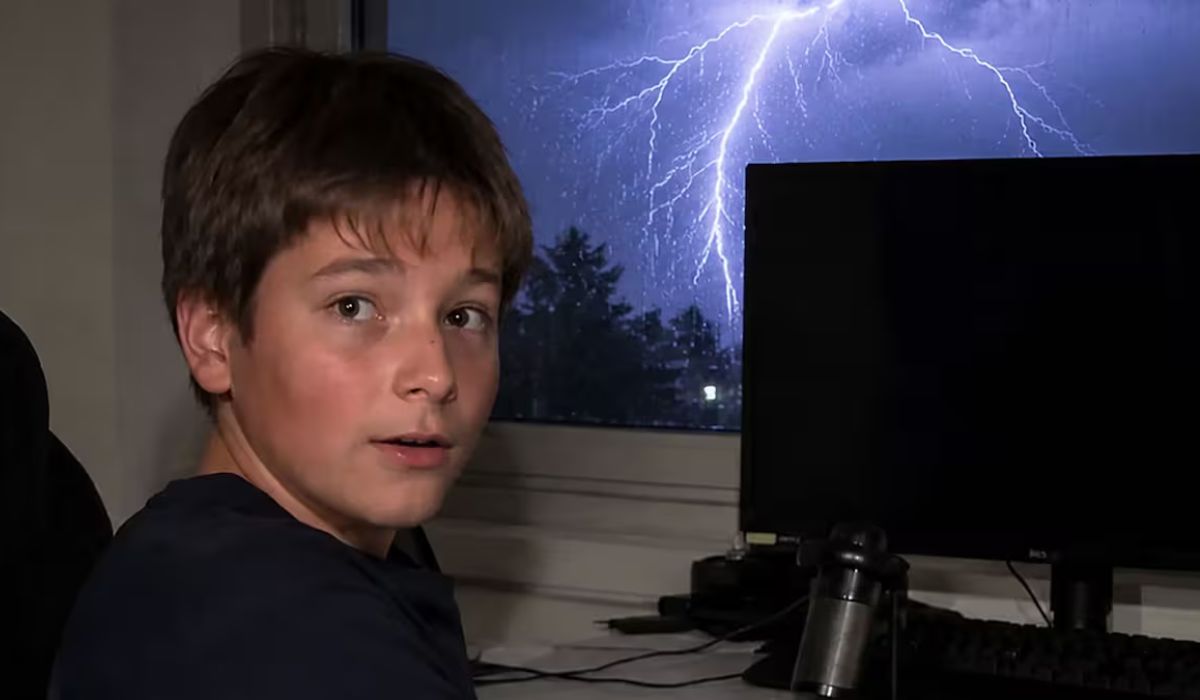
While playing video games in his room, a 13-year-old teenager was struck by a lightning bolt that entered the house, left a hole in the wall, passed through a metal piece of the desk, and made the boy scream, thinking he was going to die.


Among the pillars of this condition are some well-defined markers. It usually involves high intellectual potential, intense curiosity, great learning capacity, and deep involvement in topics of interest. It is worth noting that giftedness should be understood as a multidimensional phenomenon, meaning it goes far beyond intelligence measured by traditional tests and includes emotional, social, and creative aspects.
The first signs before school
Long before the child enters the literacy phase, some behaviors may already catch the parents’ attention. One of the most common is early development, when the baby sits, crawls, or walks months before the average observed in other children of the same age. This advancement is often one of the first signs noticed at home.
Language and memory also offer important clues. A gifted child may display an advanced vocabulary, using uncommon words for their age, as well as an above-average memory, capable of recalling details of past trips or repeating entire dialogues from movies. Added to this is accelerated learning, with cases of children who learn to read on their own or understand game rules after very few explanations.
Curiosity, Hyperfocus, and Creativity
Another group of signs is related to how the child interacts with knowledge. Intense curiosity is a hallmark: there are successive questions about complex topics, such as the origin of the universe, death, or the functioning of the human body. This desire to understand the world usually goes far beyond what is expected for their age group.
This interest often turns into deep dives into specific subjects. This is called hyperfocus, when the child spends hours researching dinosaurs, maps, astronomy, or music, accumulating unusual knowledge for their age. Creativity completes the picture, with the invention of games, elaborate stories, and unexpected solutions to everyday problems, as well as a constant search for more complex challenges.
Why Low Grades Do Not Rule Out Giftedness
Here is one of the points that most surprises parents and educators. Contrary to common belief, a gifted student does not always stand out for their grades. In the classroom, some learn new content with minimal instruction and finish activities long before their peers, but when faced with repetitive subjects, they may simply “switch off” and show disinterest.
There is also a phenomenon that further confuses behavior interpretation. To avoid social isolation, some students hide their abilities and produce work below their potential, in a movement known as dissimulation. Therefore, experts emphasize that low academic performance does not exclude the possibility of giftedness, as boredom, anxiety, and social pressure can mask a child’s true potential.
The Emotional and Social Side
Giftedness is not only about cognitive performance, and ignoring the emotional side is a common mistake. Many of these children exhibit greater reactivity, with intense responses to noise, pain, frustrations, or situations they consider unfair. This heightened sensitivity is part of the profile and needs to be embraced.
In the social field, there are also striking characteristics. It is common for a gifted child to prefer the company of older people or adults, seeking interlocutors with similar interests, and to demonstrate leadership traits. At the same time, these students may face feelings of inadequacy, loneliness, and even bullying situations, which makes emotional support as important as intellectual stimulation.
What is dyssynchrony
A concept helps to understand many of the apparent contradictions in the behavior of these children. It is dyssynchrony, which is an uneven development between different areas. Not everything evolves at the same pace, and this can cause confusion when assessing the child’s profile.
Examples make the phenomenon clearer. A child may have very advanced reading ability but still face motor difficulties in writing, or exhibit high intellectual performance alongside emotional immaturity. This difference between areas is one of the reasons why identification needs to be careful and consider the set of behaviors, not an isolated trait.
How identification is done
Faced with so many possible signs, the question arises of how to confirm giftedness. The Ministry of Education advises that identification be a continuous process, not a single event. The teacher’s observation plays a central role, analyzing not only academic performance but also learning processes and behavior in different situations.
This perspective is complemented by other assessment fronts. Identification usually considers interviews with family members, development history, and scales filled out by teachers, and when there is suspicion, involves a neuropsychological evaluation conducted by a specialized professional. It is worth remembering that intelligence tests measure only part of the abilities and do not capture the full complexity of giftedness, which involves curiosity, emotional intensity, and motivation to delve into topics.
What parents should do
Upon noticing these signs, the parents’ attitude makes all the difference in the child’s development. Specialists recommend starting by recording behaviors, interests, and relevant observations, creating a consistent portrait of what is observed at home. This monitoring helps differentiate giftedness from mere precocity stimulated by the environment.
Dialogue with the school is the next and equally important step. The guidance is to talk to the pedagogical coordination, seek specialized professional evaluation, and maintain constant dialogue with educators. On the other hand, it is necessary to avoid excessive pressure for exceptional performance, as overly high expectations can generate anxiety and feelings of inadequacy precisely in those who most need support.
And you, have you noticed any of these signs in your child or any nearby child? Share in the comments which behaviors caught your attention and help other parents better understand the world of gifted children.