






 Portuguese
  Spanish
  5 min of reading
  219 comments


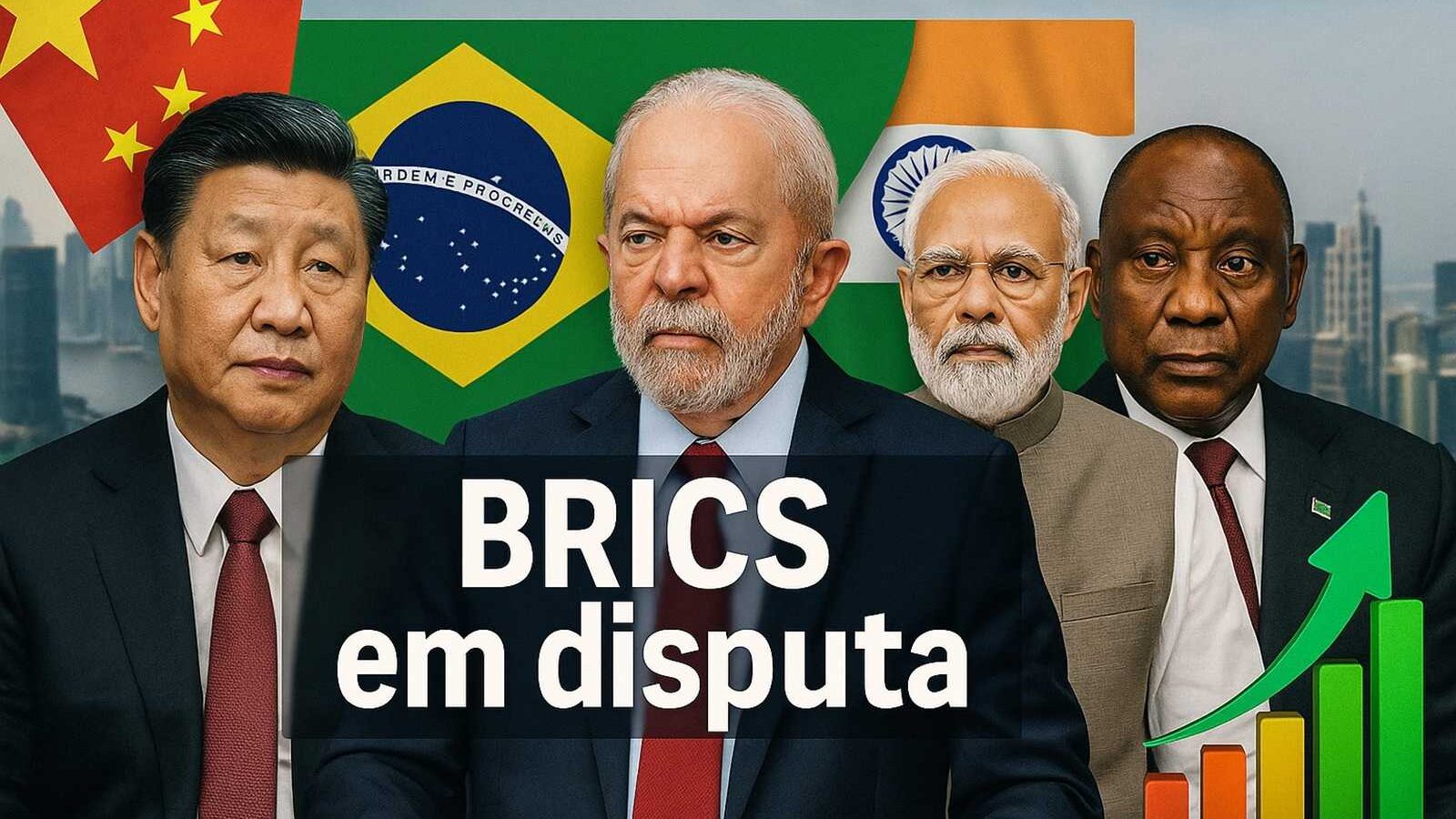


China Pressures the BRICS to Adopt the Yuan as a Reference Currency, but Brazil, India, and South Africa Advocate a Multi-Currency System Against Chinese Dominance.
China has intensified its initiatives to expand the use of the yuan as a reference currency within the BRICS bloc.
The proposal arises at a time when the countries in the group are discussing alternatives to the dollar to reduce risks in international transactions.
The topic gained traction following the sanctions imposed by the United States against Russia, which stimulated the search for other payment methods.
-
A collective political will that allows for the creation of a cross-party and state agenda, focusing on concrete actions such as reducing the Custo Brasil; commitment to fiscal balance; feasible goals that enhance professional qualification and the adoption of a myriad of incentives aimed at innovation.

-
PIX from BRICS becomes reality: BRICS Pay advances to enable international payments without the dollar; system inspired by Pix and based on blockchain could move up to 20% of global trade by 2030, while bloc countries already account for 40% of the world economy.

-
After a motorcycle accident at 17, a Bahian agronomist borrowed R$ 40 from his mother, transformed a homemade granola recipe into Tia Sônia, and reached R$ 120 million, targeting São Paulo with 300 tons monthly and 80 products.

-
The CNPJ made up only of numbers is numbered in Brazil, and the Federal Revenue has already set the changeover for July 2026: the new model will mix letters and numbers to avoid exhausting combinations and also prepare the ground for tax reform taxes.



In this context, Russia and Brazil have started to adopt the yuan more frequently in commercial operations, especially in the oil sector and in other commodities.
During the summits held in 2023 and 2024, the government of Xi Jinping presented formal proposals for the yuan to be considered both in central bank reserves and in commercial transactions.
Furthermore, Beijing suggested that member countries use their local currencies more frequently in exchanges, emphasizing, however, the role of the yuan as an available alternative.
Internal Reactions in the Bloc
Despite the pressure, the strategy is not unanimously accepted by the BRICS countries.
India and South Africa show caution as they advocate a multi-currency system.
A multi-currency system, advocated on several occasions by the BRICS, is a financial arrangement in which different national currencies from member countries can be used in commercial and financial transactions between them, instead of relying almost exclusively on the US dollar as a reference.
According to them, this format would allow different local currencies to have space, without giving exclusivity to the yuan.
Even Brazil, which has been using the Chinese currency in several transactions, now reinforces this position of not giving more prominence to the yuan.
The three countries argue that internal trade within the bloc should be diversified and that a basket of currencies could compete with the dollar in a more balanced manner.
Loans in Chinese Currency
In addition to trade, China is pressing for the use of the yuan in financing from the New Development Bank (NDB).
Countries like Pakistan, Sri Lanka, and African nations have already received loans denominated in yuan. This measure reinforces Beijing’s intention to consolidate its currency as a global alternative.
However, not everyone agrees. India has used the yuan in some settlements but quickly backed out.
This decision shows the fear of becoming overly dependent on the Chinese currency.
Criticism of China’s Prominence in the BRICS
China is, by far, the largest economy in the BRICS. Its GDP exceeds that of several members of the bloc combined, creating a natural power imbalance.
Experts point out that this disparity allows Beijing to dictate the group’s direction, reducing the autonomy of countries like Brazil and South Africa.
For critics, instead of balanced cooperation, the BRICS could become an extension of Chinese foreign policy.
Analysts observe that China sees the BRICS as a tool for international projection.
By advocating for a new reference currency based on the yuan and expanding its influence in the New Development Bank, Beijing reinforces its position as an alternative to the hegemony of the United States.
Trump Pressures Against the BRICS
Donald Trump, in his new term, made the BRICS a political priority. He began openly attacking the bloc, treating it as a threat to the dollar-led global monetary system.
The head of the White House made it clear that he would not allow progress in this regard without a harsh reaction.
Tariff Threats
In January, Trump announced that BRICS countries that advance initiatives to reduce the use of the dollar will face heavy trade tariffs.
He even mentioned rates of up to 100% on imports, in addition to a fixed tariff of 10% on products from all member countries.
“We will demand a commitment from these apparently hostile countries that they will not create a new currency or support any other currency to replace the mighty US dollar, otherwise, they will face 100% tariffs and must say goodbye to sales for the wonderful US economy“, Trump wrote at the time.
Unexpected Effects
Experts point out that Trump’s strategy may have the opposite effect than intended.
Instead of weakening the BRICS, his actions could accelerate the search for financial alternatives.
BRICS Pay, a system for payments in local currencies, gained momentum precisely amid sanctions and threats.
Therefore, American pressure acts as a stimulus for the bloc to consolidate its own tools, gradually reducing its vulnerability to the dollar.
Trump’s offensive shows how much the topic has shifted from being purely economic to geopolitical.
By defending the dollar with tariffs and threats, the United States reinforces the image that it fears losing ground in the international system.
For the BRICS countries, the challenge is to turn discourse into practice, expanding the use of national currencies and proving that they can create real alternatives.
The scenario indicates that the dispute is just beginning and will mark the coming years.
Future Paths of the BRICS
Therefore, although China reinforces the proposal to expand the use of the yuan as a reference currency in the bloc, the other countries maintain some distance from this idea.
Each member presents its own interests, and collectively, the preference has been for a broader and more diversified arrangement.
The majority position is to advocate for a multi-currency system, in which the local currencies of each country have equivalent space.
The rationale is that this model allows for greater balance in transactions and reduces the concentration of power around just one currency.
In summary, the BRICS does not signal adherence to the yuan as a sole reserve currency.
The internal differences regarding the subject ultimately function as a limit to the scope of bolder initiatives within the alliance, keeping the bloc on a trajectory of gradual negotiations and difficult consensus.
And you, what do you think about this debate? Do you believe Brazil should remain firmly within the BRICS, even in the face of Chinese prominence, or would it be better to rethink its position in the bloc? Share your opinion in the comments and join the discussion.







Esse artigo tem bons pontos, mas faltou o Central. A China ganha mais no sistema multimoedas do que se tornando a moeda padrão do BRICS. Para isso (e essa e a parte central e básica) a China teria que abrir suas contas para o investimento internacional financerizado. Isso explodiria a dívida da China que tem uma das maiores carteiras de poupança do mundo. Acho muito difícil que esse artigo esteja refletindo a posição real do governo Chinê a sua política monetária. É bom estudar para não dar um **** desses. A pressão que a China exerce sobre o BRICS é de outra natureza econômica. Quem quiser saber mais eu explico. Um bom dia a todos. Jesus na direção.
Olá Contra Polemiki, sou leigo em economia, mas gostaria muito de entender mais a fundo sua análise. Achei esse artigo superficial e tendencioso. Como seria esse processo de a dívida da China explodir, caso o yuan fosse transformado em moeda padrão do BRICS? O que significa um país ter uma “carteira de poupança”? Obrigado!
Penso que apesar de Trump não ser eterno, as leis básicas de uma administração pede que não se coloque “todos os ovos em uma cesta só!” Ou seja, encontrar alternativas comerciais ao dólar é uma boa ação independente da autoridade política americana que estiver no poder.
Tá mais do que claro, que a China quer o domínio de tudo,por isso para aceitar o BRICs,XI JinPing quer impor o seu yuan ,uma nova moeda terá que ser o yuan e não o BRICs, tá mais do que na cara!
Dalvo