






 Portuguese
  Spanish
  5 min of reading
  0 comments


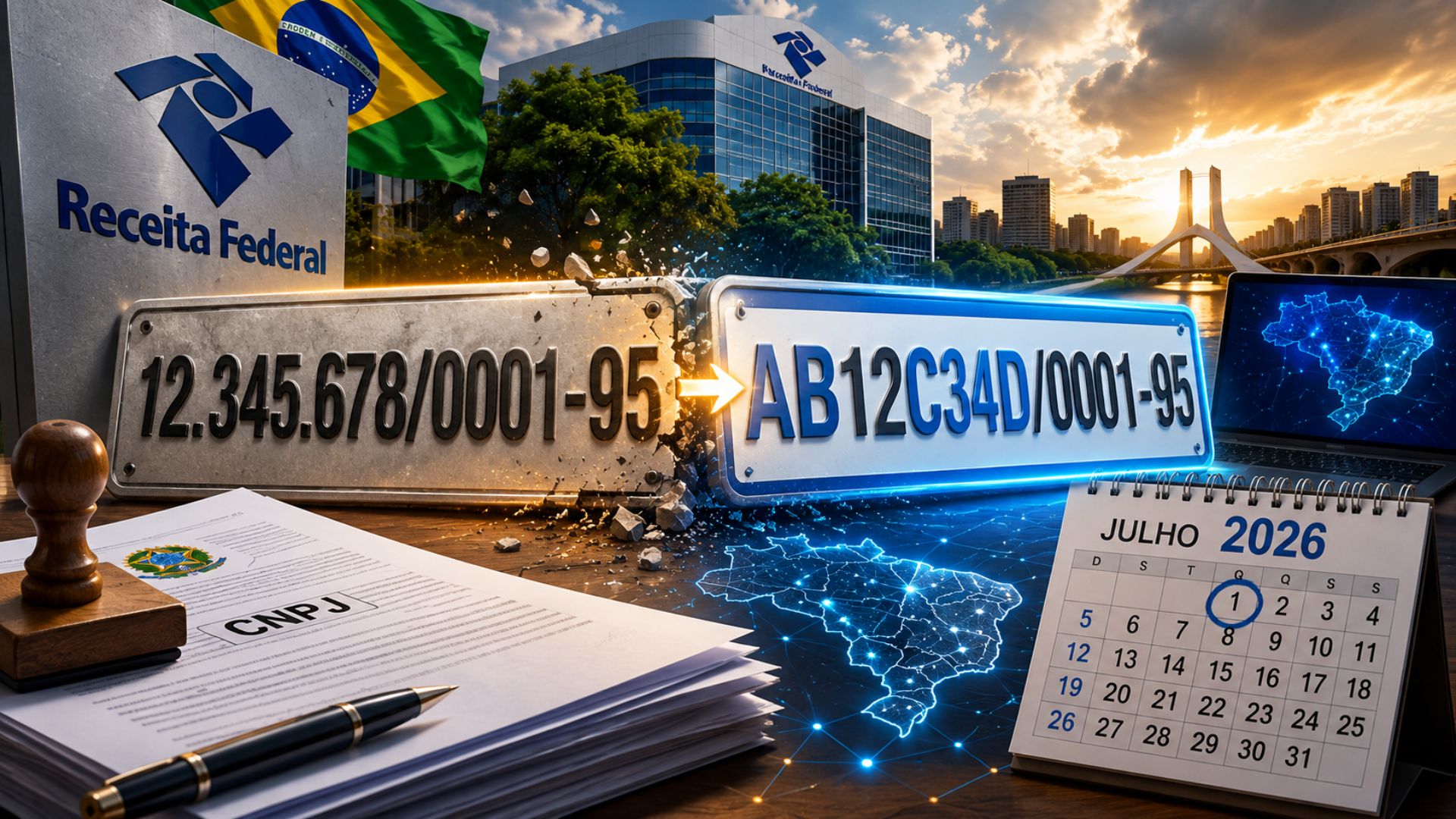
Starting in July 2026, the CNPJ will include letters from A to Z in addition to numbers, maintaining the 14 characters. The change by the Federal Revenue applies only to new registrations, prevents the exhaustion of combinations, and prepares the system for tax reform.
The CNPJ is about to change its appearance in Brazil. Starting in July 2026, the National Register of Legal Entities will include letters in addition to numbers in the identification of companies, organizations, rural producers, liberal professionals, and other types of legal entities. The decision is by the Federal Revenue and has a concrete reason: the current format, composed only of digits, is reaching its technical limit, and the inclusion of letters greatly expands the number of possible combinations.
The novelty does not require a rush for those who already have an open company. The change will be gradual and will only apply to new registrations, with no need to change or update anything in existing records. In addition to solving the problem of exhaustion, the new model prepares the ground for the modernization of the tax system and the arrival of new taxes from the reform. The information was released by g1, based on data and guidelines from the Federal Revenue itself.
What is the alphanumeric CNPJ

Instead of using only numbers, it will combine letters from A to Z with digits from 0 to 9, maintaining the total of 14 characters of the traditional structure. The visual appearance will remain similar to the current one, but with the inclusion of new characters in specific positions.
-
The government will increase the MEI limit and allow the hiring of one more employee, announced the Minister of Finance on Wednesday, but did not specify by how much.

-
Dia Supermercados closes 343 stores in Brazil, ends judicial recovery ahead of schedule, and attempts to revive with 238 units in São Paulo after a debt of nearly R$ 1.1 billion exposed the brutal pressure of wholesale clubs on traditional chains.

-
‘The vessel of human civilization has entered dangerous waters, full of reefs and storms’: it was with this apocalyptic tone that China launched an explosive manifesto this Wednesday, full of barbs at protectionism and the “double standards” of Western powers.
-
Brazilians begin to receive R$ 600 through Caixa Tem and the Bolsa Família calendar reveals who will have the money released first between June 17 and 30.





The reason behind the change is mathematical. In Brazil, more than 63 million CNPJs have already been issued, a number that is approaching the limit of the current model. This happens because, like the CPF, each registration is unique and permanent, and cannot be reused even when the company is closed. Currently, there are more than 24.9 million active registrations and about 29.2 million deactivated, according to data from the Federal Revenue.
Who will receive the CNPJ with letters
The rule to define who will have the new format is simple: it applies only to registrations made from the start date. This includes newly created companies, new branches, rural producers, condominiums, and freelancers. The issuance will begin in July 2026, and the Revenue intends to develop a calendar to define which types of companies or economic activities will first adopt the alphanumeric model.
For those who are already registered, the message is reassuring. The current numbers will continue to be valid and accepted normally by public and private systems, without any additional procedure. It will not be necessary to resort to the Federal Revenue or state and municipal agencies to keep the registration functioning. Public systems will be updated to accept both the old and new formats, automatically and transparently.
What changes for companies and their systems
Although it does not require action from those already registered, the change brings tasks for those dealing with the technical part. Companies and systems that issue invoices or perform tax control will need to adapt their software, databases, and internal routines to recognize the new CNPJ. Without this preparation, problems may arise in daily operations.
The risks are concrete. There may be failures in issuing tax documents, difficulties with suppliers, or delays in meeting tax obligations if the adaptation is not made in time. The Revenue’s recommendation is that companies prepare in advance, and the agency has informed that it will provide tools to facilitate this technical update. These adaptations, however, may generate costs, especially in invoice issuance software and databases.
The novelty in the calculation of the Check Digit


One of the most technical points of the change involves the Check Digit, that number that appears at the end of the CNPJ and serves to validate its authenticity. It will continue to be calculated by the Module 11 method, a type of mathematical verification, now adapted to include letters in the calculation. The security logic remains, it just gains an extra layer to handle the new characters.
The operation is simpler than it seems. Each character will be converted into a numerical value based on the ASCII table, from which the value 48 is subtracted to arrive at the number used in the calculation. The letter A, for example, corresponds to the number 65 in this table, so the value applied will be 17, resulting from 65 minus 48. The Federal Revenue will provide calculation routines in popular programming languages to facilitate system adaptation.
The connection with the tax reform
The change in the CNPJ is not an isolated movement, but part of a larger effort to modernize the Brazilian tax system. The new format paves the way for the implementation of two new taxes: the CBS, Contribution on Goods and Services, and the IBS, Tax on Goods and Services. Together, they are expected to unify and simplify various taxes currently in force.
For this mechanism to work, more modern and integrated systems are necessary. The alphanumeric CNPJ contributes by expanding the system’s capacity, facilitating the separation between personal and professional expenses, and automating processes such as the recovery of tax credits. It is this integration that makes the seemingly simple inclusion of letters an important piece within the gears of the tax reform.
How to prepare for the change
For most Brazilians, the transition will be silent and will not require any action. The old numbers remain valid, and the change only actually appears when opening a new registration. The registration process itself remains the same, and the only difference is that the generated number may contain letters from the start of issuance.
Those who need to stay alert are companies that rely on their own systems to issue documents and fulfill tax obligations. The general advice is not to leave the adaptation to the last minute, as technical failures can block the issuance of invoices and delay the payment of taxes. With systems adjusted and integrated with REDESIM, the expectation of the Receita is that the change to the new CNPJ will occur without major hiccups.
And you, do you think the inclusion of letters in the CNPJ will make life easier for companies or do you fear problems during adaptation? Leave your opinion on this change by the Receita Federal in the comments.







Be the first to react!