Portuguese
  Spanish


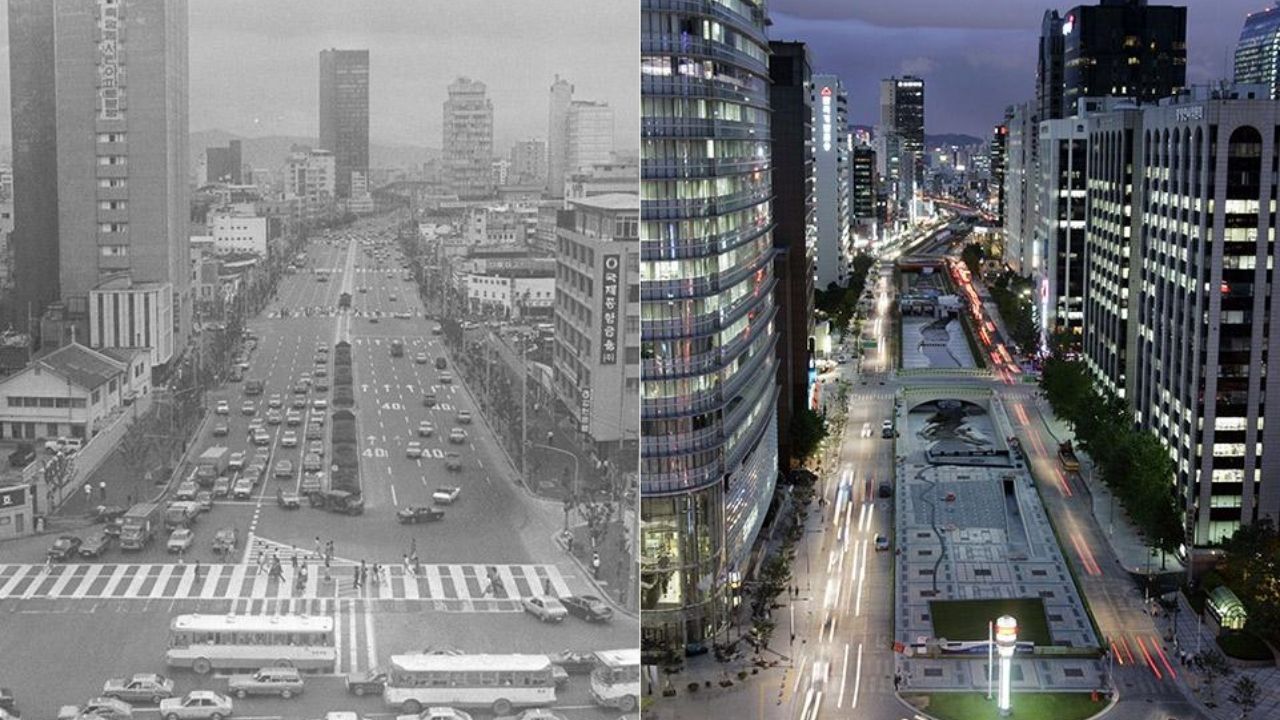

Cheonggyecheon Project transformed a river buried under concrete and an expressway into an urban park in Seoul, with water, walkways, and green areas. The project attracted thousands of visitors, reduced heat, improved mobility, increased biodiversity, and showed the limits of a restoration dependent on complex artificial urban engineering in the modern urban center.
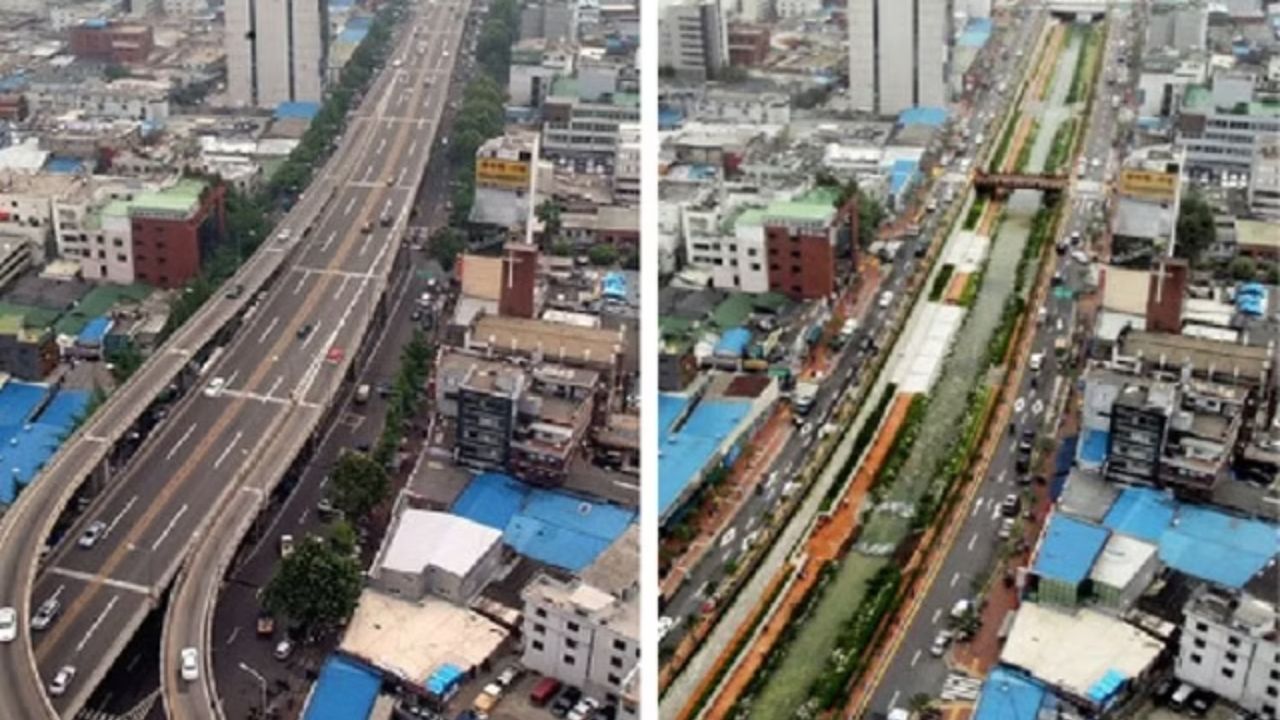
The river buried under concrete and an elevated expressway in the center of Seoul resurfaced as part of the Cheonggyecheon recovery project in South Korea and became viewed as an urban park. The project was completed in 2005, after 27 months of urban intervention in one of the busiest areas of the capital.
In a video released by the Simple Discovery channel, on June 1, 2026, the transformation removed a highway that had become a symbol of South Korean modernization and made way for a corridor of water, walkways, and public spaces. The project gained worldwide attention for attracting about 64,000 visitors per day and for recording a 639% increase in biodiversity between 2003 and 2008.
An ancient river disappeared under the concrete
The Cheonggyecheon was a historic watercourse in Seoul, associated with the city’s daily life since ancient times. Over time, its banks gathered commerce, housing, bridges, and popular activities that were part of the urban landscape.
-
They exchanged the idea of a large house for a 35 m² warehouse, spent US$ 12,000 on the structure, and created a tiny house in Colorado with space to live and work.

-
A newly opened terminal in the middle of the Amazon has begun transporting soy and corn through Amapá, eyeing the queue of ships that is congesting the ports in the South.

-
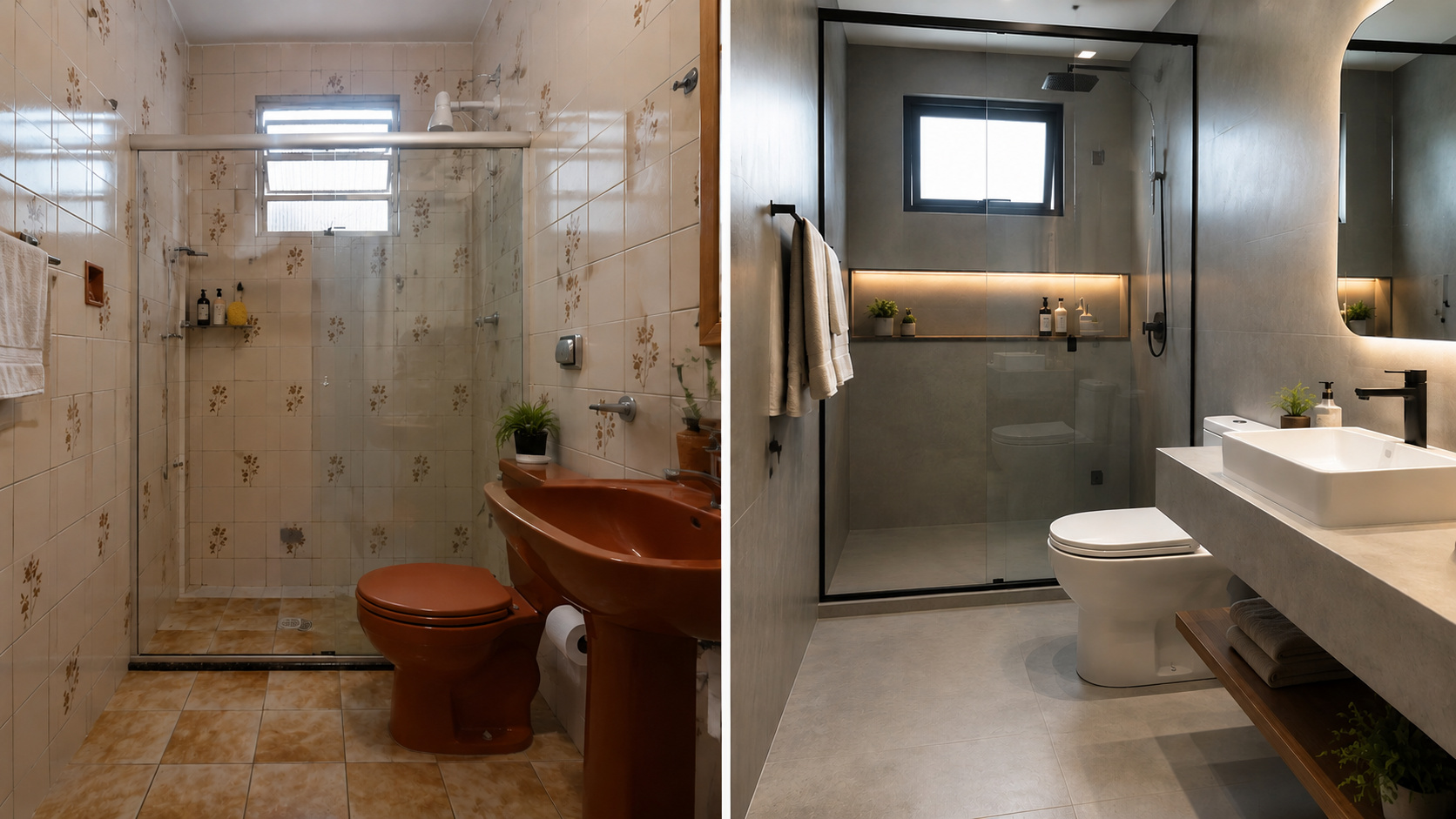
Goodbye to old tiles: renovation technique without construction transforms bathrooms in a few hours, eliminates debris, and reduces costs with coverings using special paints, high-resistance adhesives, and modern finishes that completely renew the space.
-
Goodbye to the traditional clay brick: Indian startup transforms burnt straw into a carbon-negative brick that costs half, insulates better, and even removes CO2 from the air.


After the Korean War, however, the city grew rapidly and faced poverty, intense migration, precarious occupations, and sewage dumping in the stream. What was once part of urban life came to be seen as a sign of backwardness in a capital that wanted to modernize quickly.
Modernization transformed the stream into a highway
In the second half of the 20th century, Seoul invested in large infrastructure projects to accelerate industrialization and organize traffic. In this process, the Cheonggyecheon was covered with concrete and later had an elevated expressway built over its former bed.
For many residents of the time, the construction represented progress. More cars, more speed, and more circulation of goods seemed to indicate economic advancement. The buried river became the foundation of a city shaped by concrete, haste, and the logic of the automobile.
Highway began to weigh on the city
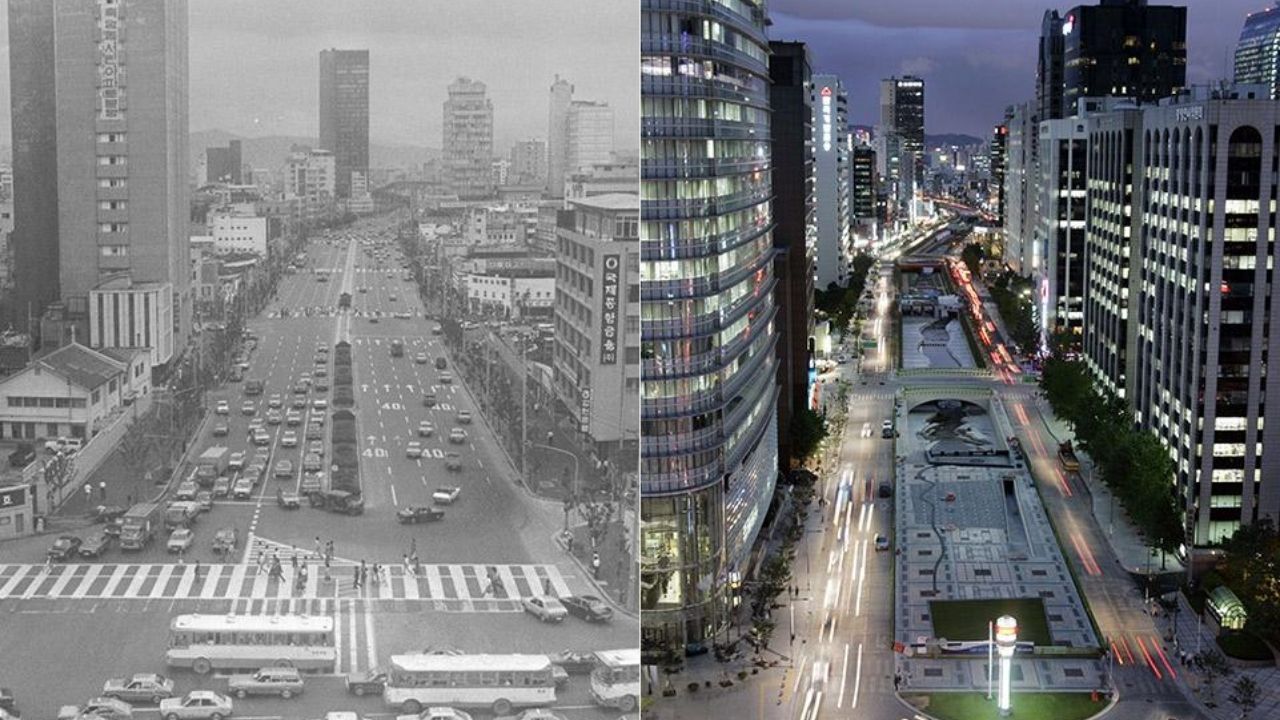
Over the decades, the elevated structure stopped appearing as a solution and began to expose problems. The road supported heavy traffic, aged rapidly, and required expensive repairs in an area increasingly dominated by concrete.
Besides the physical wear, there were urban impacts. Downtown Seoul accumulated congestion, pollution, heat, and little space for pedestrians. The highway that once symbolized modernity began to function as a barrier, shadow, and weight on the heart of the city.
Demolishing the road seemed like a risky bet
The decision to tear down the expressway and recover the Cheonggyecheon was considered bold. The project gained momentum in the early 2000s, during the administration of Lee Myung-bak, then mayor of Seoul, who had built a career linked to the infrastructure sector.
The proposal seemed contradictory to part of the population: a politician associated with the world of large constructions wanted to remove one of the most emblematic structures of urban modernization. The question was simple and uncomfortable: how could a metropolis withstand losing an elevated avenue in its very center?
Project removed concrete, steel, and decades of infrastructure
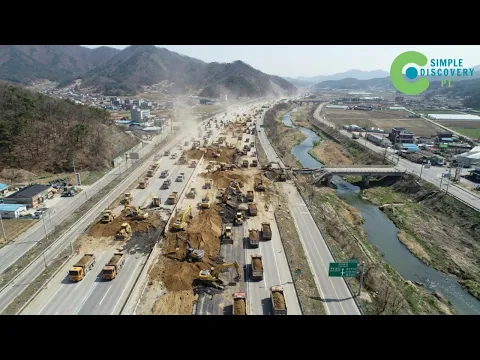
The intervention began in 2003 and transformed the center of Seoul into a large construction site. It was necessary to remove lanes, elevated structures, underground networks, cables, pipes, and accumulated layers of urban infrastructure.
The scale of the demolition was impressive. More than 680 thousand tons of concrete and steel were removed, according to technical references about the project. It was not just about opening a park: it was about undoing a part of the industrial city to rebuild another model of public space.
Cheonggyecheon returned as a water corridor
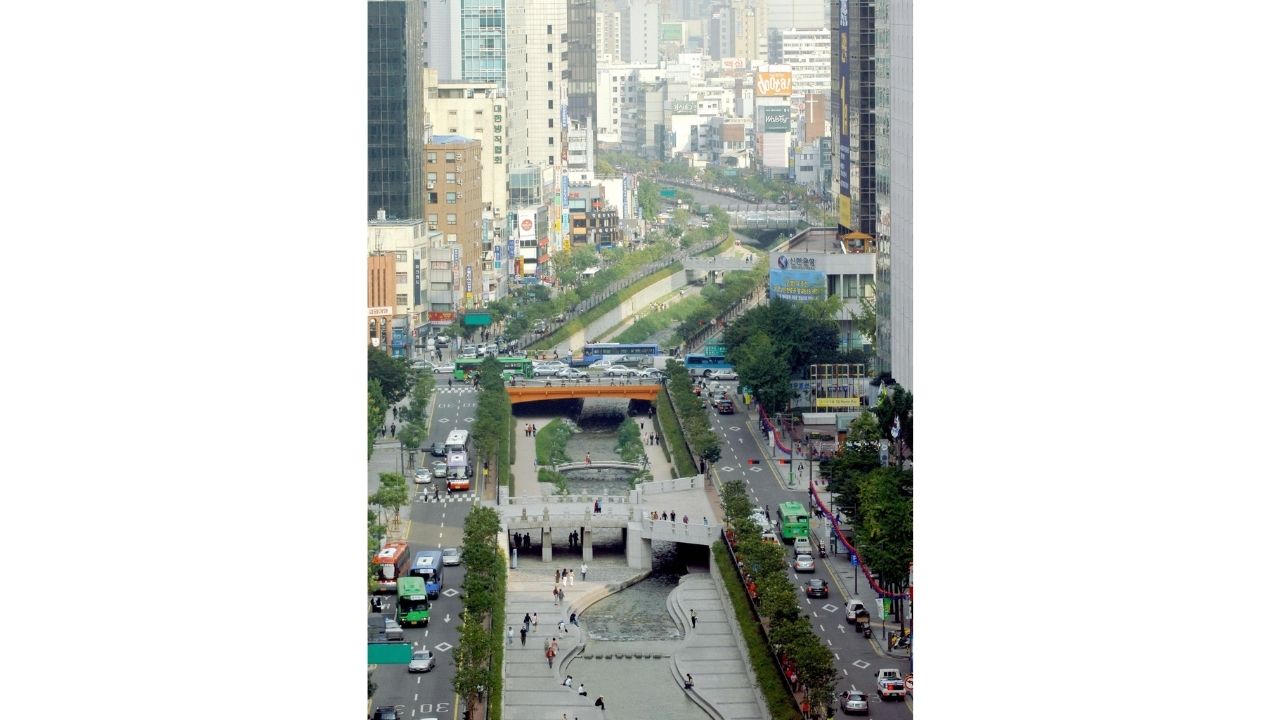
After 27 months of construction, Cheonggyecheon was reopened in 2005 as a water corridor and social space in the center of Seoul. The restored section became about 5.8 km long, with walkways, accessible banks, and leisure areas.
The final image contrasted with the recent past. Where there was concrete, viaduct shadows, and vehicle flow, there appeared water, vegetation, pedestrians, and resting spaces. The buried river returned not as a simple return to the past, but as a planned urban reconstruction.
Restoration also depended on artificial engineering
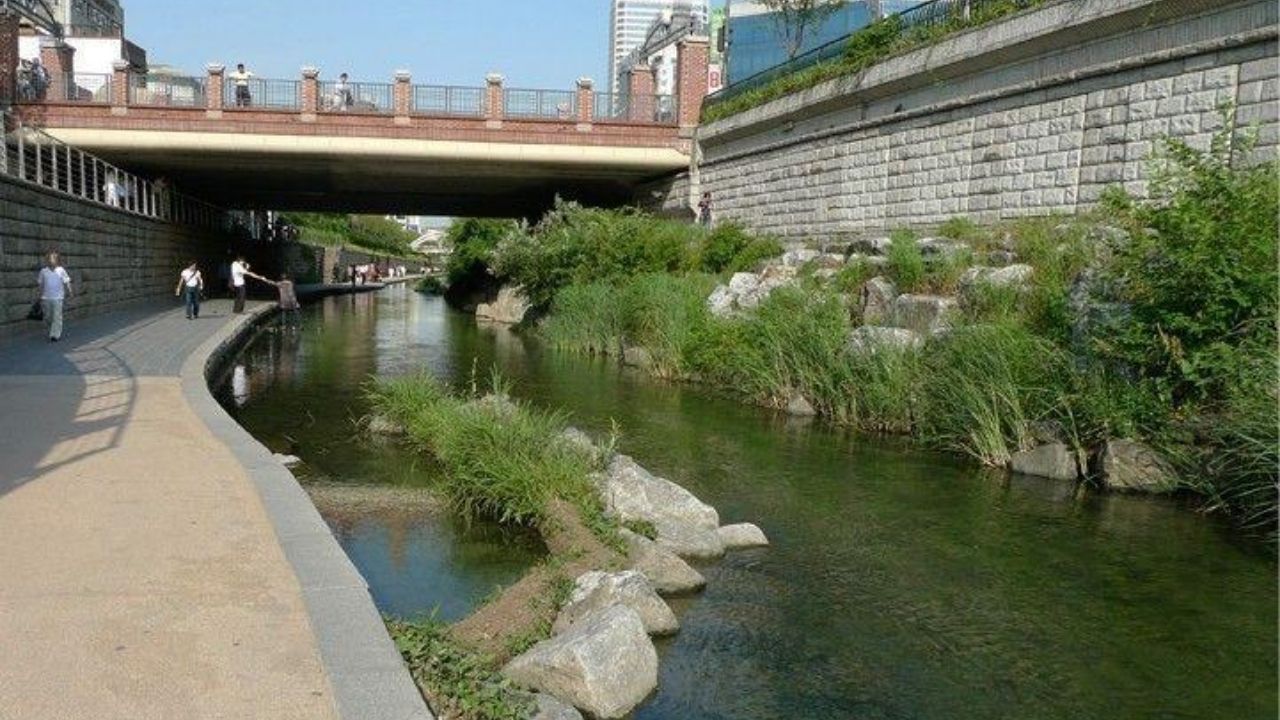
Despite its natural appearance, Cheonggyecheon did not return solely by removing the concrete. The old hydrological system had already been profoundly altered, and the city needed to create mechanisms to maintain the water flow.
The project came to depend on pumping, hydraulic control, and urban infrastructure to sustain the channel. This detail is important because it shows that the recovery was not a pure return to nature, but a hybrid solution between engineering, landscaping, and urban ecology.
Biodiversity grew in a surprising way
One of the most cited results of the project was the increase in biodiversity. Between 2003 and 2008, studies recorded a 639% growth in the set of species observed in the restored area.
Plants, fish, birds, insects, and other organisms reappeared in a section previously dominated by concrete and traffic. The case showed that even highly urbanized areas can recover life when they receive water, vegetation, and ecological connection.
Species returned to the center of Seoul
The increase in biodiversity was not limited to a general number. Plants, fish, and insects grew in variety after the reopening of Cheonggyecheon, while birds began to be seen more frequently in the green corridor.
This return of species changed the perception of the city center. The space ceased to be just a quick passage and became a living environment where residents and visitors could perceive the presence of nature within the metropolis.
Area became cooler and less suffocating
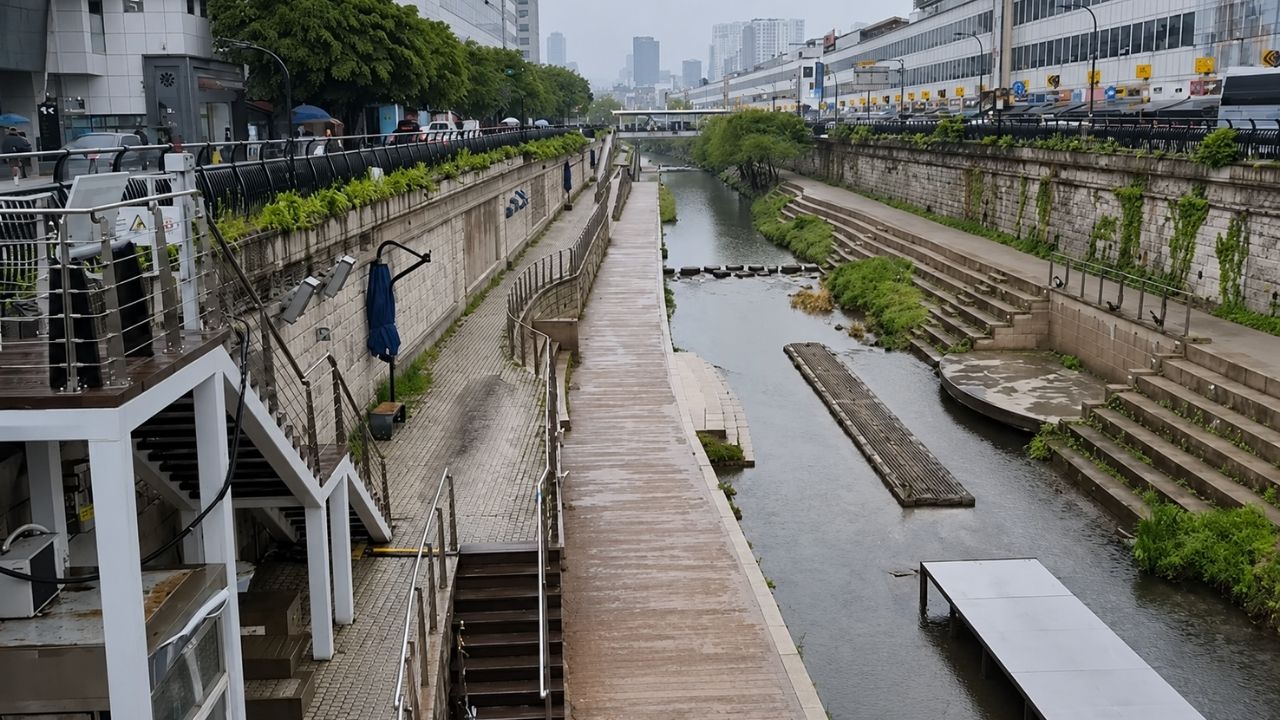
The return of water and vegetation also helped reduce local heat. Research cited in urban studies indicates that the Cheonggyecheon region became cooler than nearby avenues dominated by concrete.
The thermal difference reinforced the importance of green areas in dense cities. Instead of relying solely on roadworks, Seoul showed that running water, shade, and vegetation can also function as infrastructure against heat islands.
Mobility did not collapse as many feared
Before the demolition, there was fear that the removal of the expressway would cause traffic chaos. The highway carried a large volume of vehicles and was seen as an important artery for urban commutes.
The result, however, was more complex. Seoul expanded bus corridors, strengthened the subway, and reorganized transportation. The case became an example of an idea increasingly discussed in urbanism: removing roads can change habits, reduce car dependency, and redistribute commutes.
Visitors transformed the space into an urban park
After the restoration, Cheonggyecheon began to attract about 64,000 visitors per day. People walk, rest, cross footbridges, observe the water, and use the corridor as a break within the urban routine.
This flow shows that the intervention ceased to be just environmental or road-related. The buried river became an urban park, a tourist spot, a meeting space, and a symbol of a city that decided to return part of the center to the people.
Project became a reference for other cities
The impact of Cheonggyecheon has surpassed South Korea. The project has been cited in international debates on river renaturalization, removal of urban roads, and recovery of public spaces.
The idea connects to a movement known as daylighting, which seeks to bring back to the surface watercourses previously hidden by concrete. In many cities, buried rivers have ceased to be seen as problems to hide and have started to be treated as urban assets.
Not everything in the project is consensus
Despite the positive results, Cheonggyecheon also receives criticism. The dependence on water pumping and the strong engineering intervention raise doubts about cost, ecological authenticity, and long-term sustainability.
These criticisms do not nullify the relevance of the project, but help to understand its complexity. The project was not a perfect natural restoration; it was an urban attempt to correct decades of decisions based on concrete, traffic, and accelerated growth.
Cities rethink concrete, water, and quality of life

The story of Seoul shows a shift in mindset in urban planning. For a long time, progress was measured by highways, speed, elevated works, and traffic expansion.
Today, many cities are beginning to measure development also by thermal comfort, active mobility, biodiversity, safety, public space, and quality of life. Cheonggyecheon has become a symbol of this shift: less absolute priority to cars and more attention to water, people, and nature.
What a city chooses to hide
The story of the buried river under the highway in Seoul shows that an urban decision can seem like progress at one time and a problem at another. Cheonggyecheon was covered to make way for concrete, but decades later returned as an urban park, ecological corridor, and social space.
The case also leaves a question for other metropolises: how many rivers, streams, and green areas are still hidden under asphalt, galleries, and viaducts? Do you think modern cities should continue prioritizing cars and concrete or open more space for water, shade, and people? Share your opinion.