Portuguese
  Spanish


The Búzios Field, in the Santos Basin, Hits the Unprecedented Mark of 1 Million Barrels of Oil Per Day. Result Reinforces Petrobras’ Role in the Pre-Salt and Boosts National Energy Production.
The Petrobras announced an unprecedented achievement in the Brazilian energy sector: the Búzios Field reached the average of 1 million barrels of oil per day, consolidating itself as the largest producer in the country. The announcement was made this Thursday (30) by the company’s president, Magda Chambriard, at the closing of the Offshore Technology Conference (OTC) event in Rio de Janeiro.
With this result, Búzios surpassed its previous mark of 900 thousand barrels daily, recorded in August, and reinforced the state-owned company’s dominance in pre-salt exploration. This achievement is seen as a strategic milestone for Brazil, as the field is considered the second in Petrobras’ history to exceed the 1 million barrel barrier, after Tupi, also located in the Santos Basin.
Búzios Field Establishes Itself as the Engine of National Production
Discovered in 2010 and operating since 2018, the Búzios Field stands out for its vast reserves and high technical performance. Currently, it has six production units: the platforms P-74, P-75, P-76, P-77, and the FPSOs Almirante Barroso and Almirante Tamandaré — the latter being the largest in the country, with a capacity to produce up to 225 thousand barrels per day.
-
OPEC+ Boosts Oil Supply by 188,000 Barrels per Day in July 2026, Leading to Price Drop from $112 to $89 per Barrel in Under Two Months

-
TotalEnergies Signs 20-Year Deal to Purchase 2 Million Tons of LNG from Alaska, Boosting Project Viability
-
Turkey Deploys Çağrı Bey Drilling Ship to Explore New Oil Frontier Off Somalia’s Coast
-
Golden Pass LNG Ships First Liquefied Gas Cargo from the U.S., Completing $10 Billion QatarEnergy and ExxonMobil Investment

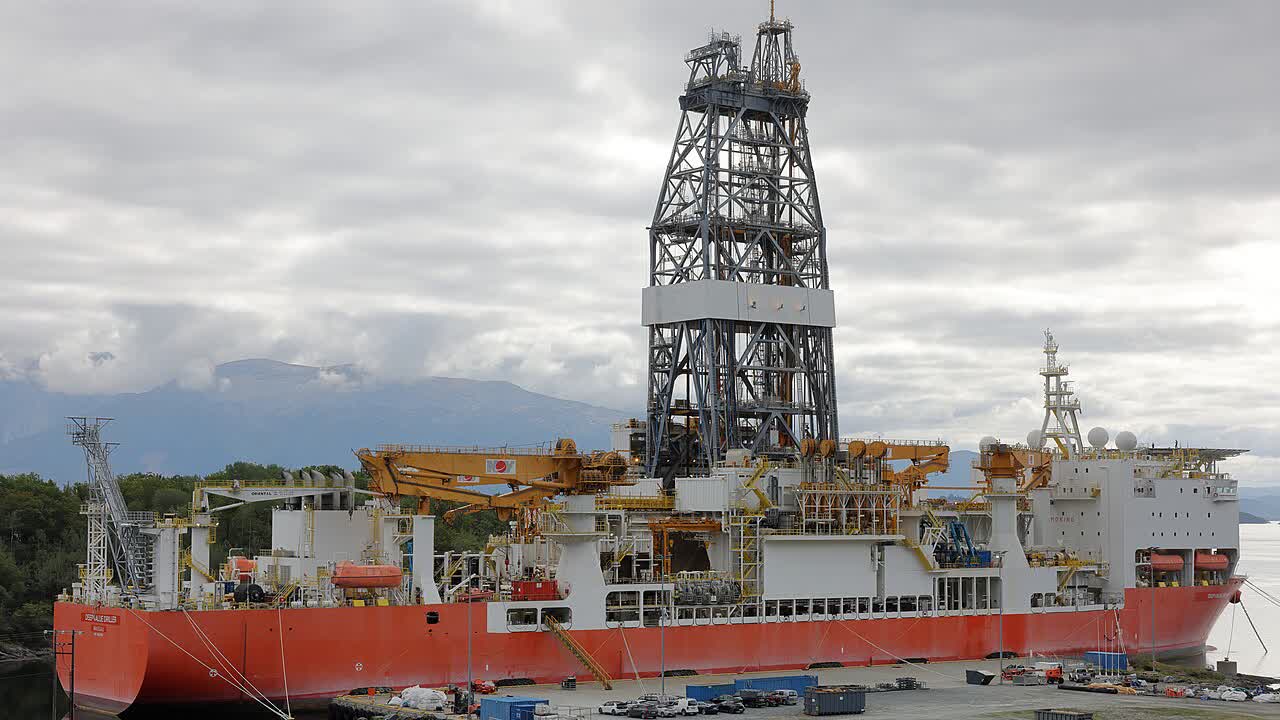

Furthermore, Petrobras confirmed that a new unit, the FPSO P-78, has already arrived at the field last month. The platform is in the wells interconnection phase, a stage that precedes the start of operations. With it, it is expected to further increase extraction capacity and ensure greater stability in pre-salt production.
Pre-Salt Production Accounts for 80% of Brazilian Oil
The advancement of Búzios reinforces the strategic importance of the pre-salt for the national energy matrix. According to Petrobras’ president, Magda Chambriard, about 80% of Brazil’s oil production already comes from this geological layer.
“Today 80% of our production comes from the pre-salt, where we have two giant fields, Búzios and Tupi. Each achievement is an encouragement for us to continue overcoming barriers of knowledge and generating, responsibly and safely, the energy that Brazil needs,” Chambriard stated.
The executive’s statement reflects the company’s vision of continuing to expand its operations in deep waters, combining technological innovation, sustainability, and operational safety.
International Partnerships Strengthen the Potential of Búzios
The Búzios Field is operated by Petrobras, which holds the largest stake in the project, in partnership with the Chinese companies CNOOC and CNPC, in addition to Pré-Sal Petróleo S.A. (PPSA). This composition reinforces the international character of the venture, while contributing to technology transfer and increased investment in the Brazilian energy sector.
The cooperation between the companies has enabled the development of advanced drilling techniques and production systems that make Búzios a global reference in efficiency.
Tupi Loses Position but Remains a Pillar of Brazilian Pre-Salt
Until recently, the Tupi field held the position of the largest national producer. However, in recent months, production in the area has shown a gradual decline, making way for Búzios to take the lead. Nevertheless, Tupi remains a fundamental asset for Petrobras and for the country’s energy security.
Both fields are located in the Santos Basin, considered the most promising region of the pre-salt, where the main oil discoveries of the last decade are concentrated.
Petrobras Aims to Double Production in Búzios in the Coming Years
During the event, Magda Chambriard revealed that the production potential of the Búzios Field is still far from being fully explored. According to her, the volume of produced oil could double in the coming years, as new platforms come into operation and underwater infrastructure is expanded.
This growth is strategic for Petrobras, which seeks to strengthen its position among the largest energy producers in the world and secure internal supply based on its own sources.
In addition to increasing production, Petrobras has directed efforts to make its operations more efficient and sustainable. The company invests in technologies that reduce greenhouse gas emissions and optimize energy use on platforms.
With the expansion of the pre-salt, Brazil positions itself as a protagonist in the global energy transition, combining high oil productivity with increasingly stringent environmental practices. The advancement of Búzios is, therefore, not only an economic milestone but also a symbol of the role the country intends to play in the global energy landscape.