






 Portuguese
  Spanish
  5 min of reading
  0 comments


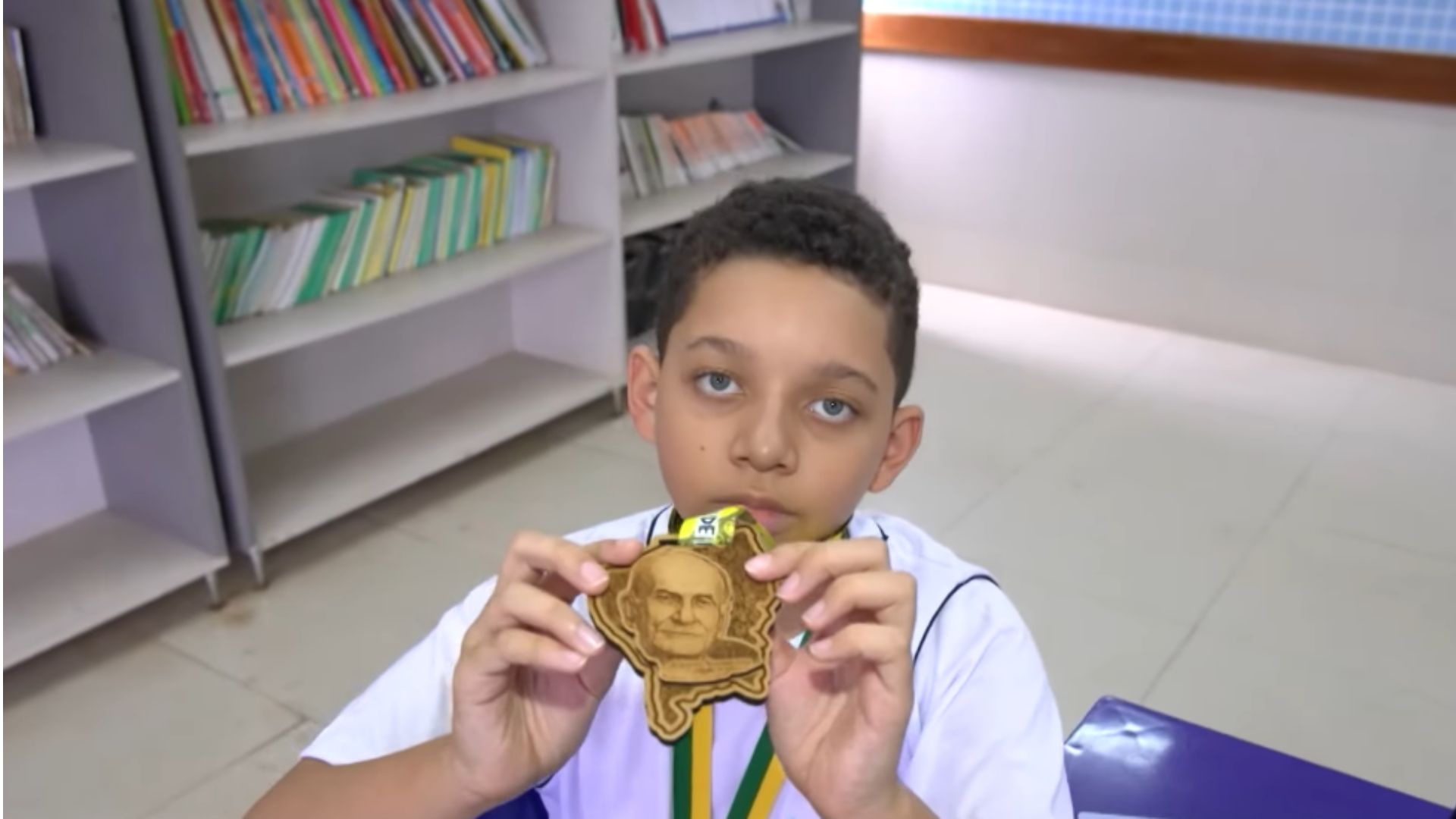
Discovery arose from an apparently simple problem from the Brazilian Mathematics Olympiad, but ended up attracting the attention of specialists from the University of Brasília, who validated the consistency of the solution created by the young student and highlighted his impressive ability to identify advanced mathematical patterns.
A stick counting exercise used in preparation for the Brazilian Mathematics Olympiad for Public Schools (OBMEP) ended up turning into a discovery that caught the attention of the academic community. At 11 years old, student Rafael Kessler Ferreira, a resident of the Federal District, developed an unprecedented mathematical formula that was analyzed and validated by specialists from the University of Brasília (UnB) and is now in the process of being evaluated for scientific publication.
The story was published in November 2025 in a report by journalist Marcela Ferreira, published by the portal Terra. According to the information disclosed by the outlet, the young man managed to transform a specific competition question into a mathematical solution capable of being applied to different geometric formations, significantly expanding the reach of the original problem.
Known among teachers and colleagues by the surname Kessler, which ended up naming his scientific creation, Rafael already demonstrates unusual skills for his age. In addition to studying advanced mathematics, he programs in different languages, attends university classes online, and dedicates much of his free time to self-taught learning.
-
Brazilian Man Transforms Degraded Area in São Paulo into Urban Forest with 40,000 Trees

-
They promised wealth with Sigma Lithium’s lithium mining, but the Jequitinhonha Valley got cracked houses, skyrocketing rent, and R$ 0 in royalties in 2025.
-
Brazilian creates ingenious hack with bus air conditioner water and transforms invisible dripping into savings of millions of liters; Capixaba system reuses condensation on the windshield, supplies the toilet on long trips, and has become a practice in Águia Branca’s fleet.
-
An 11-year-old boy left home with two cousins to sell popcorn for R$ 5, became an entrepreneur at 15, sells 100 buckets a day, and uses the profit to pay the entire family working in the business.


How the so-called Kessler Formula was born
The discovery occurred while Rafael was training for OBMEP exams. During the resolution of a question involving the counting of sticks used to form squares in an increasing sequence, the student realized that there could be a mathematical relationship capable of simplifying the entire process.
Instead of performing manual counts at each new stage of progression, he began to look for numerical patterns that would allow him to create a general expression to solve the problem.
The result was the creation of the formula:
[(x² + x) + (y² + y)] – (y – x)²
The expression was named the “Kessler Formula” and, according to experts who analyzed the work, it can extrapolate the original question, allowing calculations related not only to squares but also to different rectangular formations.
According to the family’s account, the creation process occurred completely spontaneously. The student’s mother, Robertha Munique Ferreira, a Portuguese and Spanish teacher, noticed that her son was using concepts far beyond what was expected for his age group.
Later, a question posed by the father about the application of logic in rectangles ended up serving as a trigger for the consolidation of the formula.
Professors from UnB analyzed and validated the discovery
Given the complexity of the creation, the family sought specialists from the University of Brasília to verify the mathematical consistency of the work.
The study initially went through the evaluation of a master’s professor and was later analyzed by mathematicians Igor Lima and Rui Seymens, both linked to the Department of Mathematics at UnB.
During the process, Rafael presented demonstrations, explained the reasoning used, and answered the professors’ questions, who examined in detail the logic employed in constructing the mathematical expression.
According to Igor Lima, the role of the specialists was to verify the consistency and mathematical relevance of the proposal.
The researchers concluded that the formula presents logical coherence and mathematical validity. However, the definitive confirmation of its potential originality will depend on the evaluation conducted by specialized scientific journals, a standard procedure adopted by the international academic community.
Rui Seymens highlighted that the most impressive aspect was not just the formula itself, but Rafael’s demonstrated ability to identify patterns and construct new mathematical relationships during the conversations held throughout the evaluation.
Currently, the article has been submitted to the Revista Professor de Matemática (RPM), one of the most recognized publications in the field in Brazil, and is awaiting editorial review.


Giftedness, autism, and passion for knowledge
Rafael’s journey also draws attention for another reason. The student has a diagnosis of high abilities and giftedness, confirmed by neuropsychological evaluation, in addition to being autistic.
According to the family, from a very early age, he showed interests considered unusual for his age. By the age of five, he had already learned to read on his own in Portuguese and English.
Over the years, he began to consume content on advanced calculus, numerical systems, programming, and university-level mathematics on his own initiative. Constant curiosity became one of the main characteristics observed by teachers and family members.
Additionally, Rafael develops his own concepts related to extremely large numbers, creates nomenclatures inspired by different languages, and demonstrates a visual memory considered exceptional.
The UnB professors who participated in the evaluation emphasize that there are many students with high abilities in Brazil who end up not receiving adequate stimuli to fully develop their academic potential.
Medals, programming, and other projects developed by the student
The creation of the Kessler Formula does not represent the young student’s first academic highlight.
Since 2023, Rafael has participated in scientific olympiads and has already won several medals in competitions focused on mathematics and scientific knowledge.
At the same time, he is also dedicated to computer programming. He currently masters three programming languages and develops his own projects in a self-taught manner.
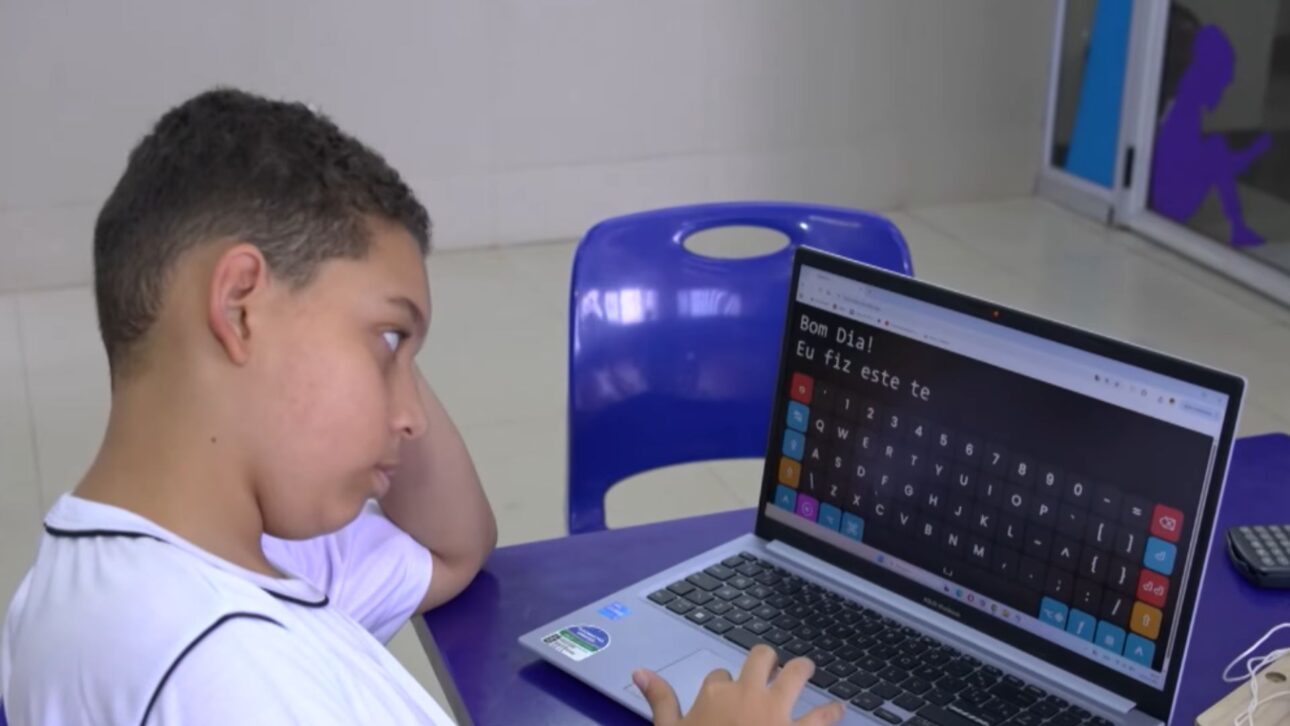
Among the creations already made is a functional virtual keyboard capable of generating characters and allowing typing using only the mouse, a project developed on his own initiative while exploring programming concepts.
For his mother, her son’s journey also serves as a warning for the need to expand support for students with high abilities in Brazil. According to her, many children end up having their abilities little perceived within the traditional school environment, which can limit the development of exceptional talents.
While awaiting the scientific evaluation of the formula he created, Rafael continues doing what he loves most: learning. Whether studying mathematics, programming, or recording new ideas in his notebooks, the student continues to demonstrate an intellectual curiosity that impresses specialists and inspires educators across the country.
Did you have any teacher who encouraged your curiosity in the same way Rafael’s parents did? Tell us in the comments.


Be the first to react!