






 Portuguese
  Spanish
  6 min of reading
  0 comments


The Capta project, created by three public school students from Sergipe, is an accessible early autism screening kit for vulnerable communities without a doctor. Awarded at FEBRACE 2026, it became public health policy in the year Brazil shone at the world’s largest science fair.
In many places in Brazil, an autistic child grows up without anyone nearby able to notice the first signs, simply because there is no doctor in the region. To break this barrier, three students from a public school in Sergipe created Capta, an early autism screening kit designed for vulnerable communities. The project was one of the highlights of FEBRACE 2026, the largest science fair in the country, whose awards took place in March 2026, according to FEBRACE.
The project’s name sums up the mission: capture early what often goes unnoticed. The authors investigated the risk factors of Autism Spectrum Disorder in children and, mainly, the difficulties in accessing diagnosis in poor regions. The answer was not an expensive device, but rather an affordable educational material capable of reaching where public health does not arrive with the necessary speed.
A kit of booklets and cards to see autism early
Capta is not a laboratory test nor a complicated software. It is an educational kit for early autism screening consisting of booklets, alert signal cards, and support tools aimed at three audiences who interact with the child daily: families, educators, and health agents. The logic is simple and powerful, putting the right information in the hands of those who see the child every day.
-
Chinese robots trained for two weeks to row a dragon boat at the Sichuan Festival in China, took full control when humans stopped rowing, and even made rice dumplings in one of the most unusual tests ever conducted with humanoids.

-
Engineering students create a low-cost 3D-printed wheelchair for dogs and help the paralyzed dog Bili, who was born without legs, walk again for R$ 448.
-
Man creates ingenious hack with pipes buried 2.4 meters deep and transforms snow into a tropical fruit greenhouse; system created by a retired mailman uses ground heat, produces oranges and lemons in Nebraska’s winter and has already turned into more than 700 kits sold.
-
An African fish is terraforming lakes by altering sediments, increasing turbidity, and changing the food chain: the silent advance of the tilapia Oreochromis niloticus


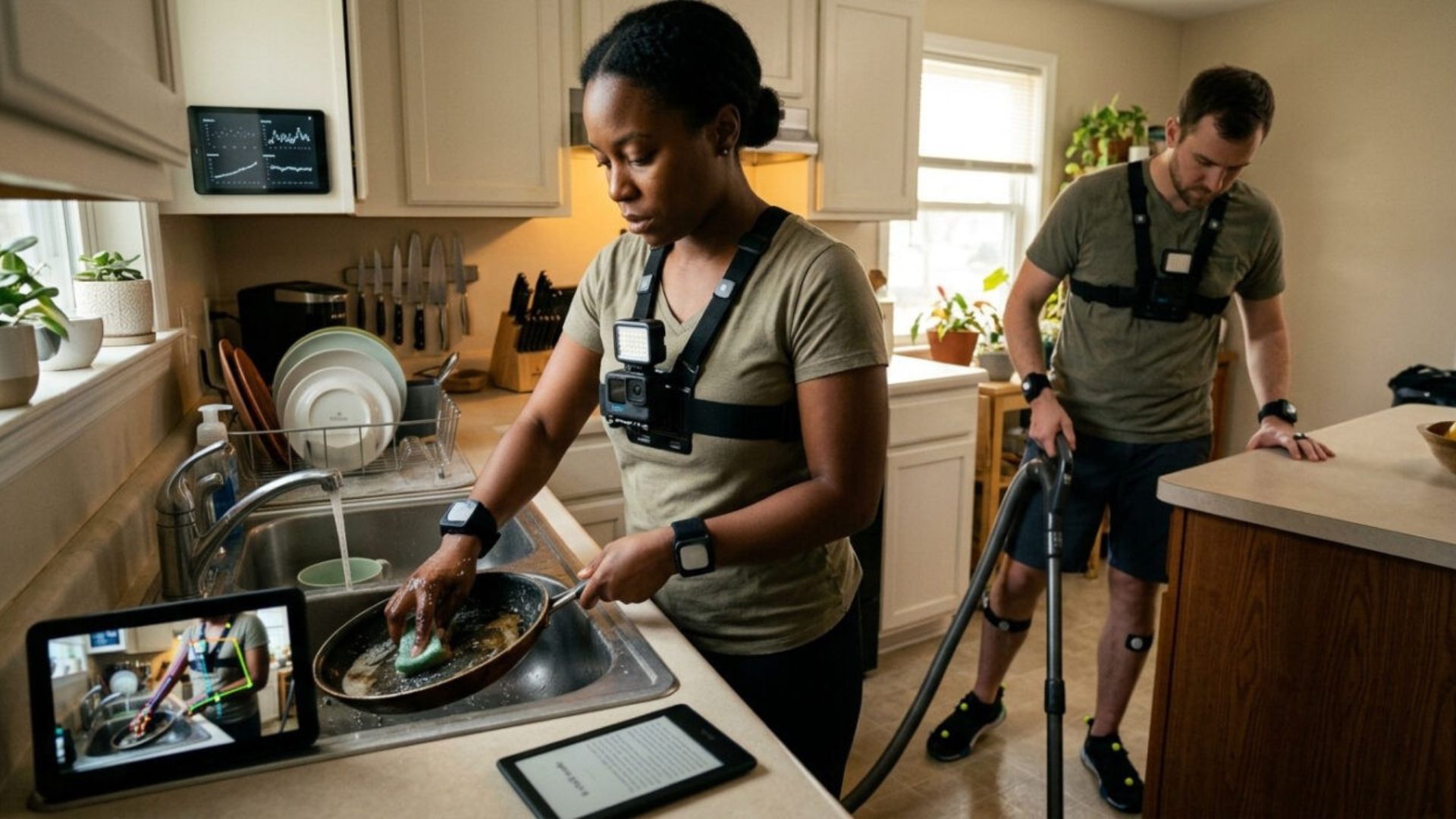
Each piece of the material helps to recognize behaviors that deserve attention, such as delays in speech, interaction, and eye contact. Instead of waiting for a specialized consultation that can take months or may not even exist in the city, the nearby adult learns to identify the signs and seek referral. It is early autism screening transformed into something that fits the reality of vulnerable communities.
This design is what makes the project so replicable. Being low-cost and easy to understand, the kit can be distributed in schools and health centers without requiring expensive infrastructure, making it a public health tool and not just a science fair project. The early screening of autism, in this format, is no longer a privilege for those living near a major center.
Made by three public school students from the Sergipe hinterland
Behind Capta are three young people from the 3rd year of high school: Taislaine Alves de Gois, Ana Karla Gois da Silva, and Luana de Oliveira Santos. The three study at the Centro de Excelência 28 de Janeiro, a public school in Monte Alegre de Sergipe, and were guided by teachers Lark Soany Santos and Edson de Jesus Oliveira. It is not a millionaire laboratory, it is the state education network.
The detail that gives strength to the story is the context. The authors did not choose a distant theme: they looked at their own region, marked by vulnerable communities and long distances to specialized health services. The choice to tackle early autism screening in this scenario shows that science made in public school can arise from the real problem at the doorstep.
This is the type of project that breaks a prejudice. It shows that students from public schools in the interior of the Northeast, with few resources, can develop a public health solution that many large institutions have not developed. The merit is not only scientific but also social, because it targets precisely those whom the system usually leaves behind.
From the science fair to the city’s health plan
Awarded is not synonymous with applied, but Capta achieved both. At FEBRACE 2026, the project won first place in the Human Sciences category, one of the highlights of Brazil’s largest science fair, according to FEBRACE. More than the trophy, what impresses is what came after the fair.
The kit was tested in three municipalities and ended up being incorporated into the municipal health plan of Monte Alegre, expanding access to early autism identification in the network, according to FEBRACE. In other words, it went from the science fair bench to the real machinery of public health, serving real people in the vulnerable communities that inspired the work.
This leap is rare. Many science fair projects shine on stage and then disappear into the drawer, but Capta became municipal public policy. For the region’s vulnerable communities, this means that early autism screening stopped being a student’s promise and became a service that actually exists.
Why Detecting Autism Early Changes a Child’s Life
For those new to the topic, it’s worth understanding what’s at stake. Autism has no cure, but early autism screening and the follow-up that comes after make a huge difference in a child’s development. The sooner the signs are noticed, the earlier therapies begin that help with speech, interaction, and autonomy.
The problem is access. In vulnerable communities, there is a lack of doctors, specialists, and information, and a child may reach school age without ever having been evaluated. It is precisely this gap that a simple public school material tries to fill, bringing health knowledge to those on the front lines of care.
When a teacher or community agent learns to recognize the signs, the invisible queue decreases. Public health gains a human and affordable filter that identifies which children need attention before the precious time of development is lost. That’s why a kit of booklets can be as valuable as expensive equipment.
The Year Brazil Shone at the World’s Largest Science Fair
Capta emerged at a golden moment for science conducted by young Brazilians. The delegation selected by FEBRACE won 8 awards at the Regeneron ISEF 2026, the largest pre-university science fair in the world, held from May 9 to 15 in Phoenix, United States, according to FEBRACE. There were 14 students representing the country, with six awards at the main ceremony and two in special awards.
The recognitions came from various regions. Projects like MeMO, from Manaus, AnisGuard, from Vitória da Conquista, Sustainpoly, from Cascavel, and Safeskies, from São Paulo, were among the winners at the international science fair. Each tackled a concrete problem, from health to the environment, in the same spirit that drives Capta.
It’s important to honestly note that Capta was not part of the delegation that traveled to the United States, as it shone in the Brazilian stage. Still, it is part of the same movement. “The results reflect a generation of young people who not only understand the problems of the current world but propose consistent solutions,” said Roseli de Deus Lopes, general coordinator of FEBRACE. The early autism screening kit is perhaps the noblest example of this generation: public school science turning into public health for those who need it most.
Capta proves that true innovation is not the most expensive, but the one that solves the problem of those who are forgotten. Three students from a public school in Sergipe took a silent drama of vulnerable communities, the lack of early autism screening, and responded with an affordable kit that is already a public health policy in their city. And they did this in the year when Brazil showed the world, at the largest science fair on the planet, what the country’s youth is capable of.
And you, do you know any child who grew up without access to a diagnosis due to a lack of doctors in the region? Share in the comments what you think of these students’ idea.




Be the first to react!