






 Portuguese
  Spanish
  5 min of reading
  0 comments


Sarah and Brandon transformed a 21 m² floating house on Fontana Lake, North Carolina, into a permanent residence after leaving traditional rent, renovating everything in three months, and accepting a routine without electricity, without cell signal, boat access, constant maintenance, and much lower annual costs.
The floating house of Sarah and Brandon became a full-time residence on Fontana Lake, in the Great Smoky Mountains, North Carolina, USA. The couple, who live with their dog Iko, bought the small structure without visiting it in person and spent about three months renovating the space.
According to Tiny House Blog, in September 2022, the move happened about a year and a half ago when the two decided to transform a 21 m² floating cabin into a permanent residence. Since then, the routine has been off the grid, without cell signal, and accessible only by boat.
Purchase without visit and renovation done on weekends
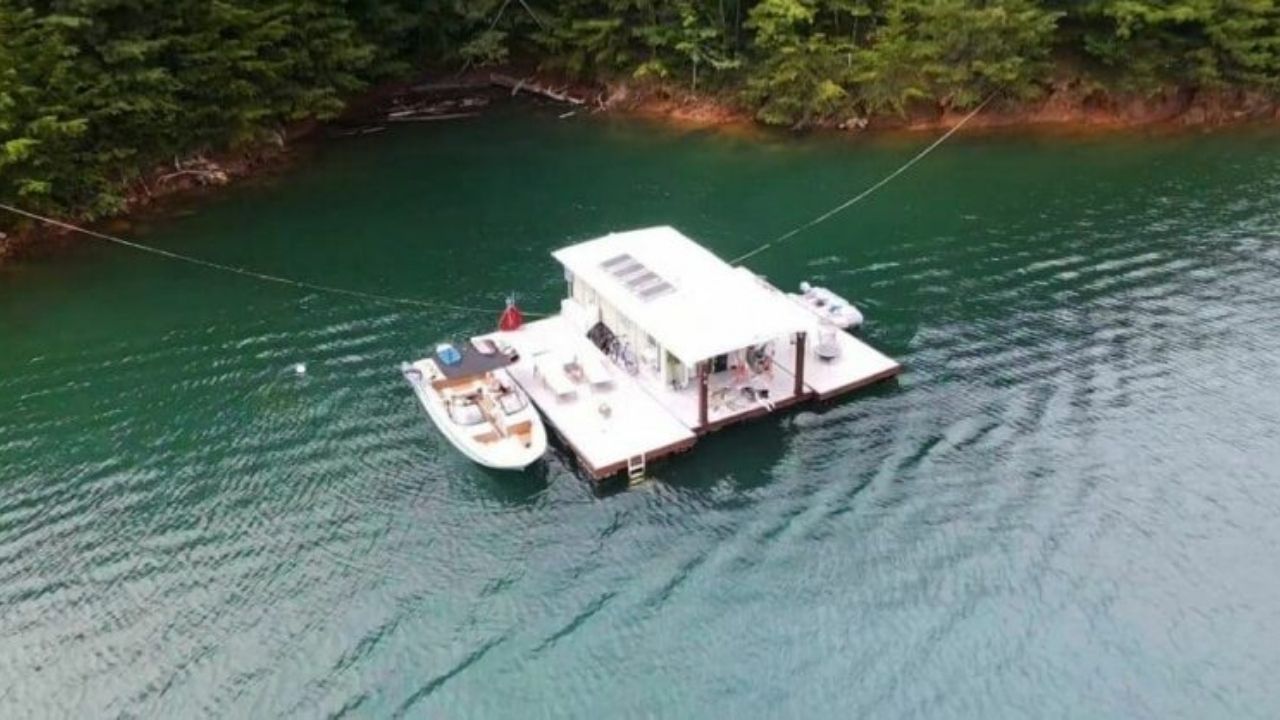
The story draws attention because Sarah and Brandon bought the house without seeing it in person. According to the account published by Tiny House Blog, this type of structure tends to be quickly contested when it becomes available, which helped explain the accelerated decision.
-
An 11-year-old boy left home with two cousins to sell popcorn for R$ 5, became an entrepreneur at 15, sells 100 buckets a day, and uses the profit to pay the entire family working in the business.

-
Tired of expensive housing, couple buys a boat for US$ 1, refurbishes the sailboat at low cost, and sails over 1,600 kilometers to the Florida Keys.

-
The Jacaroá Lagoon in Maricá has turned into a “liquid sky” that glows blue at night: the bioluminescence of the microalgae has exploded, and the city hall attributes the phenomenon to the dredging of the channels.
-
Charge the phone with or without a case? Manufacturers warn that a simple layer can retain heat, interrupt charging, and influence the battery’s lifespan after years of continuous use.



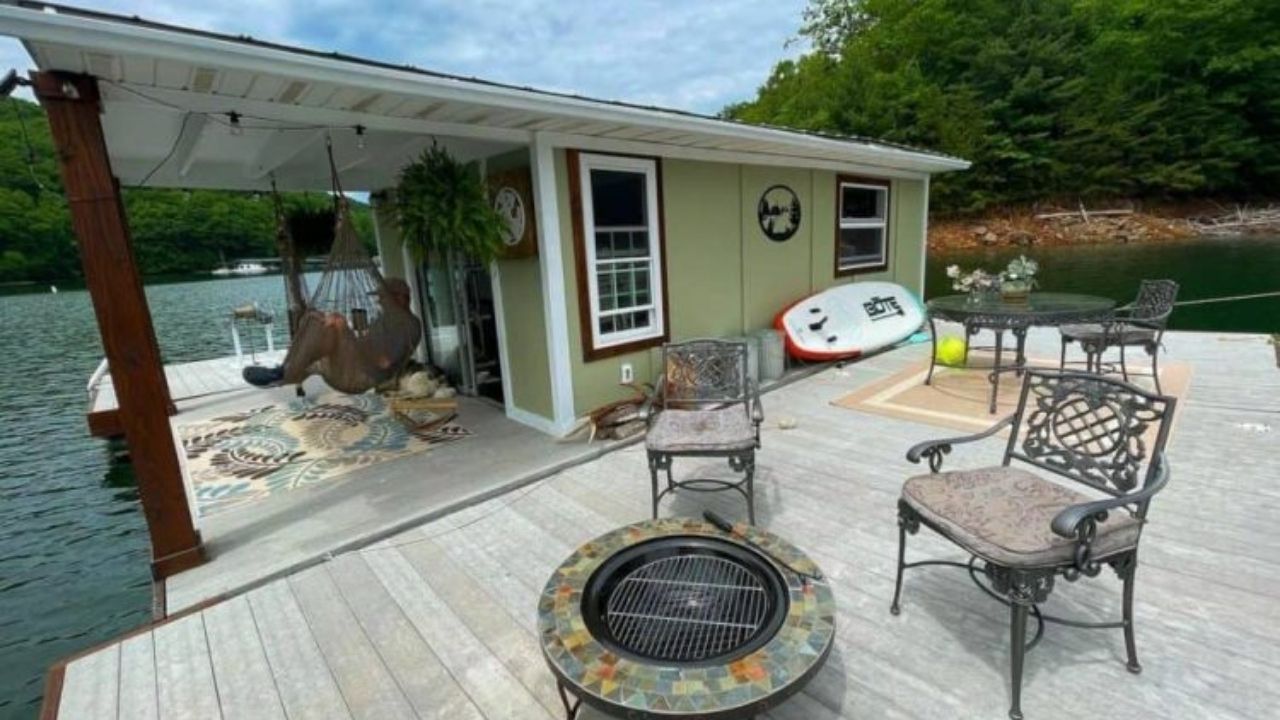
After the purchase, the hardest part came. The couple spent three months renovating the floating house, working mainly on Fridays, Saturdays, and Sundays, from dawn to dusk. The change was not just moving to a new address, but rebuilding almost everything before living there.
The structure also has an unusual feature: it is not a traditional house placed on the water. The residence is, in practice, a boat built in 1975, 28 feet long, adapted to function as a full-time floating cabin.
This detail completely changes the experience. In addition to dealing with limited space, the couple needs to think like those living on a boat: mooring, lake level variation, maintenance, access to the marina, and safety during weather changes are part of the routine.
21 m² Space Has Open Plan and Almost No Divisions
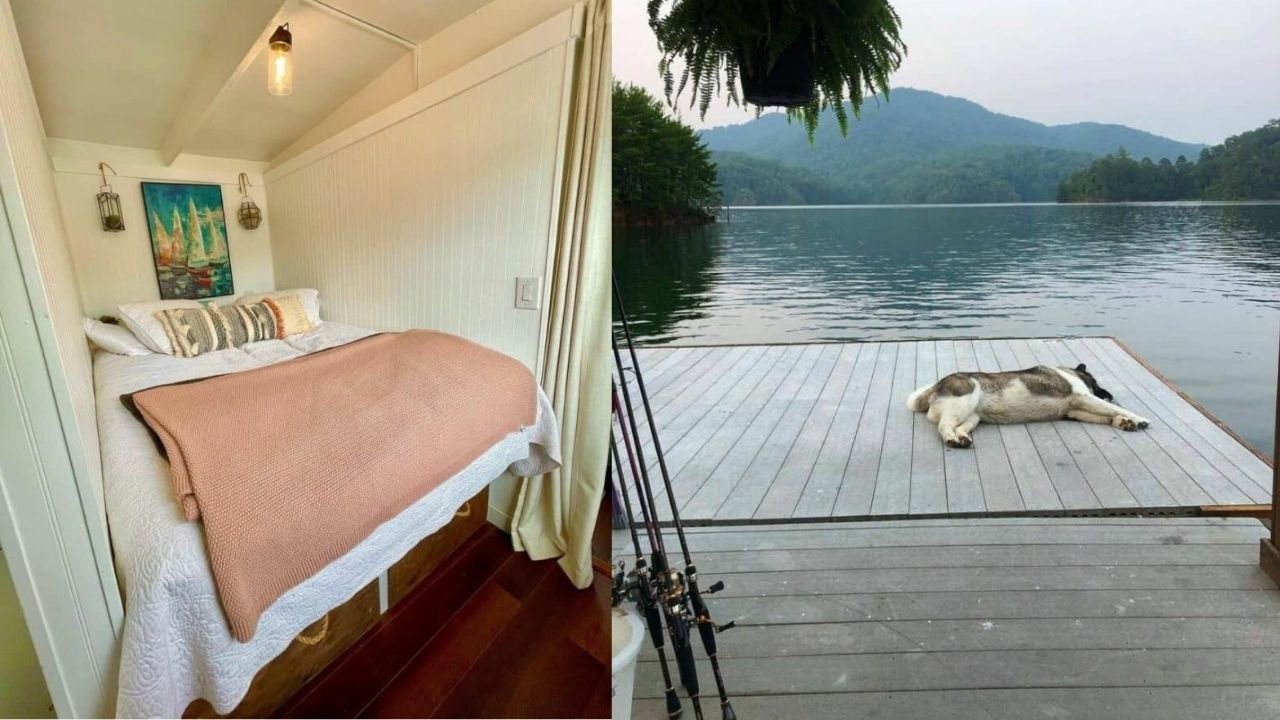
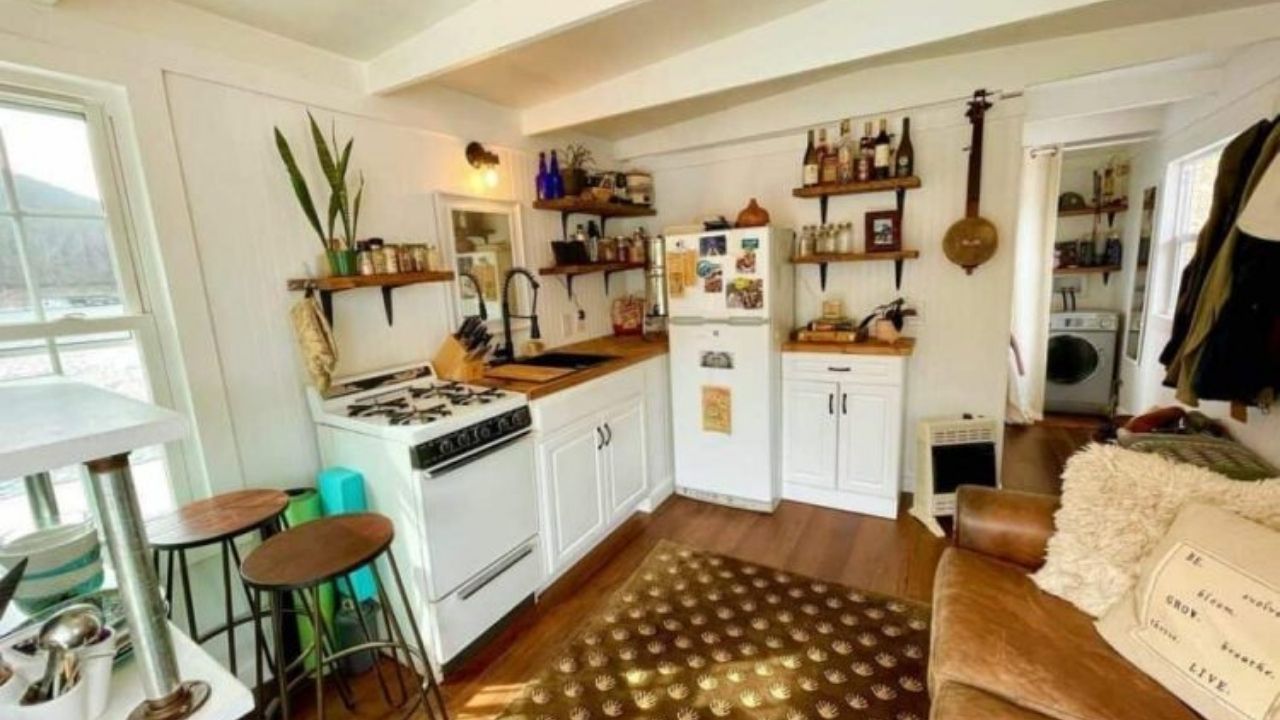
Inside, the floating house follows an open plan logic. The environment has no internal doors separating the rooms, and the divisions are minimal, with few walls marking the sleeping area and the bathroom.
Most of the day happens in a common area, which includes the living room, American kitchen, and dining space. Behind this area is the bed corner; further back, the bathroom. Every meter needs to serve a practical function, because there is no extra space for excesses.
This organization helps give a sense of continuity, but also requires adaptation. In a 21 m² house, privacy, storage, and circulation depend on well-calculated choices, especially when two people and a dog share the same space.
Even so, the proposal is not to live closed inside the structure. The cabin features decks and a covered porch, allowing the couple to use the outdoor area as an extension of the home. In practice, life on the water depends as much on the compact interior as on the outdoor space.
No Electrical Grid, No Cell Phone, and Access Only by Boat
The most extreme point of the routine is isolation. Sarah and Brandon live completely off the electrical grid, without cell phone signal and without road access. To arrive or leave, they need to use a dinghy to the nearest marina.
According to the source, the marina is approximately 400 meters away. This distance seems small on the map, but becomes a logistical challenge when it involves shopping, supplies, essential items, unstable weather, and frequent water travel.
The floating house also needs to keep up with the behavior of Lake Fontana. The water level drops about 65 feet per year, which requires constant adjustments to the position of the structure. The dwelling is anchored like a boat, held by moorings to the shore.
There is also a block of about 10,000 pounds, approximately 4,500 kg, helping to keep the house in place. In other words, the landscape seems calm, but maintenance requires constant attention.
Lower costs do not eliminate the challenges
One of the reasons that makes the story so curious is the comparison with traditional rent. According to the account, the couple paid about $1,800 per year, described as a mooring fee. Additionally, the annual taxes for the floating cabin are around $100.
These numbers help explain why the alternative may seem attractive to those looking to reduce expenses. However, the savings come with a less convenient routine, as simple services become dependent on travel, weather, maintenance, and planning.
Water supply, the bathroom, and waste treatment also require their own solutions. The toilet uses a macerating system that sends waste to a holding tank. The gray water follows a similar logic, with the use of water-saving showers and faucets.
When necessary, the tank is emptied by a specialized truck. This is the kind of detail that separates the romantic idea of living on the lake from the operational reality of keeping a self-sufficient house running every day.
Isolated life became a choice, but it’s not for everyone


Sarah and Brandon’s floating house shows a radical alternative to traditional rent, but it should not be mistaken for a simple solution. The couple traded part of urban convenience for silence, nature, autonomy, and a slower-paced daily life.
At the same time, they gave up common conveniences: cell phone signal, conventional electrical grid, car access, and immediate proximity to commerce. For many people, these absences would be too great obstacles. For them, they became part of the lifestyle.
The case also reveals a growing trend in alternative housing stories: tiny houses, cabins, adapted boats, and off-grid structures appear as a response to high costs and a desire for simplification. But each model has practical limits.
In the case of the cabin on Lake Fontana, the visual beauty does not eliminate the commitments. Living on the water requires discipline, maintenance, tolerance to isolation, and a willingness to turn simple tasks into small logistical operations.
Freedom on the water also demands planning
Sarah and Brandon’s experience is impressive because it mixes economy, risk, isolation, and creativity. Buying a floating house without visiting, renovating everything in three months, and living full-time on the lake seems like a cinematic life change, but it also reveals a routine full of invisible details.
The choice works for those who accept living with less conventional structure and more daily responsibility. In the end, the question that remains is direct: would you have the courage to trade rent, street, electricity, and cell phone signal for an isolated floating house, accessible only by boat? Leave your opinion in the comments.




Be the first to react!