Portuguese
  Spanish


In China, archaeologists opened a bronze bottle sealed with cloth and clay inside a Qin tomb and found, intact, a 2,300-year-old beer: almost 4 liters of fermented cereal beverage, pointed out as the oldest ever found in liquid form in a Chinese tomb.
Imagine uncorking a bottle closed for 23 centuries and discovering there’s still liquid inside. That’s what archaeologists in China experienced when they opened a bronze bottle sealed with cloth and clay inside a tomb from the Warring States period. Instead of dust, they found almost four liters of a cloudy beverage, preserved for over 2,300 years. The content was a 2,300-year-old beer, one of the oldest fermented beverages ever preserved in liquid state inside a Chinese tomb.
The analysis was published in the scientific journal Journal of Archaeological Science: Reports, by a team from Chinese institutions. The bronze bottle, with a garlic-shaped mouth, still held about 3,740 milliliters of liquid, and tests revealed more than 2,400 chemical compounds, ruling out that it was just groundwater. It wasn’t infiltrated water: it was indeed an ancient alcoholic beverage, fermented from grains.
A bronze bottle sealed for more than 2,000 years
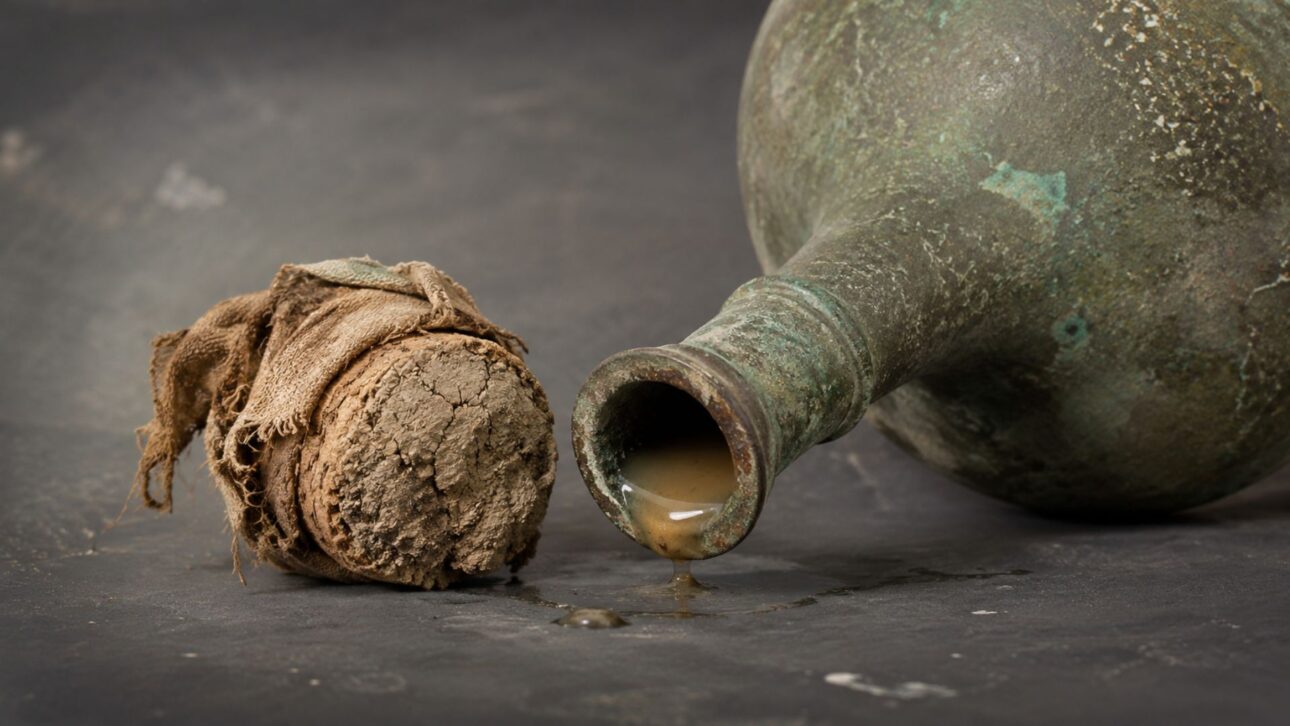
It is a bronze bottle with a garlic-shaped mouth, a typical style of ancient Chinese metallurgy, found in the tomb identified as M39.
-
35,000-Year-Old Saber-Toothed Tiger Cub Found Intact in Siberian Permafrost, Whiskers, Claws, and Skin Preserved Since the Ice Age

-
Scientists Uncover “Amazon Stonehenge” with 127 Giant Rocks, Shedding Light on Indigenous Solar Observations Before European Arrival

-
Six-Year-Old Uncovers 400-Million-Year-Old Coral Fossil in Backyard, Revealing a Pre-Dinosaur Ocean World

-
India Gains 2.1 Million Hectares of Dry Tropical Forest in a Decade, but Scientists Warn Much of It May Be Commercial Plantations, Not Genuine Biodiversity Recovery





What is impressive is the state of preservation: after more than 2,300 years buried, the bronze bottle was still sealed and full. Inside it, the almost four liters of liquid had resisted time, air, and soil moisture.
For archaeologists, opening such an object is like uncorking a time capsule. Each drop stored there carries information from a world that disappeared over two millennia ago.
What was inside: a cereal beer
The main star is the liquid, not the metal. Analyses showed that the content was a 2,300-year-old beer made from cereals, mainly millet, with a bit of wheat or barley.
It was not grape wine: it was a fermented grain beverage, the ancient equivalent of a cloudy craft beer. Chemical tests found lactic acid, oxalic acid, and more than two thousand organic molecules, the typical signature of fermentation.
It was precisely this chemical richness that convinced archaeologists it was not infiltrated water. The Qin people, who lived in that region, mastered the art of turning grain into alcohol much earlier than imagined.
The Qin tomb near the Wall
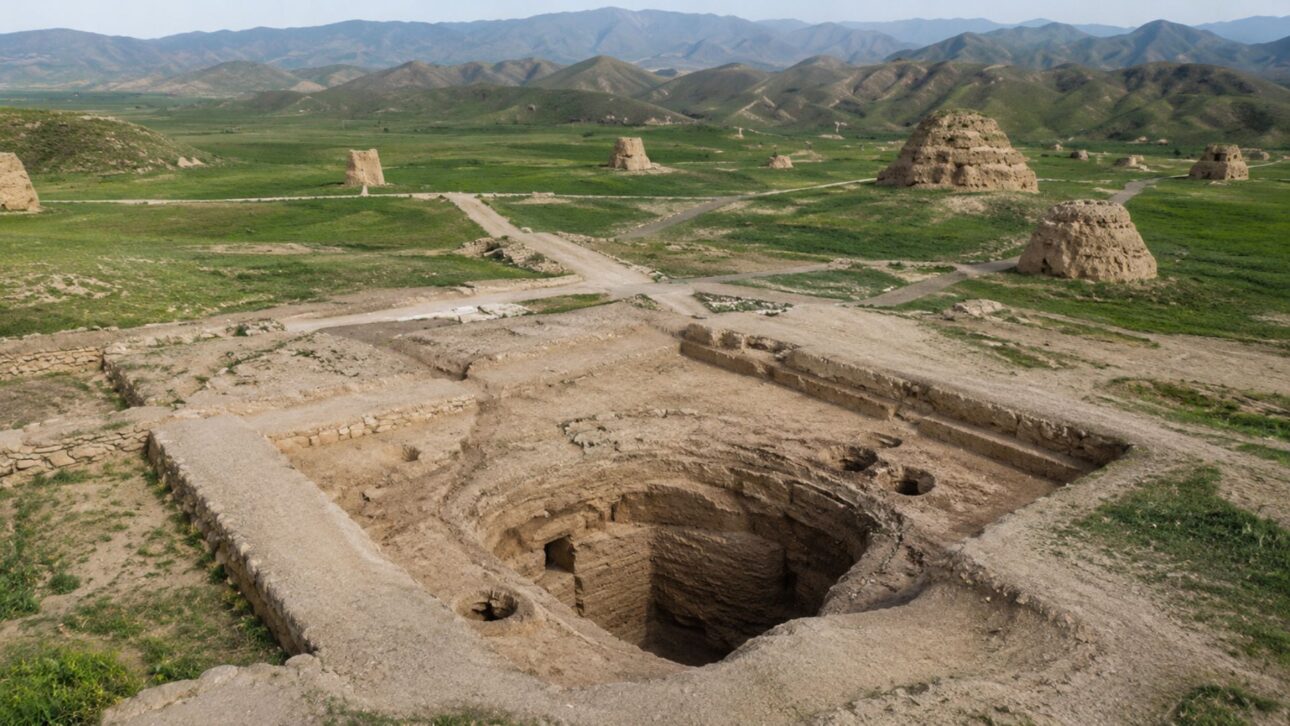
The bottle came from tomb M39, in the Shanjiabao cemetery, in the Ningxia region, northern China, near a section of the ancient Wall built by the Qin.
The tomb is from the Warring States period, between 475 and 221 BC, one of the most turbulent and creative eras in Chinese history. It was shortly before China was unified by the first emperor, the famous Qin Shi Huang.
Burying a fine drink in a tomb was a ritual gesture, an offering for the deceased to take to the afterlife. That’s why the beer was there: not to drink, but to accompany someone into eternity.
How the cloth and clay preserved the liquid
The secret of preservation lies in a simple and ingenious seal. The mouth of the bronze bottle was plugged inside with a fabric stopper, and outside it received a layer of clay mixed with organic material.
This double barrier of cloth and clay blocked air and soil water for more than two thousand years, keeping the liquid practically isolated from the world. It’s the kind of solution that seems rustic but worked better than much modern technology.
Without this seal, the content would have evaporated or rotted centuries ago. It was the meticulousness of those who prepared the tomb that allowed, millennia later, archaeologists to prove that the beverage existed.
The oldest beer ever found in liquid form in a tomb in China
The discovery made it into the books for its novelty. It is the oldest fermented beverage ever recovered in liquid state inside a tomb in China, a very rare case in archaeology.
It’s worth noting: there are much older beer residues, up to 9,000 years old, but they are dry residues in vessels, not the beverage still in liquid form. Finding almost four liters of 2,300-year-old beer preserved is what makes the find special.
Liquid survives very poorly over time, and therefore almost never reaches the hands of researchers. Here, the combination of bronze, cloth, clay, and luck delivered a treasure that most excavations never see.
Why archaeologists celebrate a sip that can’t be drunk
The liquid won’t end up in any glass. Despite being preserved, the beer cannot be drunk, as it spent millennia in contact with bronze and lost any safety for consumption.
But its value is not in the taste, but in the information: each molecule tells how the Qin people made and used alcohol. For archaeologists, discovering the ingredients and fermentation method is to reconstruct a piece of the daily life and rituals of an ancient people.
The beverage becomes a document, a chemical report of a civilization, according to the detailing by ZME Science. It’s science coming out of a forgotten bottle in a tomb.
What the discovery shows
The greatest lesson is about what time sometimes decides to preserve. A 2,300-year-old beer surviving intact to this day, inside a bronze bottle, is the kind of chance that rewrites what we know of the past.
Of course, it’s important to stay grounded. The liquid cannot be tasted, and part of the story depends on chemical interpretation, so there are still details of the Qin method to confirm.
Even so, opening a tomb in China and finding the beverage intact inside is the kind of discovery that makes archaeology seem magical. From a seal of cloth and clay emerged a window to a world over two thousand years ago, and proof that the past sometimes remains preserved in the most unlikely place: inside a bottle.
And you, would you drink, even if just a symbolic sip, a beer prepared 2,300 years ago? Tell us in the comments what impresses you most about this discovery.