Portuguese
  Spanish


The Palestinian girl Tala Mohammad Waheed Awad, 15 years old, arrived in Brazil with her family after fleeing the conflict in Gaza, learned Portuguese to follow classes, and won a gold medal at the 2026 São Paulo Mathematics Olympiad, according to Só Notícia Boa in July.
The Palestinian girl Tala Mohammad Waheed Awad, 15 years old, won a gold medal at the 2026 São Paulo Mathematics Olympiad, OMASP, in São Paulo, after arriving in Brazil with her family after fleeing the war in Gaza.
The information was published by Só Notícia Boa on July 6, 2026. The source reports that Tala had to quickly learn Portuguese to keep up with classes and, in a short time, managed to adapt to the new school, make friends, and stand out in the competition.
Who is Tala, the student who caught attention in São Paulo
Tala Mohammad Waheed Awad is a 15-year-old Palestinian teenager who arrived in Brazil with her family after leaving Gaza amid the conflict. The source does not provide the exact date of arrival in the country but notes that the move required quick adaptation to a new routine, a new school, and another language.
-
“Vampire Deer” Rediscovered in Remote Afghan Forest After Nearly 60 Years, Highlighting Urgent Conservation Efforts

-
Historic Living Hedge in Brazil, Over 300 Years Old and 13 Meters Tall, Enters Guinness World Records

-
Couple Trades Wedding Celebration to Invest in Therapeutic Gym for Seniors in Brazil, Now Earning $2 Million Annually
-
Daughter of a Cleaner and a Doorman Started at McDonald’s at 14, Opened a Salon for Curly Hair at 19, and Helped Grow it into a Network with Thousands of Employees


The journey gained attention because the Palestinian girl stood out not only for her story of displacement but also for her academic performance. In São Paulo, she participated in the 2026 São Paulo Mathematics Olympiad and won the gold medal, a result that moved teachers, colleagues, and social media readers.
Learning Portuguese became a decisive part of adaptation
Upon arriving in Brazil, Tala needed to learn Portuguese to keep up with classes. According to the publication, teachers highlighted the student’s dedication and the ease with which she began to handle the new language in a few months.
Mastering the language was an important step for her to participate in school life with more confidence. The adaptation also involved interacting with classmates, integrating into the school community, and building a study routine far from the country where she was born.
Gold in the 2026 São Paulo Mathematics Olympiad
The medal came at the 2026 Paulista Mathematics Olympiad, a competition known for the participation of students from different schools and cities in São Paulo. According to the source, Tala competed with thousands of students from public and private schools.
The Palestinian girl’s achievement gained symbolic strength because it happened in an area that requires concentration, logical reasoning, and mastery of school language. More than an individual result, the gold showed how support and opportunity can help a refugee student rebuild paths within the classroom.
A story of new beginnings after moving countries
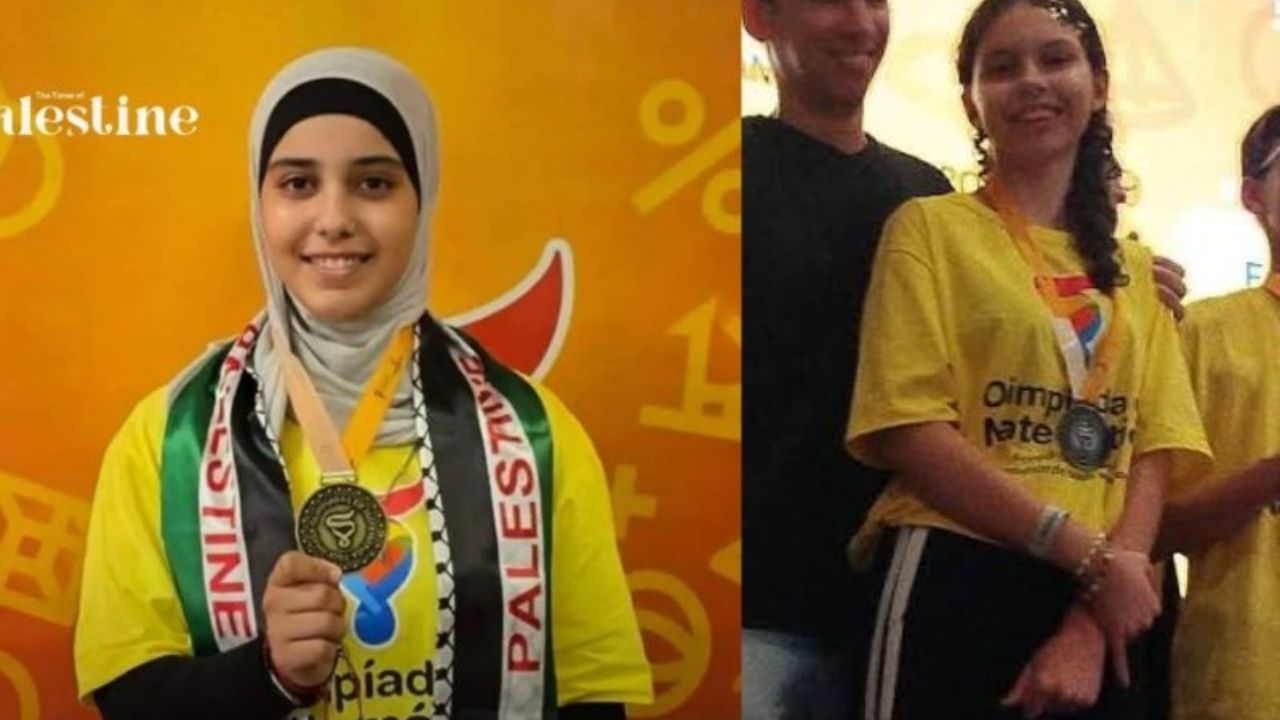
The move from Gaza to Brazil placed Tala in front of a new school routine, another language, and classmates she was still getting to know. In São Paulo, the Palestinian girl began attending classes while learning Portuguese and adapting to the functioning of the new school.
In this process, mathematics appeared as an area where she managed to stand out. Participation in the 2026 Paulista Mathematics Olympiad ended with a gold medal and drew the attention of teachers and classmates for the student’s academic performance.
Education, support, and social networks amplified the impact
The publication reports that the story moved Brazilians on social networks and came to be seen as a symbol of hope for other refugee children. This type of impact tends to grow when the public identifies an objective achievement, like a medal, linked to a human story of adaptation.
In the case of the Palestinian girl, the interest is not just in the prize, but in the journey to it: arriving in Brazil, learning Portuguese, integrating into the school, and performing in a mathematics competition. It is a classroom story, but also one of belonging.
What this achievement makes us think about
The medal of Tala doesn’t resolve the scars left by a war nor does it summarize the experience of refugees. Even so, it shows how school can become a support point when there is welcome, continuity, and real opportunity to learn.
Now, the story of the Palestinian girl opens an important conversation: how many talents can emerge when students displaced by war find a community willing to welcome them? Do you think Brazilian schools are prepared to better accommodate refugee children and teenagers? Leave your opinion in the comments.