Portuguese
  Spanish


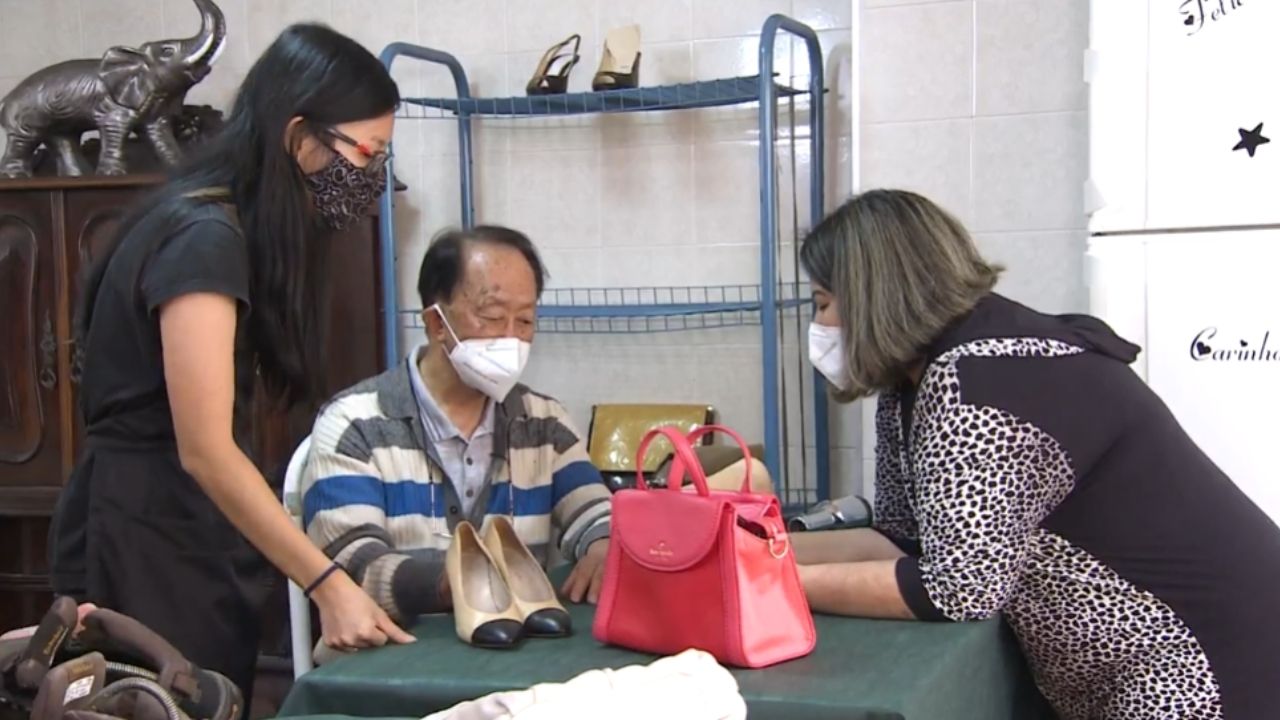
Report by Small Companies & Big Business, published on g1 on 01/23/2022, shows Orlando Okanishi, a chemical engineer with almost 60 years of experience in leather, who opened a workshop in 2010 for the restoration of shoes, bags, jackets, luxury items, and rare pieces in São Paulo.
The restoration of shoes became a business for Orlando Okanishi, a chemical engineer who opened his own workshop in 2010, in São Paulo. According to a report by Small Companies & Big Business, published on g1 on 01/23/2022, he had already accumulated almost 60 years of experience with leather restoration.
At the time of publication, Orlando was 84 years old and worked with shoes, bags, jackets, and mainly luxury items. The case draws attention for showing the professionalization of an old craft, without relying on trends, expensive technology, or a narrative of overcoming obstacles.
Age today would be approximately 88 to 89 years
In the report published by PEGN/g1 on 01/23/2022, Orlando Okanishi was presented as being 84 years old. Considering the year 2026, he would be approximately 88 to 89 years old today, depending on the exact date of his birthday, which was not provided.
-
Japanese Botanist’s Miyawaki Method Grows Native Forests in Small Spaces in Just Years, Not Decades

-
800-Year-Old Cliffside Temple in Greece Amazes with Secret Cave, Drawbridge, and Stunning Views

-
Japan’s “Akiya” Homes: Abandoned Properties Attract Foreign Buyers as Locals Shun Them
-
Lawyer Turned Entrepreneur Earns $60,000 Annually Selling Brazilian Cheese Bread: Athena Rodrigues Started with $400 and Founded Dona Zelda, Bringing a Taste of Minas Gerais to São Paulo’s Heart


This detail reinforces the longevity of his professional journey, but without turning the story into a narrative of overcoming obstacles. The main point remains the value of technical knowledge accumulated over decades, applied in the restoration of shoes, leather, bags, jackets, and rare pieces within a specialized workshop.
Workshop was born with a focus on leather and higher-value pieces
Orlando Okanishi’s workshop was opened in 2010 and began operating in the restoration of shoes, bags, and jackets. The report states that the work is mainly focused on luxury items, a segment where finishing, care, and trust have decisive weight.
The first client, according to PEGN/g1, was a shoe store in a luxurious mall in São Paulo’s capital. This detail shows that the business started connected to an audience that values the recovery of expensive pieces, and not just simple everyday repairs.
Shoe restoration requires technique and understanding of the material
A shoe restoration involves evaluation of the leather, type of wear, condition of the piece, cleaning, painting, and finishing. Although the report does not detail each technical step, it states that Orlando offers restoration, cleaning, washing, and painting services.
This set shows that the service goes beyond “fixing a shoe.” In leather articles, restoring means preserving appearance, structure, and utility, especially when it comes to higher value pieces or those with sentimental value to the client.
Bags and jackets expand the workshop’s reach
In addition to shoe restoration, Orlando also works with bags and jackets. This diversification is important because it transforms the workshop into a broader leather conservation business, without relying on just one type of product.
Each piece requires different care. Bags may require handle recovery, corners, painting, and internal cleaning. Jackets need attention to the surface, seams, and natural wear. The variety of services increases the value of the craft and broadens the audience served.
Rare pieces enter as a business differential
The report also states that Orlando manufactures and restores parchment. Additionally, it mentions an unusual and expensive piece: a bar, described as a cabinet brought by a client from Europe.
This type of demand reinforces the workshop’s differential. When the professional can handle rare items, the business stops competing only on price and starts competing on technical knowledge, trust, and artisanal capability.
SEE THE FULL REPORT BY CLICKING HERE.
Family learned the craft within the operation
Orlando taught the work to his daughters Solange Okanishi and Diana Okanishi and his son-in-law, Marcelo Carneiro de Moura. Other employees also help in the workshop, under his supervision, according to the report.
This point highlights an important dimension of the business: the continuity of knowledge. Leather restoration depends on practice, observation, and repetition, and passing the craft down to the family helps maintain standards and specialized service.
Chemical engineering appears as part of the repertoire
The report identifies Orlando as a chemical engineer but does not detail exactly how the training is applied in each service of the workshop. Therefore, the safest interpretation is to treat this training as part of his professional repertoire, without attributing techniques not informed by the source.
Even so, the relationship with materials, cleaning, painting, and surfaces makes the training consistent with the type of activity developed. What is confirmed is the combination of almost 60 years of experience with leather and the opening of his own workshop in São Paulo.
Luxury market values well-done recovery
Luxury items tend to have a high purchase value, specific finishing, and often emotional importance to the owner. Therefore, restoration can be an alternative to prolong the useful life of pieces that can still be recovered.
In Orlando’s case, the initial connection with a luxury shopping mall shoemaker indicates entry into a demanding market. In this segment, the client is not just looking for repair; they seek to preserve value, appearance, and confidence in the service.
Cleaning, washing, and painting complete the restoration
In addition to restoration, the workshop offers cleaning, washing, and painting. These services broaden the possibilities of service because many pieces do not need complete reconstruction but rather aesthetic recovery and maintenance.
Painting can renew the appearance of worn leather. Cleaning helps remove signs of use. Washing, when suitable for the material, contributes to recovering usability. The service gains strength when it brings together several solutions in a specialized delivery.
Old craft gains new space with conservation
The restoration of shoes, bags, and jackets also aligns with the appreciation of durable pieces. Although the report does not present sustainability data, the service itself reduces the need to discard items that can still be recovered.
This change favors traditional crafts. Instead of treating repair as something outdated, the market can see restoration as care, economy, preservation, and maintenance of rare or expensive pieces.
What this workshop reveals about niche businesses
The story of Orlando Okanishi shows that niche businesses can gain value when they combine experience, technique, reputation, and specialized service. Shoe restoration is the gateway to an operation that also serves bags, jackets, scrolls, and unusual items.
The question remains whether more traditional crafts can grow again with the appreciation of durable goods and specialized services. Do you think shoe, bag, and leather item restoration can gain strength as a luxury business and conscious consumption? Leave your opinion in the comments.