Portuguese
  Spanish


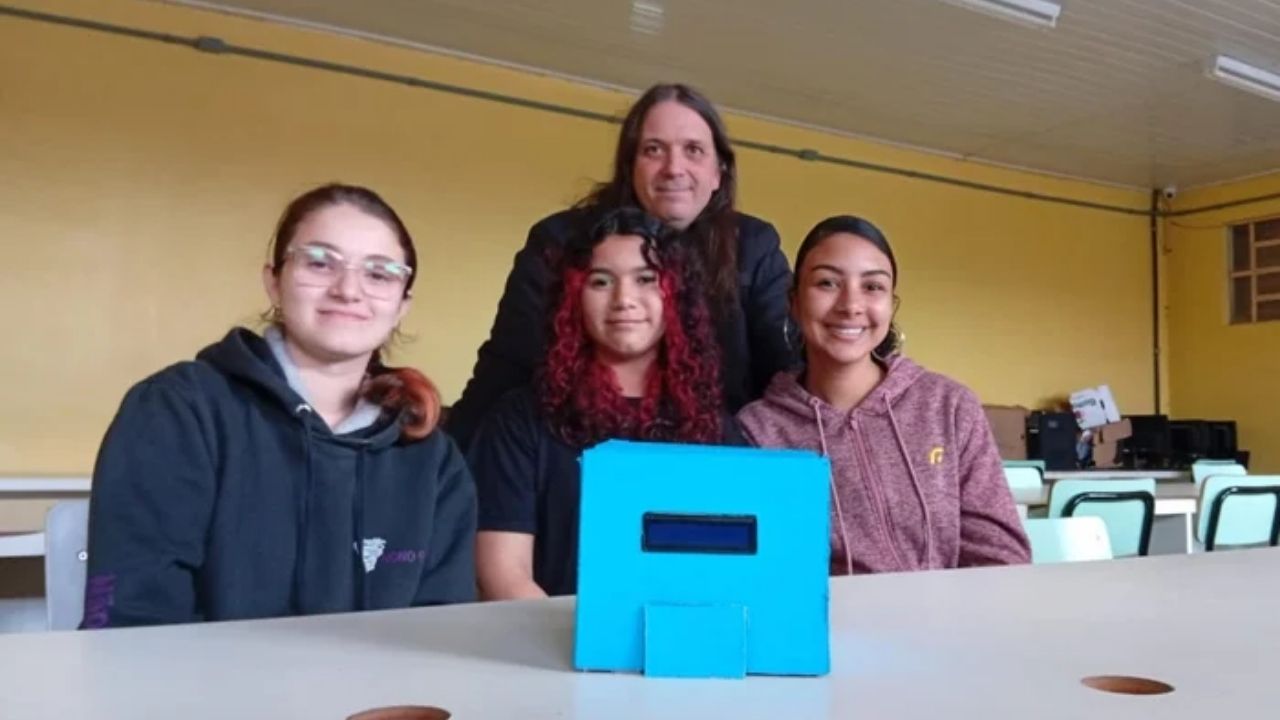
GZH report published on 07/01/2026 shows the reminder robot developed by Sara Machado, Anthonela Xavier, and Marina Costa, 9th-grade students at Nossa Senhora de Lourdes Municipal School, in Pelotas, under the guidance of Professor Cleber Garcia, using Arduino, LCD screen, sound alert, light, and automatic drawer for medications.
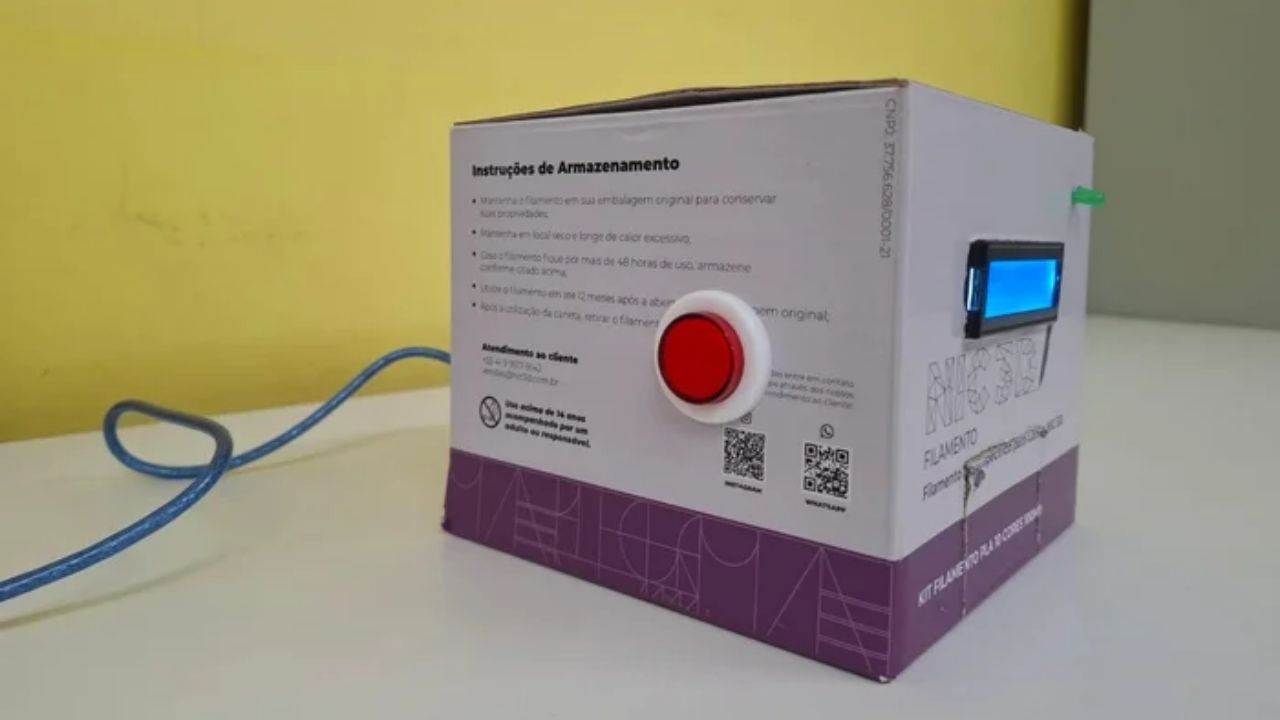
The reminder robot created by three students of the 9th grade in Pelotas, Rio Grande do Sul, was developed to assist the elderly and patients who need to take medications at set times. The prototype emits sound, lights up, shows instructions on the screen, and releases the medication drawer at the scheduled time.
According to a GZH report published on 07/01/2026, the project was made by Sara Machado, Anthonela Xavier, and Marina Costa, from the Nossa Senhora de Lourdes Municipal Elementary School, under the guidance of Professor Cleber Garcia. The proposal will be presented on July 9 and 10 at Robopel 214, an event of robotics, programming, and innovation promoted by Pelotas Technology Park.
Idea was born during vacation and became a robotics project
The idea for the reminder robot came up during the summer vacation. Before the school break, Professor Cleber Garcia proposed that the students return to classes with project suggestions to develop throughout the year.
-
Canada Makes Historic Decision to Purchase New German Submarines in $70 Billion Defense Program, Replacing Aging Victoria-Class Fleet by 2033

-
4,000-Year-Old Stone Circle Discovered Near Belfast, Unveiling Prehistoric Ritual Complex in Irish Countryside

-
Brazilian Innovator Transforms 1962 Mercury Comet with Nissan Leaf Electric Motor, Achieving 125 km Range for Under $6,000
-
China Tests Giant 582-Ton Magnets to Contain Plasma Hotter Than the Sun’s Core, Aiming to Cut Superconductor Costs and Generate First Electricity from “Artificial Sun” by 2030


After researching similar solutions, Sara Machado presented the equipment proposal. She told GZH that she found a similar project, designed the model during the vacation, and brought the idea to the professor when classes resumed. The central point was to transform a simple observation into a functional prototype within the school.
Three students shared the construction of the equipment
After the idea was approved, the students divided the development stages. Sara and Marina Costa were responsible for the physical structure of the robot, including assembly, painting, and the opening mechanism of the drawer where the medication is stored.
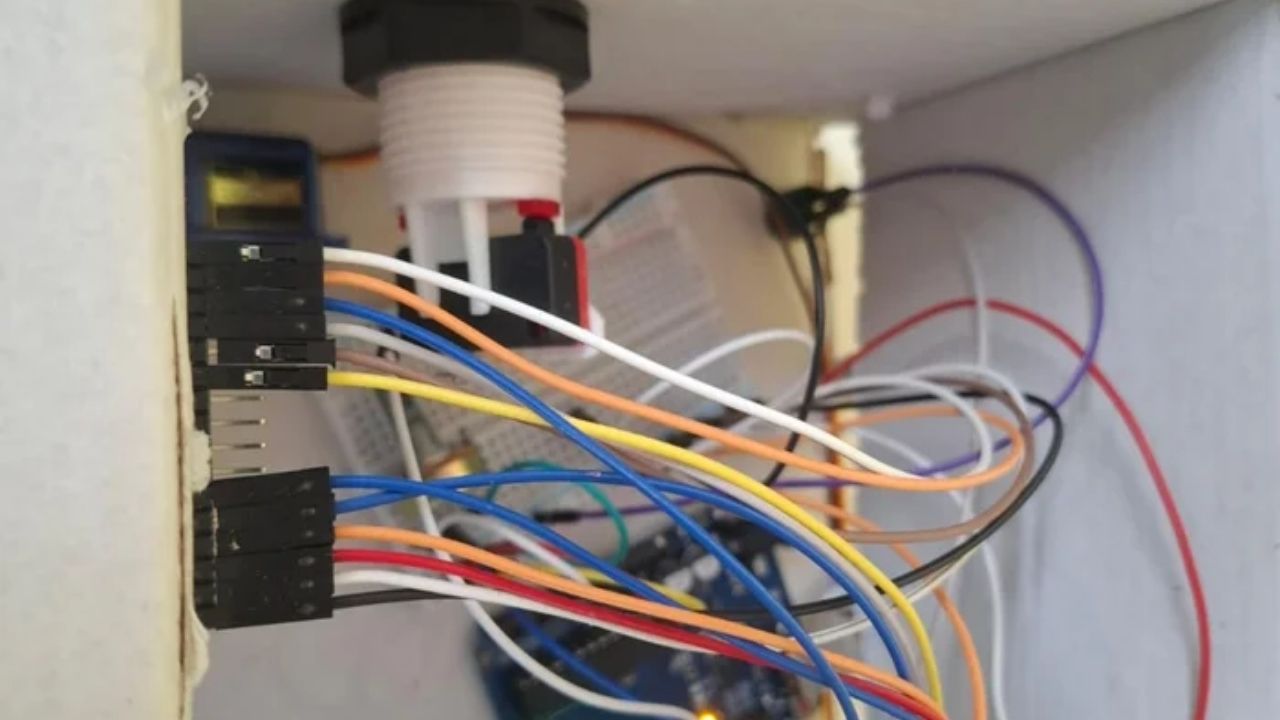
Anthonela Xavier took on the programming and electronic part of the prototype. She explained that programming required attention, research, and consulting forums to understand the functioning of the components. This division shows a common dynamic in maker projects: each student takes on a technical part and the result depends on the integration between structure, code, and electronics.
Arduino controls light, sound, display, and automatic drawer
The reminder robot was developed with an Arduino controller, a technology widely used in educational automation and robotics projects. The system is pre-programmed by a family member or caregiver with the times the medications should be administered.
When it’s time for the dose, the equipment triggers a sound alert, activates a flashing light, and displays instructions on an LCD screen. After the user presses a button, a drawer opens automatically, allowing access to the stored medication. The logic of the prototype is to reduce the risk of forgetting through visual, auditory signals, and simple mechanical action.
Prototype has only one drawer to test the concept
The current version has only one compartment for medicines. According to Professor Cleber Garcia, the choice was strategic: before creating a larger and more complex equipment, the goal was to prove that the system worked.
He explained that it would be possible to attempt a version with multiple drawers, but the priority was to demonstrate the students’ ability to develop the technology. This care is important because it positions the robot as a school prototype, not as a medical product ready for commercial use.
Structure uses recycled filament packaging
The equipment structure uses recycled filament packaging for a 3D pen. The reuse of the material helped shape the prototype and reinforces the typical experimentation logic of maker labs.
The students, however, intend to replace this structure with a wooden box produced by them. The change would bring the reminder robot closer to the initially idealized model. The improvement in the finish shows that the project is still in the development phase, but already proves the basic functionality of the idea.
Maker Lab supported the development
The robot was created in the school’s Maker Lab, implemented through the More Science at School program. The space features 3D printers, robotics kits, and tools that allow students to transform ideas into prototypes.
This environment is crucial for projects like this because it brings theory closer to practice. Instead of learning technology only on paper, the students were able to test components, make mistakes, adjust, and assemble a solution with concrete application in everyday life.
Robopel 214 will showcase the project
The project will be presented on July 9 and 10 during Robopel 214, an event promoted by Pelotas Technology Park. The program focuses on robotics, programming, and innovation, bringing together initiatives related to education and technology.
For the students, the presentation represents an opportunity to showcase the development of the prototype outside the classroom. The event also helps give visibility to school projects that treat technology as a tool to solve real problems, not just as subject content.
CNPq scholarships strengthen scientific trajectory
In addition to the experience in the Maker Lab, Sara, Anthonela, and Marina received scientific initiation scholarships from the National Council for Scientific and Technological Development, CNPq, lasting one year.
For Professor Cleber Garcia, the scholarship at this stage of training is significant. He told GZH that the students show interest in the scientific field and that the goal is to provide conditions for them to continue developing this potential. The project, therefore, also serves as an entry point for research still in elementary school.
Simple technology targets an everyday problem
The correct administration of medication depends on timing, attention, and routine. The reminder robot aims to address this point by offering a sound alert, warning light, and physical release of the medicine at the scheduled time.
Even so, the equipment should not be treated as a substitute for medical, family, or professional supervision. The best perspective is to see it as an educational support solution, capable of showing how robotics and programming can assist in simple daily care tasks.
Project shows potential of school innovation
The case of Pelotas shows that school projects can go beyond technical exercises. With Arduino, LCD display, light, sound, and an automatic drawer, the students created a functional solution for a recognizable problem in many families.
The merit lies in combining accessible technology with an everyday need. When the school provides a laboratory, guidance, and space to test ideas, robotics ceases to be just a competition and becomes a tool for social impact.
What this robot reveals about science in school
The reminder robot developed by Sara Machado, Anthonela Xavier, and Marina Costa shows how innovation can emerge from a municipal school, with teacher guidance, maker equipment, and a desire to solve a practical problem.
The question remains whether more schools should have such laboratories to transform students’ ideas into real prototypes. Do you believe projects like this can bring young people closer to science and also help create useful solutions for everyday life? Leave your opinion in the comments.