Portuguese
  Spanish


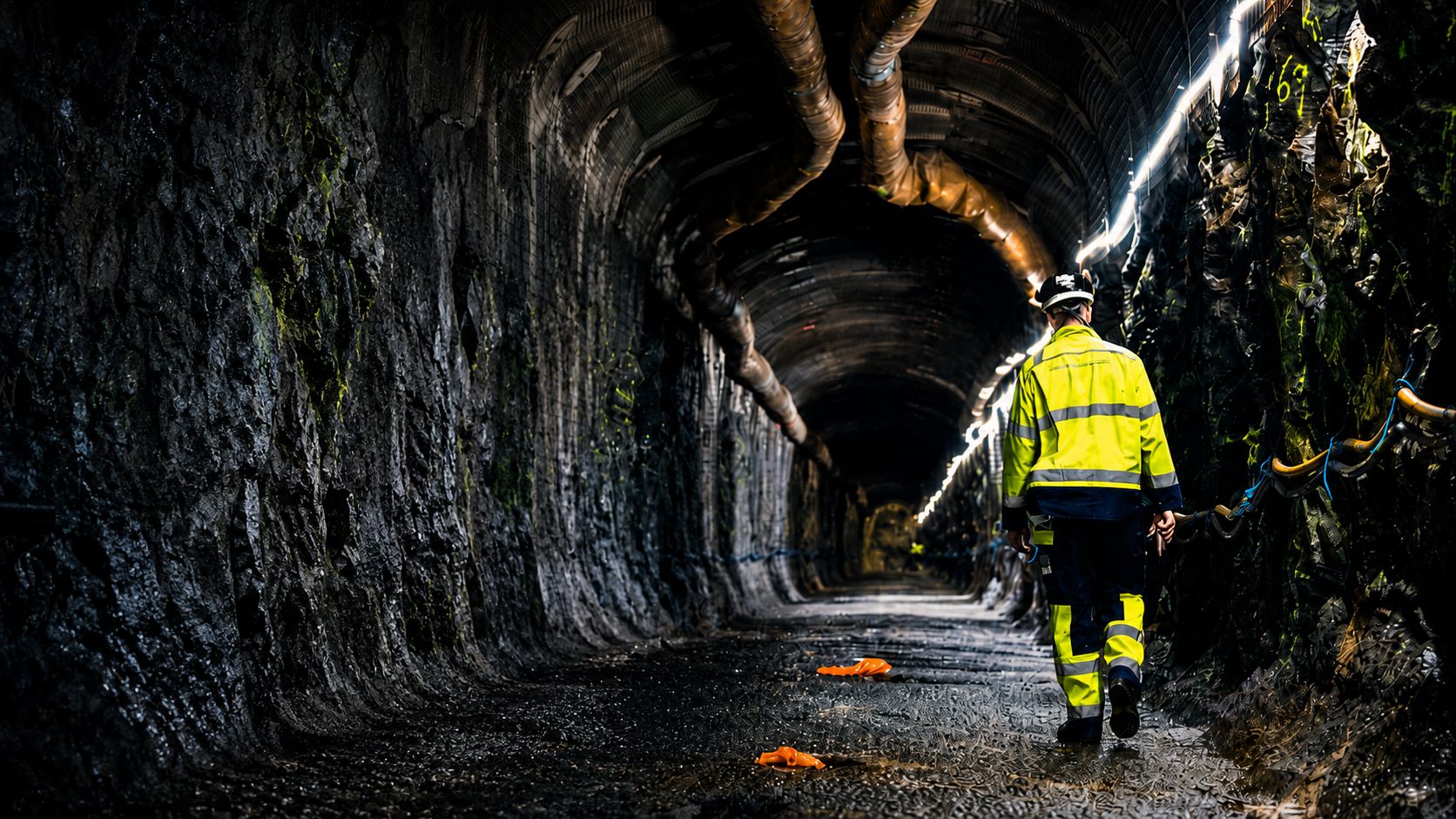

Excavated in Eurajoki, in southwest Finland, the Onkalo repository is set to become the world’s first permanent nuclear waste cemetery, with a capacity for 6,500 tons of uranium, operation planned after final evaluation by STUK and safety planned for at least 100,000 years
Built in Eurajoki, in southwest Finland, Onkalo is expected to receive used nuclear fuel from the country’s five reactors, with a capacity for 6,500 tons of uranium, an estimated cost of one billion euros, and safety planned for at least 100,000 years.
At 433 meters below ground, the Onkalo nuclear waste cemetery in Eurajoki, southwest Finland, is close to starting operations as the world’s first permanent repository for used nuclear fuel, after the final evaluation by STUK scheduled for June.
Nuclear waste cemetery advances in ancient rock
Excavated in stable rock 1.9 billion years old, the complex was designed to receive radioactive waste currently held in temporary storage. Since the construction of the first nuclear plants in the 1950s, countries have sought a definitive answer for this material.
-
Sumatran Rhino: The Rare “Prehistoric Survivor” with Fewer Than 50 Left and a Fascinating Natural History

-
Chinese Humanoid Robots Transition from Labs to Real Factories to Assemble Tablets: AgiBot Deploys G2 Machines at Longcheer, Aiming for 100 Robots in Electronics, Cars, Chips, and Energy by 2026

-
Shopkeeper Buys Notebook at English Bazaar, Discovers Rare 1915 WWI Record Listing 900 Volunteers, 140 Fallen

-
Hyundai Workers Vote to Strike Over Fears of Being Replaced by Atlas Robots in Factories




The Finnish geological repository is known as Onkalo, a word that means “cave” in Finnish. The facility is located near the Olkiluoto plant, close to the Baltic Sea, where used nuclear fuel is cooled in water tanks.
The expectation is that Finland will inaugurate the first permanent underground storage solution, while similar projects advance in Sweden and France. STUK’s approval is expected to precede the operating license in the country.
Philippe Bordarier, executive director of the nuclear operator Teollisuuden Voima Oyj, stated that the operation could begin at the end of this year or the beginning of the next. The initial material will come from temporary storage in Olkiluoto.


Planned capacity meets the five reactors
Onkalo was designed to store 6,500 tons of uranium. The planned capacity should meet the used fuel from Finland’s five nuclear reactors, three of which are located in Olkiluoto, a central area for the country’s nuclear production.
Posiva, the company responsible for nuclear waste management, began construction in 2004. The current estimated cost of the project is one billion euros, equivalent to $1.16 billion, according to the presented values.
The repository is expected to receive used nuclear fuel for 100 years. This period may be extended if new nuclear reactors are built. Afterward, the underground vault will be sealed to ensure safe storage for at least 100,000 years.
After 100,000 years, the level of radioactivity should approach that of the uranium ore used to manufacture the fuel. Until then, the strategy combines depth, ancient rock, resistant capsules, bentonite clay, and concrete barriers.
How the material will be isolated underground
Before descending into the tunnels, the used fuel will be encapsulated in copper containers highly resistant to corrosion. These containers will be placed in holes drilled into the rock, within the underground disposal network.
After placement, the holes will be filled with bentonite clay, used to seal the spaces. Parviainen explained that safety depends on the bentonite remaining in place, functioning as an additional barrier around the capsules.
Each disposal tunnel will be 300 meters long. When full, it will be sealed with a steel-reinforced concrete plug. The system’s logic is to create layers of containment to reduce risks of environmental contact.
The process was designed to keep radioactive fuel away from the surface for periods that exceed any usual infrastructure scale. Therefore, the nuclear waste repository combines engineering, geology, and regulation in a single solution.
Risks assessed up to a million years
Jarkko Kyllonen, a nuclear safety specialist at STUK, evaluated risk scenarios for Onkalo that extend up to a million years. The first 10,000 years are considered relevant to keep the capsules intact.
The main long-term risks are corrosion of the copper containers and earthquakes during future ice ages. These events could damage the capsules and cause radioactive leakage, but evaluations conducted over the years have had positive results.
The acceptance of the project in Finland contrasts with the strong opposition faced by similar plans in France. In Eurajoki, there was local resistance when the proposal appeared in the 1970s, but support has grown.
Matti Kojo, a professor of social sciences at LUT University, stated that people have become accustomed to the project and trust STUK’s assessments. He also noted that support for nuclear energy is at a historically high level in Finland.
The Finnish Association for Nature Conservation maintains criticisms of the project. Director Tapani Veistola stated, in an email to AFP, that no one can guarantee the safety of Onkalo for thousands of years, due to the long-term risk.
Legislation keeps waste within the country
The Minister of Climate and the Environment, Sari Multala, stated that Finnish legislation requires that nuclear waste produced in the country be deposited on national territory. Before the legal change in 1994, used fuel was exported to Russia.
The Finnish government is also considering expanding nuclear energy, with discussions about small modular reactors. Multala stated that there is still no decision on the management of used fuel from these future reactors, and an assessment should be completed by March of next year.
What do you think of this solution for storing nuclear waste for thousands of years?