






 Portuguese
  Spanish


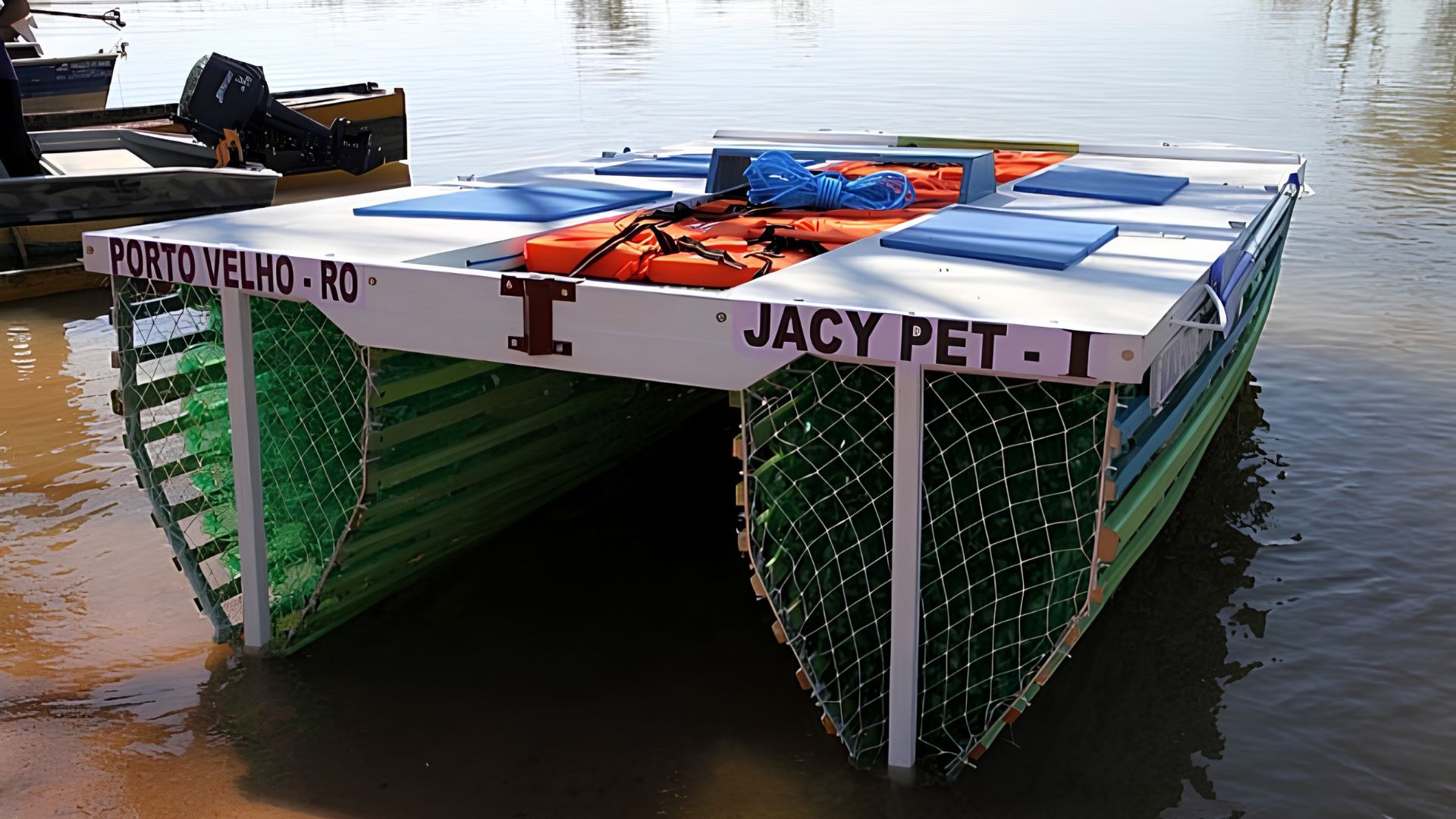


Project in Rondônia transformed 2,000 PET bottles into real 3.60-meter boats with capacity for six people.
In August 2014, a project developed in Jacy-Paraná, a district of Porto Velho, in Rondônia, drew attention by transforming plastic waste into real vessels capable of navigating the region’s rivers. The initiative used about 2,000 PET bottles collected from local schools to build two boats, each 3.60 meters long, almost 2 meters wide, and approximately 210 kg.
The vessels were given capacity for one crew member and five passengers, showing that discarded materials could gain a function far beyond traditional recycling. The project was developed within the Fisheries Activity Support Program, linked to Santo Antônio Energia, with technical guidance from OAK Soluções Ambientais.
In addition to the environmental impact, the economic factor also drew attention. According to those responsible for the initiative, the boats were about 30% cheaper than conventional vessels with similar characteristics, making the project even more relevant for riverside communities.
-
Qatar Commissions World’s Largest Gas Ship, a 344-Meter Giant Now Under Construction

-
Expert Challenges Alarmism Over El Niño in Brazil: Atmosphere Yet to Respond to Warm Pacific, Advises Farmers Against Selling Cattle or Delaying Planting Before September
-
In a Degraded Atlantic Forest Area, a São Gonçalo Resident Transforms Land into a Living Eco-Museum, Now a Model for Environmental Education

-
World’s First Lithium-Sulfur Battery Factory Launches, Promising to Double Range Without Relying on China


Boats made from PET bottles originated from a course held in a riverside community in Rondônia
The construction of the vessels took place during a five-day course held in Jacy-Paraná. The training brought together community residents interested in recycling, material reuse, and activities related to local fishing.
During the course, participants learned techniques for reusing PET bottles and the structural assembly of the vessels. The work involved material separation, bottle organization, and preparation of the structure used in boat construction.
At the end of the activities, the two boats were ready to be launched into the river. The vessels were named JacyPet1 and Jacy Pet 2, reinforcing the direct connection with the community where they were produced.
Sustainable 3.60-meter vessels supported up to six people
The boats built in the project were not just symbolic prototypes. Each vessel had the capacity to transport one crew member and five passengers, in addition to dimensions much larger than simple improvised rafts.


With approximately 3.60 meters in length and almost 2 meters in width, the boats drew attention for their size and stability on the water. The approximate weight of 210 kg also reinforced the project’s more robust structure.
The vessels were launched into the waters of the Jacy River in front of the local residents, who followed the tests conducted after the course concluded.
Project used plastic waste collected from schools in the Amazon region
The approximately 2,000 PET bottles used in the project were collected from schools in Jacy-Paraná. The proposal involved precisely uniting environmental education and waste reuse within the community itself.
The discarded plastic, which could end up in streets, land, or rivers, became part of a functional structure used for navigation. This transformed the project into a practical example of reuse applied to a riverside reality.
The initiative also brought students and residents closer to discussions about recycling, concretely showing how waste can gain a new utility.
PET bottle boats were about 30% cheaper than conventional vessels
The reduced cost was one of the most important points of the project. According to the organizers, each boat was approximately 30% cheaper than a similar conventional vessel.
In regions where rivers are part of daily life, boats represent an important tool for displacement, fishing, and local transport. Reducing the production cost of a vessel can make a significant difference for residents of these areas.
The reuse of plastic precisely helped to reduce part of the expense necessary for the construction of the structures.
Vessels received technical monitoring before being launched into the river
Before being used, the vessels underwent technical monitoring. The boats received a naval engineer’s report and registration with the Porto Velho River Agency, linked to the Brazilian Navy.
The process ensured that the structures were evaluated before navigation. This care was important to validate the project and allow the boats to be presented as real vessels, not just improvised experiments.

After licensing, the boats were officially placed in the Jacy River, where they underwent their first tests before the community.
Rondônia Project continues to draw attention more than a decade later
Even more than ten years after its completion, the JacyPet boats case continues to be remembered for its unusual combination of recycling, simple engineering, and visual impact.
The idea of transforming 2,000 PET bottles into real boats navigating Amazonian rivers created one of the most curious images involving plastic reuse in Brazil.

The project also gained momentum by showing a practical application for disposable waste in a community where rivers have direct economic and social importance.
JacyPet Boats show how waste can gain a second function on water
The Jacy-Paraná case revealed that plastic waste can cease to be just trash and become part of real solutions within riverside communities.
With about 2,000 PET bottles, residents built two vessels nearly 4 meters long, with capacity for six people and reduced cost compared to conventional boats.
In the end, the project showed that creativity, reuse, and technical guidance managed to transform discarded plastic into functional boats capable of navigating the Amazonian rivers.


