





 Portuguese
  English
  Spanish
  5 min of reading
  0 comments


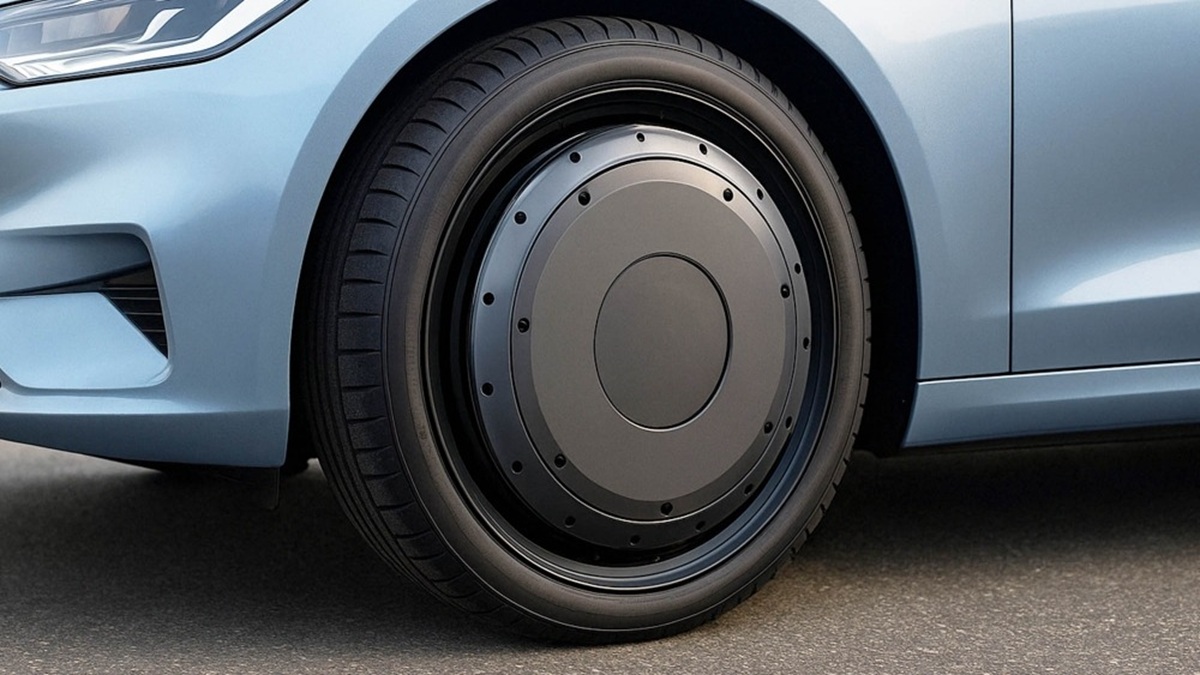
Automakers Like Toyota, BMW, and European Startups Bet on Wheel-Integrated Motors Capable of Eliminating Traditional Components, Reducing Weight, Increasing Range, and Completely Transforming the Design and Efficiency of Next-Generation Electric Cars
At the beginning of the 20th century, the idea of placing electric motors directly in the wheels seemed revolutionary. Ferdinand Porsche introduced this solution at the 1900 Paris Motor Show, with each wheel powered individually. Despite the initial impact, the dominance of combustion engines and the lack of electrical infrastructure hindered its commercial evolution.
For decades, the automotive industry practically abandoned the concept, which survived only in niches like electric bicycles and motorcycles.
With the advancement of sustainable mobility in the 21st century, the old idea has been revived with strength.
-
For the first time in history, a submarine cable will descend to four thousand meters deep under the ice of the North Pole to ensure that the internet between Europe and Asia no longer depends on conflict zones in the Middle East.

-
A British company has installed in the middle of the ocean the world’s first floating platform that generates electricity 24 hours a day from the temperature difference between the surface and the depths of the Atlantic, without relying on wind or sun.
-
The James Webb telescope spotted a planet 700 light-years from Earth with mornings full of sand clouds and nights with clear skies, the temperature difference between the two hemispheres reaches an impressive 170 degrees.
-
A former Hong Kong police officer has just become the first astronaut from her city to go to space. She embarked on the Shenzhou-23 mission alongside two other colleagues who will face muscle atrophy, radiation, and prolonged fatigue in orbit.




The proposal to eliminate traditional mechanical components and make cars more efficient has gained relevance again — and now with technologies capable of overcoming past limitations.
Advantages of Wheel-Integrated Motors
The main characteristic of wheel-integrated motors (IWM) is their compact architecture. Installed within the rim, they transfer torque directly to the tire, eliminating the need for axles, differentials, and gearboxes. This configuration reduces mechanical losses and increases energy efficiency.
The independent control of each wheel represents another differentiator. It allows for optimized traction and stability in curves, as well as enabling complex maneuvers, such as torque vectoring and even “tank” turns, where the vehicle pivots on its own axis — something unfeasible with centralized motors.
The space freed up in the chassis also opens new possibilities.
Without the need for a large compartment for the motor and transmission, manufacturers can opt for more spacious cabins or larger batteries in the same volume. This reduction in structural weight improves energy consumption and extends range.
Therefore, proponents of technology claim that vehicles with wheel-integrated motors can cover greater distances on a single charge. Furthermore, the simplified architecture contributes to greater comfort and performance, redefining the driving experience.
Technical Challenges and Limitations
Despite the advantages, wheel-integrated motors face significant technical obstacles. The main one is the increase in unsprung mass — weight added directly to moving parts, such as wheels and suspension. This extra mass can compromise stability and handling.
To address this problem, companies like Protean have developed adjustable suspension systems capable of compensating for the additional weight, making its presence almost imperceptible.
Durability also demands advanced solutions. As the motor is more exposed to impacts, dirt, and vibrations, it needs to withstand severe conditions.
The latest generations of IWMs undergo rigorous testing — including impact resistance, water immersion, and thermal cycles — and are designed to operate for up to 15 years or 300,000 km without maintenance.
Another critical point is thermal management. Heat dissipation and electrical insulation within the wheel hub require precise engineering. The technical complexity and higher costs explain why many past projects never advanced beyond the prototype stage.
Even so, experts assert that these challenges are surmountable.
The idea of transferring components from the engine compartment into the wheels requires radical design changes but promises to simplify the rest of the vehicle.
Current State of Technology
In recent years, wheel-integrated motor technology has advanced impressively. The British company Protean Electric, for instance, developed the ProteanDrive Gen5 Pd18, a fifth-generation motor ready for production.
Designed for 18-inch wheels, the system integrates an inverter and electronic control, delivers up to 1,500 Nm of torque, and has been approved in durability tests for 15 years or 300,000 km.
The units are already being manufactured in Tianjin, China, and 400 V and 800 V versions are expected to arrive by the end of 2024.
The startup Donut Labs, with offices in the UK and Finland, showcased at CES 2025 an even more impressive prototype: 630 kW of power and 4,300 Nm of torque in a 21-inch wheel motor weighing only 40 kg.
These figures surpass those of the Protean Pd18, which generates 1,250 Nm and 80 kW per wheel, and demonstrate the potential of new materials and engineering techniques.
The technology is already being tested in motorcycles and trucks. The manufacturer Verge uses Donut Labs motors in its TS Pro model. BMW and the startup DeepDrive are working on a highly compact dual-rotor axial motor that facilitates the installation of one motor per wheel, enabling independent all-wheel drive.
Toyota has also joined the race, with a patent for a motor with a helical gear integrated into the wheel, designed to support high axial loads without increasing weight. Meanwhile, Aptera Motors, based in the USA, has relaunched its electric tricycle with front-wheel drive on two wheels, promising up to 1,600 km of range — a direct result of the efficiency of IWMs.
Nonetheless, most production cars still use centralized motors. IWMs appear only in prototypes, demonstration vehicles, or special projects, such as electric trucks and lunar vehicles.
However, commercial adoption is close: Protean, in partnership with ConMet, is developing motors for trucks, and companies like Mercedes and Nissan have already demonstrated functional concepts.
Perspectives for the Future
The industry believes that wheel-integrated motors could redefine the design and efficiency of electric vehicles. By eliminating heavy and complex mechanical components, they allow for more versatile architectures.
According to Stephen Lambert, chief technology officer at Protean, the adoption of these motors could “deeply change the efficiency and aesthetics” of electric cars, taking driving to new levels of safety and adaptability.
Without driveshafts or transmissions, the front space can accommodate larger batteries or impact absorption zones, enhancing range and safety.
In the coming years, the technology is expected to appear in more concept cars and prototypes, from sporty SUVs to vans. Protean already has production-ready systems, while giants like Toyota, BYD, and Stellantis are filing accelerated patents.
If the final challenges — such as cost, cooling, and reliability — are solved, experts believe the next decade will mark the arrival of wheel-integrated motors to the mass market.
Initially, they are expected to equip luxury models or specialized vehicles, before becoming popular in mass-produced cars.
A Foretold Revolution
The concept that emerged over 120 years ago returns now with the potential to transform the automotive industry.
Lighter, more efficient, and with unprecedented design freedom, wheel-integrated electric motors could usher in a new era for electric vehicles.
If the past showed the limitations of this idea, the present indicates that the technology is ready — and the future of cars may literally revolve around it.







-

1 person reacted to this.