Portuguese
  Spanish


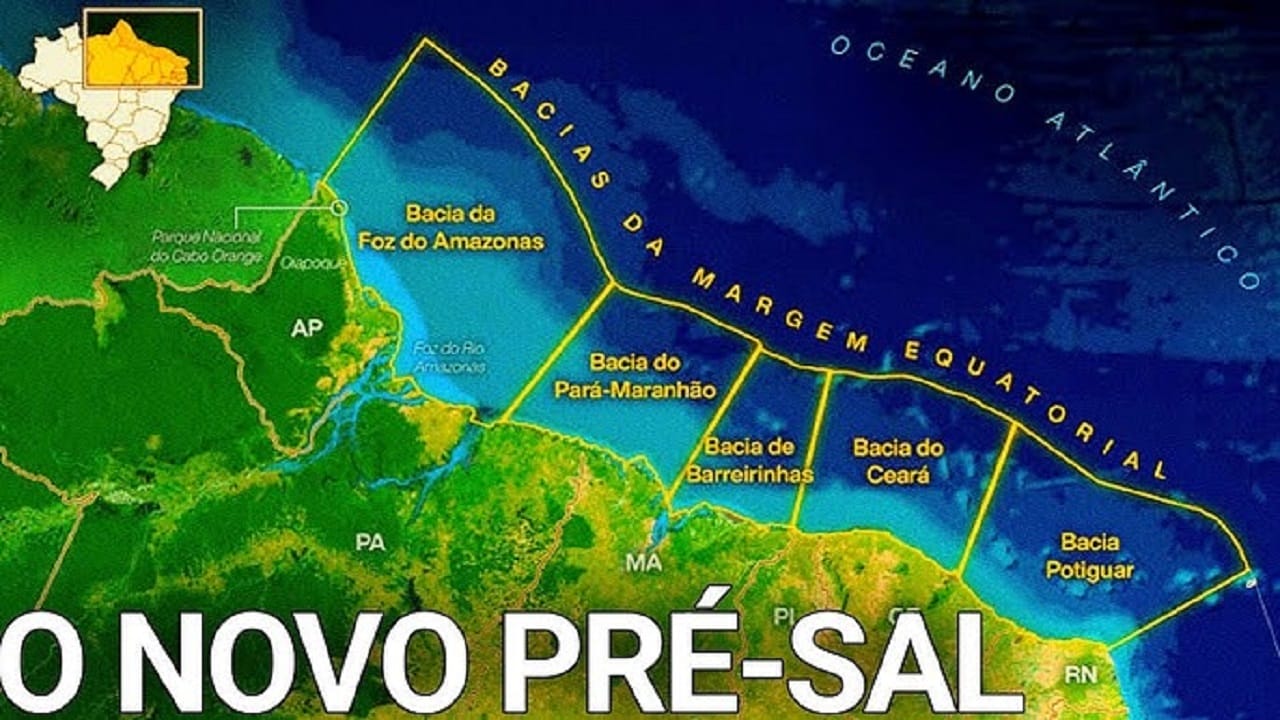

More Than 300 Thousand Jobs Will Be Created With Oil And Gas Production In The Equatorial Margin. Find Out Which States Could Benefit.
The production of oil in the Brazilian Equatorial Margin has the potential to generate 326,049 thousand new formal jobs. The data was collected by the National Industry Observatory of the National Confederation of Industry (CNI) in a groundbreaking study on the subject, which also indicates that oil and gas extraction could add R$ 65 billion to Brazil’s GDP and contribute R$ 3.87 billion to indirect tax revenue.
According to the CNI, the study’s calculations were based on the IBGE’s regional accounts system from 2019, to isolate any distortions due to the covid-19 pandemic. The simulation regarding jobs created in the Equatorial Margin considered that each state will produce the machinery and equipment necessary for oil and gas production, which would require labor quantities according to each state’s production volume. The study also assumed that all the oil obtained will be exported from Brazil.


CNI Projects Economic And Social Impacts Of Oil And Gas Production
The CNI projected the economic and social impacts of oil and gas production in each of the states that are part of the Equatorial Margin. Among the states that will create these jobs are Rio Grande do Norte, Piauí, Ceará, Maranhão, Pará, and Amapá.
-
Oil production grows in Rio, but reserve replacement raises a warning sign

-
Petrobras is expected to complete the drilling of the Morpho well in the Foz do Amazonas in August 2026, the first well in the Equatorial Margin, an oil frontier that the ANP estimates at more than 30 billion barrels and could redraw the map of Brazil.

-
Oil returns to the center of concerns with tension between the US and Iran

-
IEA reduces forecast for global oil demand in 2026 after impacts of the Middle East crisis



To make this possible, it considered the estimate of drilling one well per state, with a capacity of 100 thousand barrels per day, at a barrel price of US$ 80, with an exchange rate of R$ 4.93.
Potential Of Each State In Oil And Gas Production
Based on this scenario, the potential of each state is as follows: Amapá with an additional value to GDP of R$ 10.7 billion, an increase of 61.2% with the creation of 53,916 jobs; Pará with an additional value to GDP of R$ 10.7 billion, an increase of 6.2% with the creation of 51,706 job vacancies; Maranhão with an additional value to GDP of R$ 10.9 billion, an increase of 12.2% and creation of 56,626 jobs.
We also have Piauí with an additional R$ 10.7 billion to GDP, an increase of 21.5% and creation of 52,828 jobs; Ceará with an additional R$ 10.9 billion, an increase of 7.2% in GDP and creation of 56,669 jobs; and finally, Rio Grande do Norte, with an additional R$ 10.8 billion to GDP, an increase of 15.9% with the creation of 54,304 job vacancies.
Benefits Of Production In The Equatorial Margin Beyond Jobs
According to Rafael Lucchesi, director of Industrial Development at CNI, the production of oil and gas in the Equatorial Margin will enable resources that can improve Brazil’s energy security, open pathways for green economy and decarbonization, as well as promote social advances and infrastructure development in the states that make up the Margin.
It is important to state that this will depend on the country’s ability to build resource governance that ensures transparency, targets, and oversight in the application of the wealth obtained from exploration.
The Equatorial Margin is one of the last unexplored oil frontiers in the country. It encompasses the entire coastal strip in the northern part of the country. It is named for being close to the Equator, starting in Guyana and extending to Rio Grande do Norte. The Brazilian portion is divided into 5 sedimentary basins, which together have 42 blocks.