Portuguese
  Spanish


The well 1-BP-13-SPS reached a total depth of 5,855 meters in the Santos Basin and confirmed a gross column of 1,000 meters of hydrocarbons in a high-quality carbonate reservoir, with an area exceeding 300 km².
In the dark depths of the South Atlantic, almost 2,400 meters below the ocean surface and more than 5,800 meters below the seabed, engineers from BP (British Petroleum) — one of the largest oil companies in the world, headquartered in London and with over 50 years of operation in Brazil — drilled through rock layers hundreds of millions of years old to find something the global oil sector hadn’t seen in a long time: a giant hydrocarbon reservoir, hidden beneath the pre-salt of the Santos Basin.
The result was the Boomerang Field — and the announcement that followed shook energy markets worldwide.
The discovery that no one expected of this magnitude
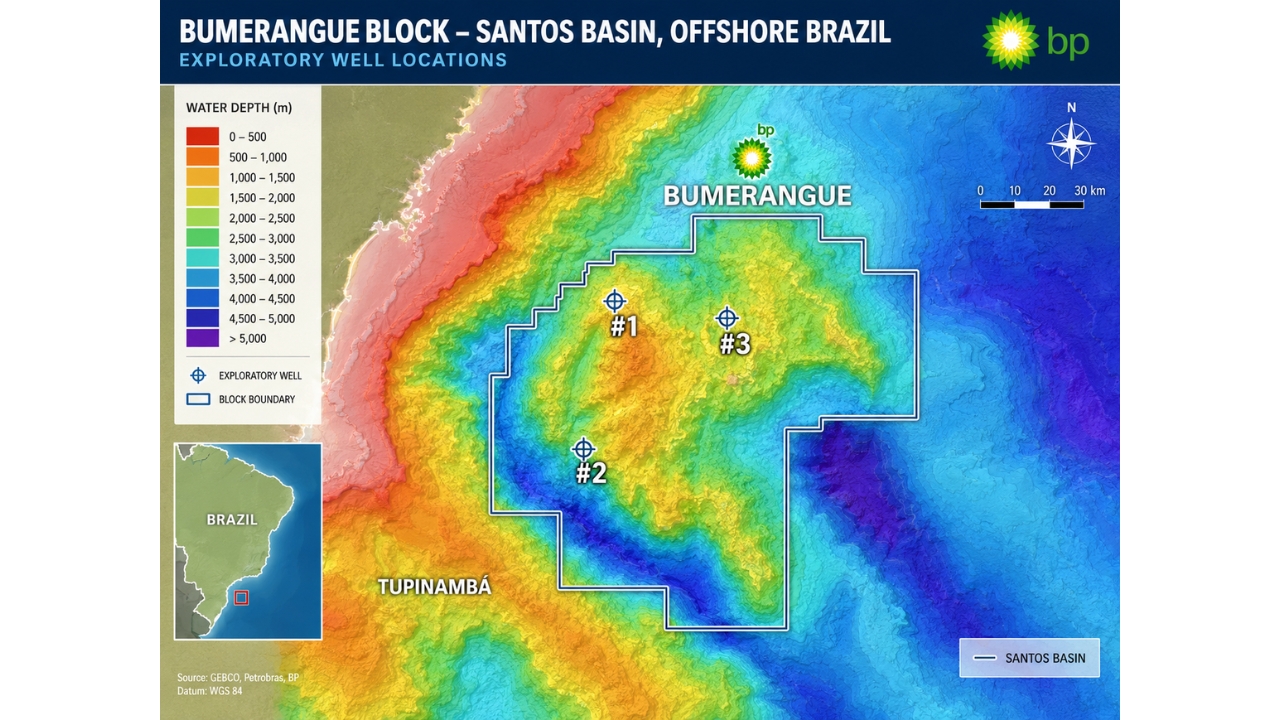
On August 4, 2025, BP informed the market of what its own executives classified as the company’s largest discovery in 25 years — since the Shah Deniz field in the Caspian Sea in 1999. The exploratory well 1-BP-13-SPS, in the Boomerang block, located 404 km off the coast of Rio de Janeiro, traversed a gross hydrocarbon column of approximately 1,000 meters — with 100 meters of oil and 900 meters of liquid-rich gas condensate.
-
OPEC+ Boosts Oil Supply by 188,000 Barrels per Day in July 2026, Leading to Price Drop from $112 to $89 per Barrel in Under Two Months

-
TotalEnergies Signs 20-Year Deal to Purchase 2 Million Tons of LNG from Alaska, Boosting Project Viability
-
Turkey Deploys Çağrı Bey Drilling Ship to Explore New Oil Frontier Off Somalia’s Coast
-
Golden Pass LNG Ships First Liquefied Gas Cargo from the U.S., Completing $10 Billion QatarEnergy and ExxonMobil Investment

To give an idea of the scale: the largest giant fields in the pre-salt, such as Tupi and Búzios, have hydrocarbon columns between 200 and 300 meters. Boomerang has triple that.
The reservoir area exceeds 300 km² — equivalent to the size of the city of Fortaleza — in a high-quality pre-salt carbonate reservoir, exactly the type of rock that generated the largest fields in Brazil’s history.
What makes Boomerang an extreme engineering challenge
Depth that few wells in the world reach
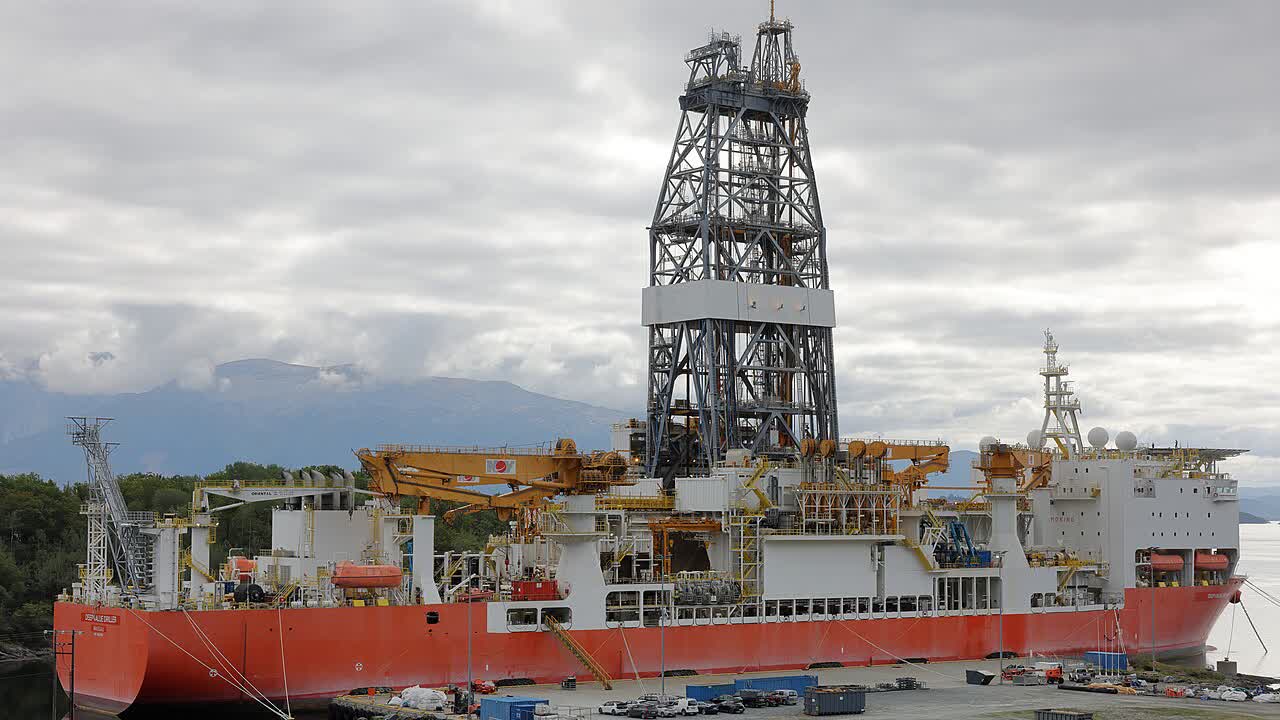
The well was drilled to a total depth of 5,855 meters, in waters with a water depth of 2,372 meters. This means the rig operated under colossal pressures and extreme temperatures, in conditions that test the limits of the most advanced equipment in the industry.
Offshore engineering in ultra-deep waters like this requires cutting-edge technology in every component: submerged wellheads, flexible risers, remote electronic control systems, and FPSO platforms capable of processing oil kilometers from the coast, without a connection to the mainland.
The CO₂ problem that could define the future of the field
The initial results from the rig revealed a fact that drew immediate attention in technical circles: elevated levels of carbon dioxide (CO₂) in the reservoir. This is a classic and critical challenge of the Brazilian pre-salt.
Subsequent laboratory analyses confirmed the presence of the gas, but BP assessed that, due to the presence of liquids throughout the column and the high-quality rock properties, the CO₂ can be managed with appropriate separation and reinjection technology.
Experts remind that the Libra field, with 40% CO₂, is in production — while Júpiter, with 80%, remains halted. The exact content of Bumerangue is still being measured, and this number will be crucial for the economic viability of the field.
BP in Brazil: a long-term strategic bet
The discovery of Bumerangue is not isolated. It reflects a strategic reorientation of BP — which, after years of investing in renewable energies under the slogan “Beyond Petroleum,” has refocused on fossil fuels starting in 2024, pressured by activist funds like Elliott Management and by financial results below expectations.
The company holds 100% of the Bumerangue block, acquired in December 2022 in the 1st Cycle of the Permanent Offer of Production Sharing by the ANP, with commercial terms that allocate 5.9% of the oil surplus to Brazil after cost recovery. Pré-Sal Petróleo S.A. (PPSA) acts as the contract manager on behalf of the Union.
Executive Vice President Gordon Birrell was direct: “Our ambition is to explore the potential to establish a significant and advantageous production hub in the country.” The company is already planning to drill the Tupinambá block in 2026, and evaluation activities in Bumerangue are expected to begin in 2027, subject to regulatory approval.
What comes next — and why Brazil should follow
Boomerang is still in the exploratory phase. There is no FID (Final Investment Decision) approved, and analysts at XP Investimentos estimate that the complete process — from delimitation to first oil — may take between 5 and 8 years. The field, if developed, will require the construction of FPSO platforms, subsea pipelines, and CO₂ reinjection systems at extreme depths.
What’s at stake goes beyond BP’s numbers: Boomerang signals that the pre-salt of the Santos Basin still holds colossal surprises, and that the race for the deepest reserves of the South Atlantic is far from over.
Brazil has the oil. Engineering has the challenge. It remains to be seen who will have the technology — and the speed — to turn this sleeping giant into real production.