






 Portuguese
  Spanish


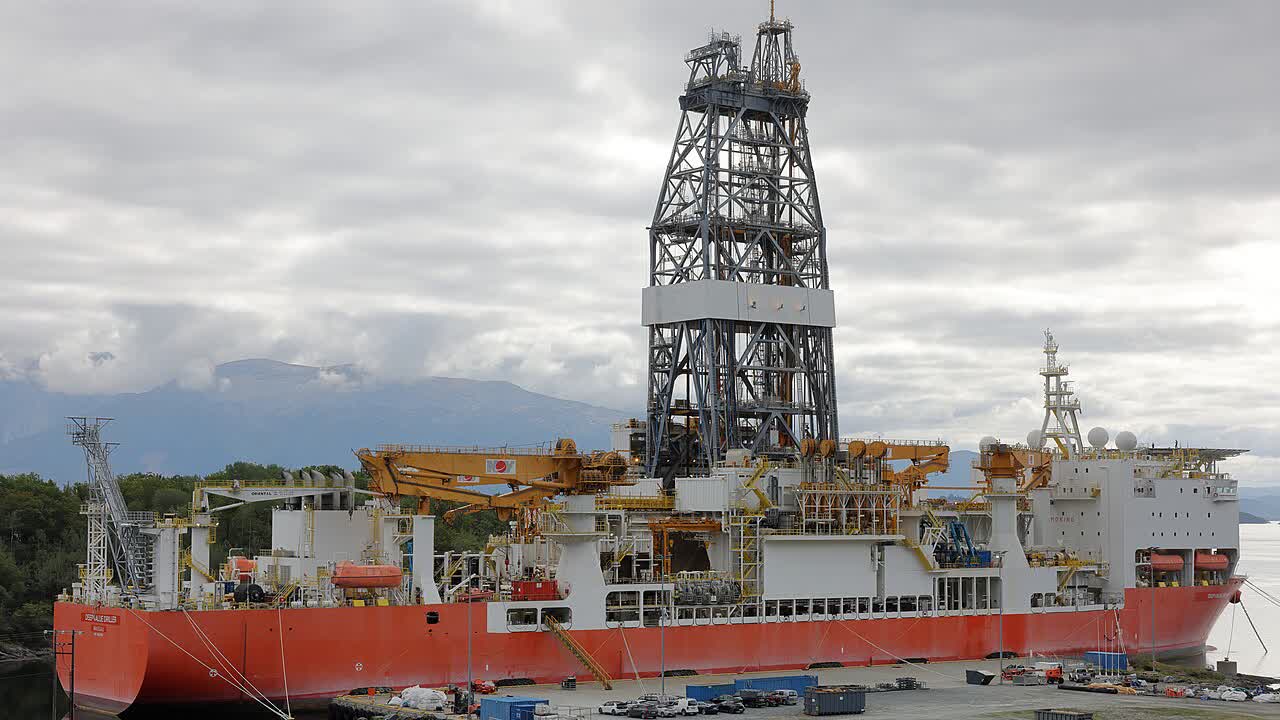

Turkey sent a state-of-the-art drilling ship to the coast of Somalia and inaugurated offshore exploration at depths that no company had attempted before on that African margin
The Çağrı Bey ship began drilling in February 2026, approximately 50 kilometers off the Somali coast, in the Horn of Africa. The operation is the result of an energy cooperation agreement signed between Ankara and Mogadishu in 2024, which granted the Turkish state company TPAO exclusive exploration rights in two offshore blocks. It is Somalia’s first ultra-deepwater drilling campaign, a country with no significant offshore production history but whose underexplored sedimentary basins have attracted Turkish interest.
To understand the strategic weight of the operation, it is necessary to remember that Turkey does not have oil in relevant quantities. The country is one of the largest importers of oil and gas in the world, spending tens of billions of dollars a year on imported energy. The expansion into offshore exploration abroad — the Çağrı Bey has already operated in the Black Sea and the Eastern Mediterranean — is part of a deliberate policy by the Erdoğan government to transform Turkey into a global energy player, reducing import dependence and building geopolitical influence through partnerships with resource-rich but capital and technology-poor countries.
Somalia is a natural partner for this strategy. The country has rebuilt its state capacity after decades of civil conflict and piracy but still lacks the infrastructure and capital to develop its own resources. The Turkish presence goes beyond oil: Ankara has built Turkey’s largest overseas military base in Mogadishu, trains the Somali Armed Forces, and has investments in ports and infrastructure. The energy agreement is another chapter in this relationship that transforms Somalia into one of Turkey’s largest African partners.
-
Golden Pass LNG Ships First Liquefied Gas Cargo from the U.S., Completing $10 Billion QatarEnergy and ExxonMobil Investment

-
Shell and INEOS Confirm Far South Discovery Nearly Eight Kilometers Below the Gulf of Mexico Seabed
-
Oil Prices Rise as U.S.-Iran Tensions Heighten Concerns Over Global Supply and Energy Market Stability

-
Explosion at QatarEnergy Plant in Ras Laffan Kills 13 and Injures 66; Investigation Rules Out Sabotage


The Somali offshore basin is located in the Western Indian Ocean, a geological region that includes the same formations that generated the large oil and gas fields of Tanzania and Mozambique — where Eni and TotalEnergies have discovered trillions of cubic feet of gas in the last two decades. This does not guarantee that Somalia has oil in commercial quantities, but it justifies the bet that the margin still has potential to be revealed.
The risks are considerable. The Horn of Africa region remains one of the most unstable in the world, with internal conflicts in Somalia, tensions between the federal government and semi-autonomous states like Puntland and Somaliland, and the presence of militant groups. Piracy, which paralyzed navigation in the Indian Ocean between 2008 and 2012, has reduced but not completely disappeared. Operating in this context requires private security and coordination with the local navy.
Besides Turkey, other emerging countries in the energy geopolitics are eyeing East Africa: China, the United Arab Emirates, and India itself have been seeking exploration agreements in African countries that have not yet entered the map of major producers. The pattern repeats — a state with technology and capital enters as a partner or operator, a state with resources but without capacity grants rights in exchange for infrastructure and future revenue.
The drilling of the Çağrı Bey will take months to reveal what lies beneath the Indian Ocean floor. If it finds oil on a commercial scale, Somalia could enter the route of African countries that have transformed hydrocarbons into a lever for development — with all the risks and promises that this implies. Turkey, in turn, would secure a strategic position in a region that connects the Middle East, Africa, and the Indian Ocean maritime corridor.
Do you think Turkey is making a smart strategic move in Africa, or is it betting on a region too unstable to yield returns? Comment here.


