Portuguese
  Spanish




Five Models That Were Once Criticized for Their Appearance and Now Represent Striking Design Turnarounds at Major Automakers.
For many years, some medium and large sedans were marked not by refinement, but by lines considered strange, too conservative, or simply dull.
Today, these same models have been repositioned and appear in catalogs and showrooms with looks that approach the luxury car universe, reflecting a profound shift in the design strategy of automakers.
The transformation was not only aesthetic.
-
2027 Toyota Corolla Cross Unveiled: New Design, Enhanced Fuel Efficiency, Reduced Maintenance Costs, Advanced Technology, Connected Services, and Up to 10-Year Warranty

-
Fiat Cronos Precision 2018: Affordable Sedan with Spacious Trunk and Reliable Maintenance
-
Volkswagen to Cut Production by 1 Million Cars by 2030, Reducing Jobs and Platforms, Focusing on More Profitable Models

-
Toyota Launches First 100% Electric Car in Brazil: bZ4X with 343 HP, All-Wheel Drive, 361 km Range, Priced at $419,990 BRL, Limited to 99 Units




Common to Hyundai Elantra, Toyota Prius, Ford Taurus, Chevrolet Malibu, and Kia Optima — now K5 in several markets — went through criticized generations before moving on to designs that elevated the brands’ image.
What was once synonymous with rational cars and the subject of jokes due to their design now serves as a showcase for new visual identities and technologies.
Hyundai Elantra: Design Evolution in the Medium Sedan
In the 1990s and 2000s, the Hyundai Elantra’s main selling point was cost-effectiveness.
The Korean medium sedan provided adequate space and a good list of equipment, but its design was seen as generic, especially in the generations that preceded the mid-2000s, with simple and unremarkable proportions.
The turnaround began with the generation launched in 2010 in the global market.

In Brazil, this bolder-looking Elantra became available starting in 2011, with a body marked by pronounced creases, elongated headlights, and a profile reminiscent of a coupe.
This style contrasted with the basic sedan appearance associated with previous versions.
Since then, each update has consolidated the model as Hyundai’s calling card in markets where medium sedans still hold relevance.

The current generation adopted more angular surfaces, a large grille, and lighting with LED signatures.
As a result, the Elantra transitioned from a “correct but charm-less” car to one of the most elaborated designs in Hyundai’s portfolio.
Toyota Prius: From Controversial to Symbol of New Visual Identity
The Toyota Prius built its reputation much more on hybrid technology than on appearance.
The first generations were known for their extreme focus on aerodynamic efficiency, resulting in a body with unconventional lines.

The second and third generations were frequently cited among the industry’s least attractive models.
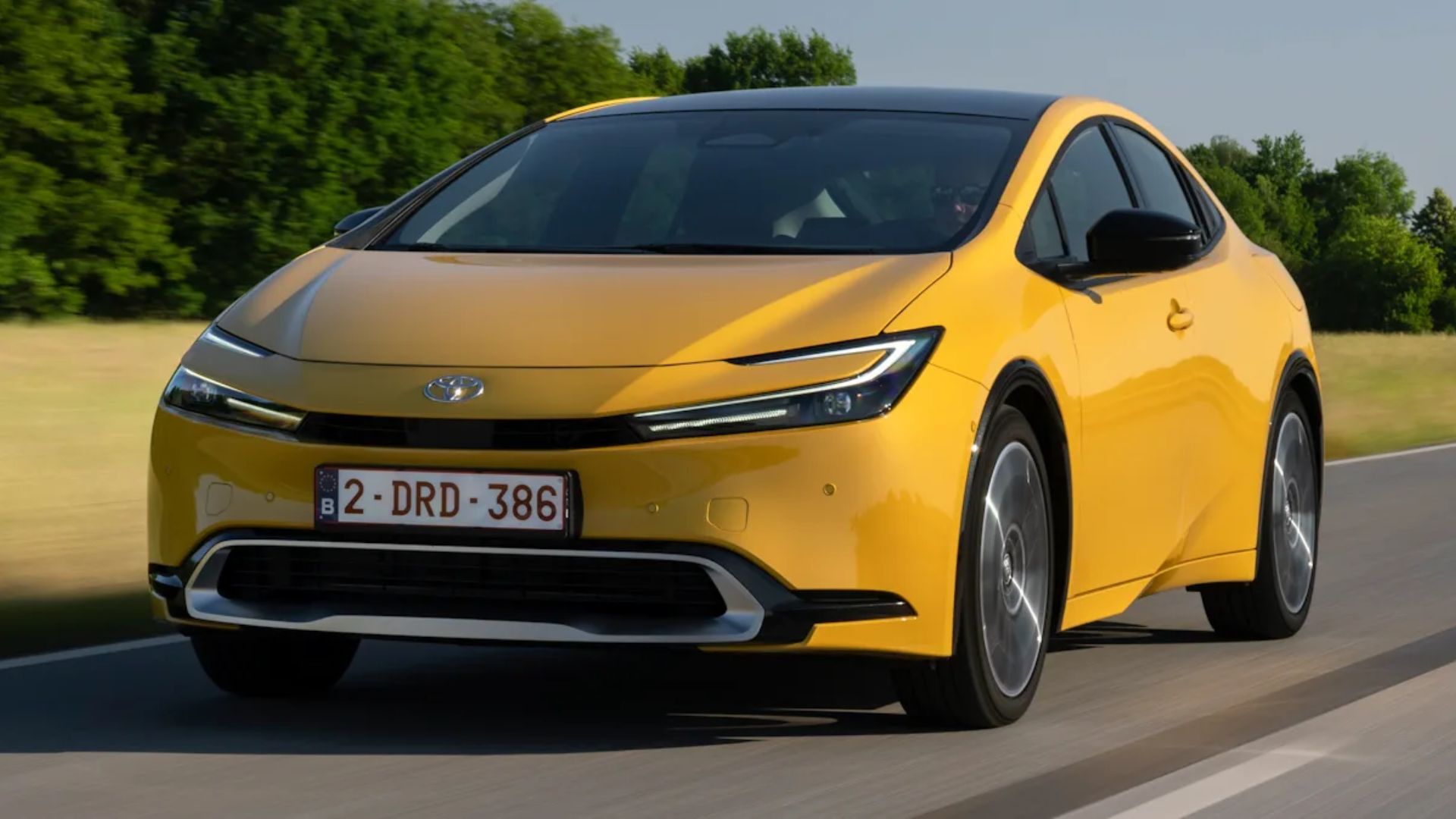
This perception began to change with the latest generation, which maintained the proposal for efficiency but adopted proportions and surfaces closer to those of a sports coupe.
The silhouette became lower, and the front gained sharp headlights integrated into the body.

At the rear, horizontal taillights replaced the bulky vertical set from previous generations.
As a result, the Prius changed from just being Toyota’s efficient hybrid to becoming a design reference, influencing other global models.
Ford Taurus: From Controversial Oval Phase to Executive Presence
When it debuted in the 1980s, the Ford Taurus was celebrated as a modern sedan by the standards of the time.
However, the generation launched in the mid-1990s, marked by the abundant use of oval shapes, became one of the most recalled examples of controversial style in high-volume cars.

This phase impacted the model’s visual legacy, which quickly aged and lost appeal among traditional family sedan consumers in the United States.
In successive generations, Ford adopted a more conservative approach closer to the luxury realm.
The last configurations of the Taurus, especially those produced for the Chinese market, adopted a robust stance, clean surfaces, and an interior aligned with the standards of executive sedans.

Thus, the model ended its recent journey with a look very different from that oval generation of the 1990s.
Chevrolet Malibu: Consolidation of a Sedan with Coupe Appearance
The Chevrolet Malibu is one of the most traditional names in the American brand.
Since its return as a front-wheel drive sedan in the late 1990s, it became known for extreme sobriety, often interpreted as a lack of personality.

In the 2000s, some versions adopted solutions that divided opinions.
The most decisive change occurred in the generation introduced in the mid-2010s.
The Malibu gained elongated proportions, a smoother roofline, and creases that enhanced the car’s width, bringing the sedan closer to the typical appearance of four-door coupes.

The cabin also evolved, featuring larger screens, improved finishes, and driving assistants.
As a result, the model shifted from being just a rational choice to competing with more sophisticated-looking medium and large sedans.
Kia Optima/K5: The Model That Repositioned the Brand Globally
Among the five cases, few illustrate a clearer image change than the Kia Optima.
The first generation of the sedan, offered in the early 2000s, was often described as a car without personality, with a simple and unremarkable body.
The transformation began in the next generation, already under the influence of a new design philosophy at Kia that consolidated in the 2010s.

The Optima began to display the “tiger nose” grille, narrow headlights, striking taillights, and a side profile with an ascending beltline.
The interior gained a more engaging dashboard and superior finishes.
In markets like Brazil, the Optima served as a technological showcase and reinforced the change in perception about the brand.
In its most recent phase, the model began to be called K5 in several countries.
With a fastback roof shape, more elaborate LED lights, and sporty proportions, it became one of the most impactful-looking sedans in its segment.

The repositioning of the Optima/K5 paved the way for other Kia models to adopt the same language, consolidating a phase of more sophisticated design for the brand.
If models like Elantra, Prius, Taurus, Malibu, and Optima managed to completely change their image, which other car do you remember that underwent a similar transformation in design?