






 Portuguese
  Spanish
  5 min of reading
  0 comments


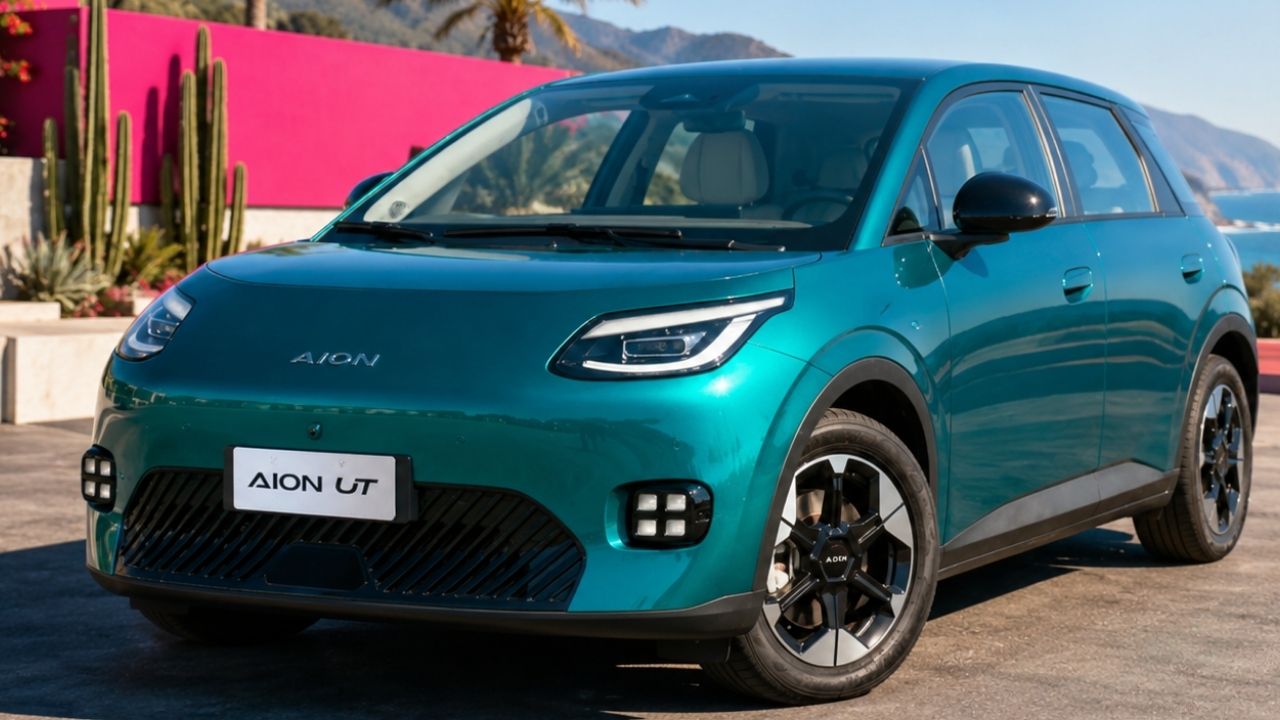
The electric car GAC Aion UT debuts in Brazil starting at R$ 135,990, with a 204 horsepower engine, 360 camera even in the entry-level version, and up to 310 km range in the top version. Larger than the BYD Dolphin, it arrives to compete directly with BYD and Dilly in the affordable electric segment.
A new electric car has arrived in Brazil to shake up the affordable vehicle segment: the GAC Aion UT. Launched starting at R$ 135,990, promotional price valid until June 15, already with a R$ 4,000 discount and one year of free insurance, the model arrives with an aggressive proposal, offering a 204 horsepower front electric motor already in the entry version and larger dimensions than direct competitors like the BYD Dolphin.
GAC’s strategy is clear: to challenge fellow Chinese companies BYD and Dilly, which are already established in the Brazilian market. With two versions available, the electric car starts at R$ 135,990 in the Premium configuration and goes up to R$ 159,990 in the Elite version, which has a larger battery, more equipment, and a range of up to 310 km. The pricing positions the Aion UT in direct collision course with the BYD Dolphin GS (starting at R$ 149,990) and with the Dilly EX2 (top of the line at R$ 136,000).
A larger electric car than the rivals

One of the main advantages of the GAC Aion UT is its size. Built on the GAC 2.0 platform, the same used in the Aion Y minivan, the model is 4.27 meters long and has an impressive 2.75 meters wheelbase. For comparison, the BYD Dolphin GS is 4.12 meters long and has a 2.70 meters wheelbase, while the Dilly EX2 measures 4.13 meters.
-
Uber Faces Shareholder Scrutiny as Board Accused of Ignoring Safety, Compliance, and Harassment Warnings Amid Over 3,500 U.S. Lawsuits

-
Ferrari’s First Electric Car Divides Fans, Priced at $630,000, Amid Concerns Over Limited Editions; Brand Clarifies It’s Not Just for Future Perks
-
BYD Dolphin Mini: The Electric Car That Defies Depreciation, Losing Only 3.58% in a Year and Becoming the Best-Selling Retail Model Under $22,000

-
Electric Car JAC E-JS4 Loses $19,000 in Value in One Year, Leading Record Depreciation of Used Cars in Brazil Due to Expensive Battery and New Models


The numbers place the Aion UT in a comfortable position within the category. The wheelbase of 2.75 meters even surpasses that of a Toyota Corolla sedan, which has 2.70 meters, and a hybrid Corolla costs around R$ 200,000. The width also draws attention: it is 1.85 meters, compared to 1.77 meters of the Dolphin GS, a segment reference. For those looking for interior space in an affordable electric car, these extra centimeters make a practical difference.
Power and range: what to expect from the batteries

Regardless of the chosen version, the GAC Aion UT delivers 204 horsepower with its front electric motor, the highest power found, for example, in a BYD Dolphin Plus, but here it comes from the entry-level configuration. The model accelerates from 0 to 100 km/h in about 7.3 seconds, a respectable number for an electric car in this position.
The difference between the versions lies in the batteries and range. The cheaper Premium version comes with a 44.3 kWh battery, a range of 253 km, and charging up to 64 kW. The Elite version, on the other hand, features a 60 kWh battery, a range of up to 310 km, and faster charging, at 87 kW. Both use lithium iron phosphate (LFP) batteries, known for their durability and safety. It is worth noting that there is a significant weight difference between the versions: the Elite weighs about 1,700 kg, while the Premium is just over 1,500 kg.
Equipment: what comes standard and what is missing

Even in the entry-level version, the GAC Aion UT surprises with some features. The 360-degree camera is present from the Premium version, a feature not all competitors offer in the basic configuration, in addition to front and rear parking sensors, 17-inch alloy wheels, full LED headlights with automatic high beam, and a 14.5-inch multimedia screen with wireless Apple CarPlay and Android Auto. The trunk has 340 liters, reaching over 1,500 liters with the seats folded down, and the car still includes a spare tire, an item many electric cars dispense with.
On the other hand, the entry-level version makes some concessions expected for the price. There is no electric seat, panoramic sunroof, wireless phone charger, or the ADAS assistance package, all these items are reserved for the Elite version. The interior finish also relies on plastics without soft-touch coating on much of the dashboard and doors, a common feature in entry-level Chinese electric cars. In compensation, the seats were highly praised for their quality and comfort, comparable to those of higher category cars.
Points that deserve attention

Not everything in the GAC Aion UT is an advantage, and some details deserve consideration before purchase. Despite the generous 2.75-meter wheelbase, the legroom in the rear seat does not fully match the car’s external size. This happens because the dashboard is quite long, the section between the windshield and the end of the dashboard takes up a lot of front space, slightly compromising the rear internal space utilization.
The suspension also reveals the cost-contained construction. The Aion UT uses McPherson suspension at the front and torsion bar at the rear (not independent), with disc brakes on all four wheels. There are still cost-saving details, such as the absence of lighting in the glove compartment, the lack of USB ports for rear passengers, and, in the entry-level version, the manually opening trunk lid. These are understandable concessions for the price, but the buyer needs to know them before deciding.
The war of Chinese electric cars in Brazil


The arrival of the GAC Aion UT intensifies a competition that was already fierce among Chinese automakers in Brazil. BYD and Dilly have built a solid presence in the national electric car market, and GAC now enters with a proposal to offer more size and power at a competitive price, trying to gain ground in a rapidly expanding segment.
The result of this fight tends to benefit the consumer. The more competition among brands, the greater the pressure for better prices, more equipment, and better purchasing conditions. The Aion UT still needs to prove its worth on the streets, with dynamic behavior, real consumption, and the support network being decisive, but its debut already shows that the Brazilian affordable electric market is more contested than ever. For those considering switching to an electric car, it’s a good time to compare options.
Would you trade your current car for an electric car like the GAC Aion UT, or are you still wary of Chinese brands? Do you think it has the arguments to surpass the BYD Dolphin and the Dilly EX2? And which version would you choose, the cheaper one or the top-of-the-line with more range? Leave your opinion in the comments!





Be the first to react!