






 Portuguese
  Spanish





Those seeking a new car know that prices are getting higher, but not everything is lost. It is still possible to find SUVs with good cost-effectiveness, balanced fuel consumption, and comfort for daily use — especially if you know where to look. In times of expensive gasoline and heavy traffic, economical models have become almost a matter of urban survival. And the best part: there are options for less than R$ 130,000 that easily exceed 12 km/l.
Economical and Affordable SUVs on the Radar
Finding SUVs that balance price, consumption, and performance may seem challenging, but some manufacturers are getting it right in this segment. Even with smaller engines and a focus on efficiency, these cars still deliver interior space, technology, and drivability that has won over the public.
Among the highlights, there are models that surprise with their low consumption and the provision of equipment that was previously exclusive to more expensive categories. The secret lies in the engineering: smaller blocks, use of turbo in compact versions, and management electronics that prioritize economy without sacrificing power.
-
Iconic Orange Double-Decker Bus, a Dutch Fan Favorite for Over 20 Years, Arrives in Texas for the World Cup After Touring Brazil, England, Qatar, and More

-
$100 Million Hypercar Collection, Including Ferrari LaFerrari and McLaren Speedtail, Found Abandoned at Los Angeles Airport
-
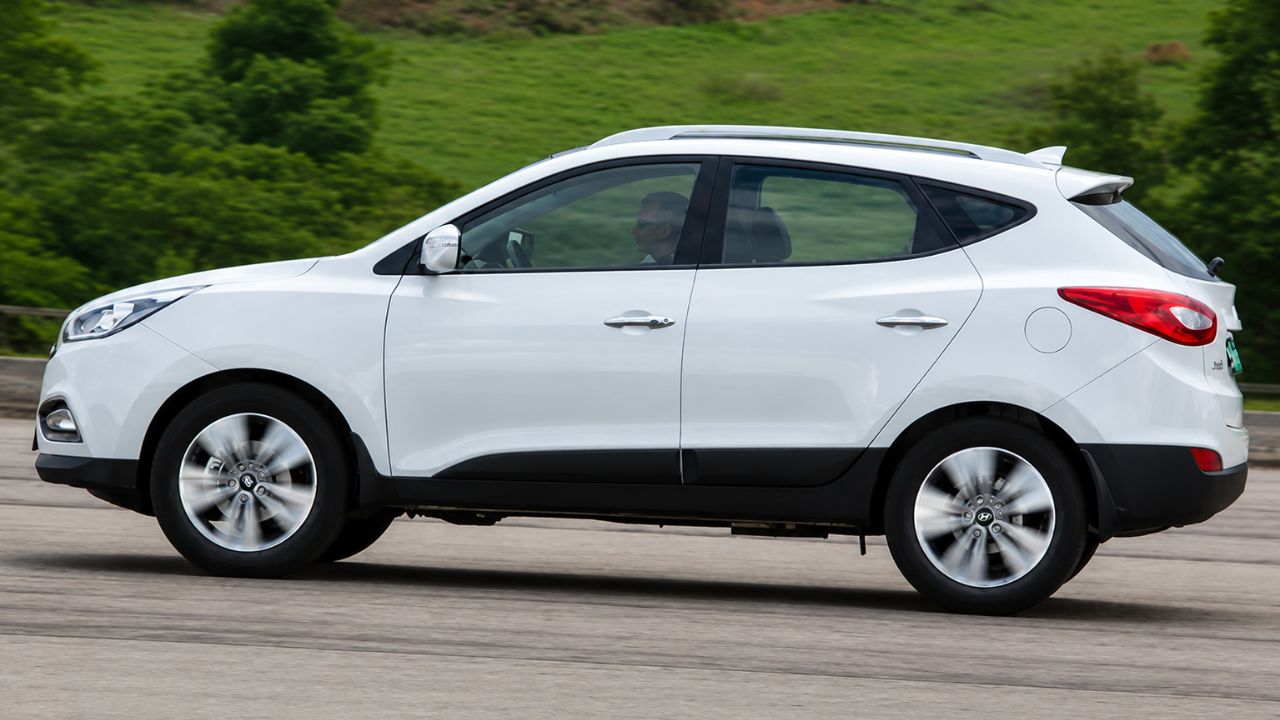
Hyundai ix35 2019: A Forgotten SUV with 2.0 Engine and 650 km Range Costs Less Than a New Kwid in Brazil
-
Harley-Davidson Enters Urban Electric Era with LiveWire S4 Honcho Minibikes: Lightweight, Affordable, 85 km Range, Priced Around $5,000



1. Renault Duster 1.6 CVT: The Veteran That Stays Strong
The Renault Duster remains a solid choice as one of the most honest SUVs on the market. With a 1.6 flex engine and CVT transmission, the model averages 12.3 km/l in the city and up to 14.2 km/l on the highway. Its efficient consumption is due to good calibration of the transmission and a relatively light weight for its category.
Even with a simpler look, the Duster offers robustness and generous interior space, ideal for those prioritizing practicality and comfort. And the price? In the range of R$ 125,000, depending on the version, the Duster delivers the basics with plenty of efficiency.
2. Nissan Kicks Active: Light and Well Adjusted
The Nissan Kicks Active is one of the most economical compact SUVs sold in Brazil. Equipped with a 1.6 engine producing 114 hp and a CVT gearbox, the model achieves 11.9 km/l in the city and 13.8 km/l on the highway.
In addition to its low consumption, the Kicks stands out for its light driving and smooth gearbox. The interior finish is simple but functional, and it comfortably accommodates four adults. Overall, it is an excellent choice for those wanting to spend little without sacrificing style.
3. Fiat Pulse Drive 1.3: The Pleasing Newcomer
Among the newest SUVs in the market, the Fiat Pulse Drive 1.3 quickly gained a spot. The 1.3 Firefly engine delivers up to 107 hp and guarantees averages close to 13 km/l in the city and 14.5 km/l on the highway.
The Pulse combines modern design with an ergonomic interior and an intuitive multimedia center. Its consumption is a result of good aerodynamics and a lightweight mechanical set. The manual Drive version starts at around R$ 118,000, making it one of the most competitive options in the category.
4. Hyundai Creta Action: Balance Is Key
Even with its conservative design, the Hyundai Creta Action has a loyal following. Equipped with a 1.6 engine and a six-speed automatic transmission, it registers averages of 11.6 km/l in the city and 12.9 km/l on the highway.
Its interior comfort and acoustic insulation remain strong points, as does its mechanical reliability — a boon for those looking to avoid maintenance surprises. The Creta Action costs around R$ 129,000, making it one of the last versions of the older model, yet still highly competitive.
5. Volkswagen Nivus Sense: Technology and Economy
Closing the list, the VW Nivus Sense delivers the ideal balance between performance and consumption. The 1.0 turbo engine with 128 hp is efficient and guarantees averages of up to 13 km/l in the city and 14.7 km/l on the highway.
Even in the entry-level version, the Nivus offers advanced connectivity, VW Play center, and sporty design. It is an SUV that pleases in both urban traffic and on trips, with predictable maintenance costs and consumption worthy of a hatch.
The Ideal Profile of Those Who Choose Economical SUVs
Those who opt for SUVs in this price range generally seek a car that won’t weigh on their budget and offers a good cost-benefit ratio. They are drivers who value balanced consumption, comfort, and space, but who do not fall for the myth that “SUVs consume too much.”
These models prove the opposite: embedded technology and optimized engines have transformed the landscape. Today, it is possible to have an SUV without giving up the economy that was once only seen in popular compact cars.
How to Get the Most Out of Efficiency
More than choosing the right car, it is necessary to adopt habits that maximize consumption. Keeping tires inflated, changing filters regularly, and avoiding sudden accelerations are simple actions that make a difference. Additionally, fueling at reliable stations and using the ideal fuel for the engine help ensure the performance promised by the manufacturer.
A New Perspective on SUVs
Times have changed — and the automotive market has too. If before it was necessary to spend a lot to have a spacious and efficient car, today technology allows for a union of the best of both worlds. Models like the Nivus, Pulse, and Kicks show that it is possible to have comfort, safety, and economy without exceeding R$ 130,000.
In the end, the secret lies in making a rational choice, but without giving up the excitement of driving a modern SUV.


